Ectoplasm: From Metaphysical Manifestation to Objects of Research
I. Introduction: The Enigma of Ectoplasm
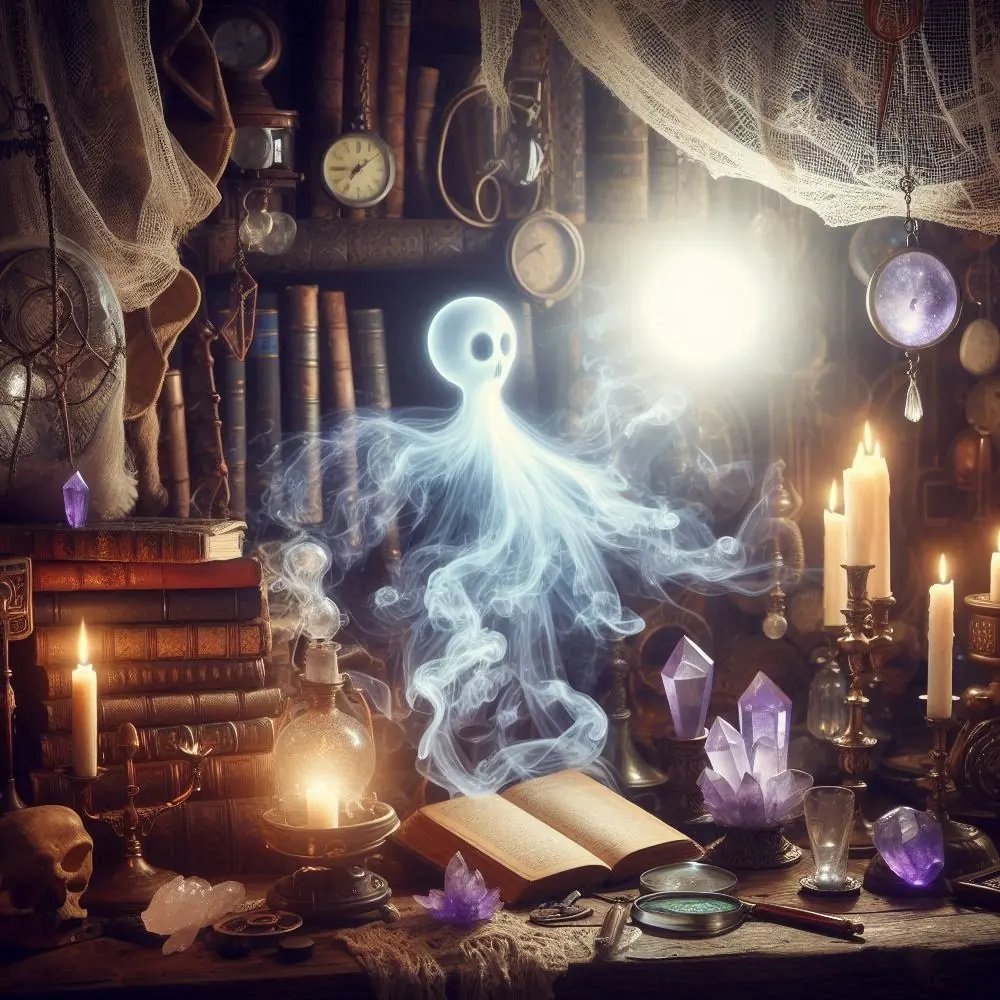
Ectoplasm, a term that conjures images of ethereal substances and darkened séance rooms, occupies a unique and often controversial place in the history of paranormal claims and psychical research. Initially defined within the context of Spiritualism, it was described as a mysterious, typically light-colored, viscous substance said to exude from the body of a spiritualist medium while in a trance.1 Proponents believed this otherworldly material was instrumental in the materialization of spirits or parts of spirits, such as faces and hands, and was even implicated in phenomena like the levitation of objects.1 The substance was generally considered visible only in the subdued lighting characteristic of séances and was purported to retract into the medium's body upon the session's conclusion.1 Over time, as belief in its physical reality waned under scrutiny, the concept of ectoplasm transitioned, becoming a recurring trope in popular culture, particularly within horror and paranormal fiction, often far removed from its original metaphysical connotations.3
The historical significance of ectoplasm is intrinsically linked to the zenith of physical mediumship, a prominent phase of the Spiritualist movement that flourished in the late 19th and early 20th centuries.3 This report aims to trace the complex journey of ectoplasm: from its origins in metaphysical belief systems and the fervent claims of its proponents, through the intense investigations conducted by psychical researchers, the recurrent and damaging exposures of fraud, to its eventual transformation into a subject of historical, sociological, and cultural analysis within academic "paper researches."
The very conceptualization and perceived characteristics of ectoplasm were deeply embedded within the socio-cultural milieu of Spiritualism. This movement, emerging in an era marked by rapid scientific advancement yet retaining a strong societal yearning for spiritual and religious continuity, actively sought tangible, empirical "proof" of an afterlife and the possibility of communication with the deceased.3 Physical phenomena, such as those attributed to ectoplasm, appeared to offer precisely this kind of validation.5 Consequently, the described nature of ectoplasm—its visibility, occasional tangibility, and capacity to form recognizable shapes—was not an arbitrary set of properties. Instead, these characteristics were seemingly constructed and emphasized to fulfill the profound evidentiary desires of a public eager for concrete manifestations of the spirit world.1
Furthermore, the trajectory of ectoplasm, from being posited as a genuine physical substance to its current status as a cultural trope and object of academic inquiry, mirrors broader societal shifts in attitudes towards science, the nature of evidence, and the paranormal. Initial claims were met with a mixture of fervent belief and the beginnings of scientific and skeptical investigation.11 However, repeated and well-publicized exposures of fraudulent practices by mediums, meticulously documented by researchers and skeptics, progressively eroded the credibility of ectoplasmic phenomena.3 The concurrent rise of more rigorous scientific methodologies and a greater understanding of human psychology and perception rendered such extraordinary claims increasingly untenable within mainstream scientific thought.4 As widespread belief in its paranormal reality diminished, ectoplasm was absorbed and reinterpreted by popular culture, often in simplified, parodied, or purely fictional forms.3 This cultural assimilation signaled its definitive loss of status as a serious paranormal claim, paving the way for its examination as a historical and cultural artifact.
II. The Genesis of Ectoplasm: Spiritualism and Early Claims
The emergence of ectoplasm as a concept is inseparable from the rise of the Spiritualist movement in the mid-19th century.3 This period was characterized by a widespread fascination with the possibility of communicating with the dead, a desire often intensified by the era's high mortality rates and the search for solace and meaning beyond conventional religious doctrines. The Fox sisters, Kate and Margarette, are often cited as pivotal figures in igniting the movement with their alleged spirit rappings in 1848, although they later confessed to faking these phenomena.5 Central to Spiritualism was the séance, a gathering where individuals sought contact with the spirit world, often facilitated by a medium. Within this context, there was a profound yearning for empirical evidence of spirit survival and interaction, moving beyond mere messages to tangible physical manifestations.3
Before the term "ectoplasm" gained currency, early psychical researchers and Spiritualists grappled with explaining the physical phenomena observed in séances. One such precursor concept was the "ectenic force," a term hypothesized by Count Agénor de Gasparin in the 1850s to account for occurrences like table turning and tapping without direct physical contact.6 This "force" was later named by de Gasparin's colleague, M. Thury, a professor of natural history.6 Such early theories illustrate the attempts to formulate quasi-scientific explanations for these mysterious events, bridging the gap between spiritual belief and the emerging language of science. Other speculative terms, such as "psychode," "psychic force," or "ecteneic force," were also employed by researchers who posited the existence of an unidentified fluid or energy within the human body capable of being externalized to influence matter.6
The specific term "ectoplasm" was coined in 1894 by Charles Richet, a distinguished French physiologist and later Nobel laureate (for his work on anaphylaxis, unrelated to psychical research).3 Richet, a prominent figure in psychical research, introduced the term to describe the substance he observed in his investigations of mediums, notably Eusapia Palladino.11 The word first appeared in print in Richet's Dictionary of Physiology in 1895.11 The adoption of a scientific-sounding term, derived from the Greek words ektos (meaning "outside") and plasma (meaning "something formed or molded") 5, was significant. It lent an air of objectivity and legitimacy to spiritualist claims, enabling the phenomenon to be discussed within the burgeoning field of psychical research rather than being confined to the purely occult or spiritual domains. This terminological choice can be seen as a strategic, if perhaps unconscious, move to gain scientific traction and encourage systematic investigation.
According to its proponents, ectoplasm was a remarkable and mysterious substance. It was typically described as a light-colored, viscous material that exuded from various orifices of the medium's body—such as the mouth, ears, nose, and sometimes even the skin—while the medium was in a deep trance state.1 This substance was allegedly capable of taking on various forms, including recognizable human features like faces and hands, or even complete, albeit ephemeral, spirit bodies.1 Its purported primary function was to serve as the raw material for spirit materializations, allowing discarnate entities to interact with the physical world, and it was also believed to be involved in other physical phenomena, such as the levitation of objects.1 At the conclusion of a séance, the ectoplasm was said to dematerialize, allegedly by returning to the medium's body.1
Further descriptive details varied among accounts. Some claimed that ectoplasm began as a clear, almost invisible vapor, which would then darken and become more visible as the "psychic energy" intensified; in extreme cases, it was even said to develop a strong, distinct odor.6 The psychical researcher Gustav Geley provided a particularly detailed account of its variable nature, describing it at times as "vaporous, sometimes a plastic paste, sometimes a bundle of fine threads, or a membrane with swellings or fringes, or a fine fabric-like tissue".6 Sir Arthur Conan Doyle, a fervent believer in Spiritualism, characterized it as a "viscous, gelatinous substance which appeared to differ from every known form of matter in that it could solidify and be used for material purposes".6
The described properties of ectoplasm, however, proved to be remarkably convenient for fraudulent production and inherently resistant to rigorous, controlled investigation. The common assertion that ectoplasm was sensitive to light and would disintegrate if exposed served as a justification for conducting séances in darkened or dimly lit rooms.3 While ostensibly a necessary condition for the phenomenon, darkness also provided an ideal cover for trickery and the manipulation of concealed materials.3 The claim that ectoplasm emanated from bodily orifices allowed mediums to easily hide substances like cheesecloth, muslin, or paper within their mouths or clothing, to be revealed at opportune moments.3 The variable nature of the substance, as described by figures like Geley, could account for the diverse array of faked materials subsequently discovered by investigators.6 Furthermore, the warning that touching the ectoplasm could cause great pain or harm to the medium, or disrupt the spiritual manifestation, effectively discouraged close examination by séance sitters.5 These characteristics collectively created a self-protective belief system around the phenomenon, one that inherently limited scrutiny and made objective verification exceedingly difficult.
III. The Heyday of Physical Mediumship: Prominent Figures and Phenomena
The late 19th and early 20th centuries marked the zenith of physical mediumship, a period during which numerous individuals gained international renown for their alleged ability to produce ectoplasm and other tangible spiritual manifestations. These mediums became central figures in the Spiritualist movement, attracting both fervent believers and skeptical investigators.
Florence Cook and "Katie King"
Florence Cook (1856-1904) was one of Victorian Britain's most celebrated spirit materializers, whose fame rested primarily on the manifestation of a spirit entity named "Katie King".11 Cook's séances typically involved her retreating into a cabinet or adjoining room, after which "Katie King," a figure claiming to be the spirit of an Indian woman who lived centuries prior, would emerge to interact with the sitters.11 The endorsement of Sir William Crookes, a highly respected chemist and physicist and Fellow of the Royal Society, in 1874, lent considerable credibility to Cook's phenomena.11 Crookes conducted a series of investigations, implementing conditions he believed were stringent. These included instances where Cook was supposedly secured in one room while "Katie King" appeared in another, and he famously photographed Cook alongside the materialized "Katie King".13 Crookes also reported taking a lock of "Katie's" hair and noted differences in pulse rates between the medium and the alleged spirit.13
However, Cook's career was not without controversy. Even before Crookes' endorsement, she had been caught in an act of apparent deception in December 1873, when a séance guest, suspicious of the spirit's appearance, recognized an uncanny resemblance between "Katie King" and Florence Cook herself.11 Later, in 1880, Sir George Sitwell also claimed to have exposed Cook, asserting that she and "Katie King" were one and the same.11 This duality—strong endorsement from a man of science juxtaposed with credible accusations of fraud—illustrates the complex and often contradictory nature of early psychical investigations.
Eusapia Palladino
Eusapia Palladino (1854-1918), an Italian medium, achieved international fame for the dramatic physical phenomena that occurred in her presence. She was investigated by a host of prominent researchers across Europe and America, including Charles Richet, Oliver Lodge, and Cesare Lombroso.11 Her séances were characterized by levitating tables, moving objects, disembodied hands, and the production of what was described as ectoplasm. Richet, despite coining the term ectoplasm partly through his work with her, and being convinced by some of her phenomena, acknowledged that Palladino was prone to cheating when conditions allowed.12 Her case remained contentious, with investigators often divided on the genuineness of her manifestations.
Eva Carrière (Marthe Béraud)
Eva Carrière (1886-c.1940s), also known as Marthe Béraud, was another highly controversial medium, particularly noted for her purported ectoplasmic materializations of faces and forms. She claimed her psychic powers developed after the death of her fiancé in 1905, with her first significant materialization being that of a 300-year-old Brahmin Hindu named "Bien Boa".11 Early photographs of "Bien Boa" were criticized for resembling cardboard cut-outs.11 An exposé in 1906 alleged that Carrière had hired a coachman to impersonate the spirit.11
Despite these early accusations, Carrière attracted the attention of several prominent researchers. Charles Richet held sittings with her and claimed that the figure of "Bien Boa" appeared to breathe, move, and even touch him.11 However, it was her association with the German physician and psychical researcher Baron Albert von Schrenck-Notzing that brought her the most notoriety. Schrenck-Notzing investigated Carrière extensively, concluding that her ectoplasm was genuine but that the forms it took were a result of "ideoplasty"—a process by which the medium could project images from her mind onto the ectoplasmic substance.6 He documented these investigations, complete with numerous photographs, in his influential book Phenomena of Materialisation (published in German in 1914, English translation 1920).4
Critics, however, were quick to point out suspicious elements in Schrenck-Notzing's photographic evidence, noting what appeared to be magazine cut-outs, pins, and pieces of string associated with the "ectoplasm".6 An investigation by the Society for Psychical Research (SPR) in London in 1920 concluded that a sample of Carrière's ectoplasm was made of chewed paper.6 The magician Carlos María de Heredia successfully replicated her ectoplasmic effects using simple materials like a comb, gauze, and a handkerchief.6 Even Schrenck-Notzing eventually admitted that Carrière had, on several occasions, deceptively smuggled pins into the séance room.14 When confronted with evidence that Carrière used images from magazines (one photograph even revealed the name of the French magazine Le Miroir on the back of an ectoplasmic face 6), Schrenck-Notzing controversially defended her by claiming she had subconsciously recalled the images, which then materialized via ideoplasty.6 Carrière's séances, often conducted with her companion Juliette Bisson, were also described as having an eroticized atmosphere, which some researchers suggested was intended to distract the predominantly male audience of sitters while fraudulent phenomena were produced.4
Helen Duncan
Helen Duncan (1897-1956), a Scottish medium, rose to prominence in the early to mid-20th century. She claimed to have developed her mediumistic powers around 1926 and became famous for emitting copious amounts of "ectoplasm," typically a white, cheesecloth-like substance, from her mouth.9 This ectoplasm would then purportedly form into spirit figures or be used by her spirit guide, "Albert." Photographs taken by Harvey Metcalfe in 1928, using a flash camera, were widely seen as exposing her methods, revealing the "spirits" to be crudely fashioned from papier-mâché masks and white sheets.11
The paranormal investigator Harry Price conducted a notable investigation of Duncan in 1931. He concluded that her ectoplasm was likely cheesecloth, possibly mixed with egg whites or other chemicals, which she swallowed and then regurgitated at the appropriate moment during séances.9 Duncan was convicted of fraudulent mediumship under the Witchcraft Act of 1735 in Edinburgh in 1933, and more famously, again in London in 1944, a case that will be discussed in more detail later.7
Other Notable Mediums
Several other mediums were associated with ectoplasmic phenomena. Linda Gazzera was investigated by Charles Richet between 1905 and 1910 for her claims of psychokinesis, but she was exposed as a fraud in 1911, with Richet admitting he had been deceived.12 Ladislas Lasslo (or Laszlo Laszlo), initially endorsed by Schrenck-Notzing, confessed to fraud in 1924, admitting to hiding "spirit heads" made of gauze and even planting them in Schrenck-Notzing's pockets or chair during séances.14 Photographs also exist of the medium Mary Marshall purportedly producing nasal ectoplasm.10
The "celebrity" status achieved by some of these mediums, often amplified by endorsements from respected, albeit sometimes demonstrably credulous, scientific figures like Crookes and Richet, played a crucial role in popularizing Spiritualism and its associated ectoplasmic claims. This dynamic highlights a period where fervent belief, coupled with the authority of scientific investigators (even when their judgment was flawed), could create powerful narratives that were remarkably resistant to immediate debunking, even in the face of concurrent or subsequent exposures of fraud.11 The theatrical and performative aspects of séances also contributed significantly to their appeal and the mediums' fame.4
Interestingly, the very nature of the "evidence" presented for ectoplasm—photographs and tangible samples—often became the primary means of its debunking. Photography, initially embraced as a tool to capture objective proof of spirits and their materializations 4, ironically provided some of the most damning evidence against mediums. Metcalfe's flash photographs of Helen Duncan revealed her props 11, and detailed examination of Schrenck-Notzing's photographs of Eva Carrière exposed the use of magazine cut-outs, pins, and strings.6 Similarly, physical samples of Duncan's ectoplasm, when subjected to chemical analysis by Harry Price, were found to consist of mundane materials like egg whites and cheesecloth 11, while Carrière's was identified as chewed paper.14 Thus, the attempt to render the phenomenon "scientific" and "provable" through the presentation of physical evidence paradoxically led directly to its scientific refutation in many key cases.
To provide a clearer overview of these prominent figures, the following table summarizes their activities and the outcomes of investigations:
| Medium Name (Alias) | Key Period of Activity | Primary Ectoplasmic Claims | Notable Investigators | Key Findings/Exposures |
|---|---|---|---|---|
| Florence Cook | Late 19th C | Full-form materialization of "Katie King" | Sir William Crookes | Endorsed by Crookes; later accusations and evidence of fraud (resemblance to medium, caught cheating) 11 |
| Eusapia Palladino | Late 19th/Early 20th C | Physical phenomena, levitation, ectoplasmic extrusions | Charles Richet, Oliver Lodge, Cesare Lombroso | Mixed findings; acknowledged by some investigators to employ trickery when possible 11 |
| Eva Carrière (Marthe Béraud) | Early 20th C | Materialized faces/forms (e.g., "Bien Boa"), ectoplasm | Charles Richet, Albert von Schrenck-Notzing, SPR, Houdini | Widespread fraud exposed: magazine cut-outs, chewed paper, pins, strings; eroticized performances 11 |
| Helen Duncan | Early-Mid 20th C | Cheesecloth-like ectoplasm from mouth, spirit guide figures | Harry Price, Harvey Metcalfe | Exposed fraud: regurgitated cheesecloth, egg whites, papier-mâché props; Witchcraft Act convictions 9 |
| Linda Gazzera | Early 20th C | Psychokinesis (attributed to ectoplasmic force) | Charles Richet | Exposed as fraudulent in 1911; Richet admitted being duped 12 |
| Ladislas Lasslo (Laszlo Laszlo) | Early 20th C | Materialized "spirit heads" | Albert von Schrenck-Notzing | Confessed to complete fraud in 1924, including planting evidence on investigators 14 |
This table underscores the recurrent pattern: claims of extraordinary phenomena, investigation by notable figures (some more critical than others), and, in a significant number of prominent cases, the eventual exposure of deliberate deception.
IV. Psychical Research and the Quest for Understanding
The rise of Spiritualism and the extraordinary claims of physical mediums prompted the emergence of psychical research, a field dedicated to the scientific investigation of paranormal phenomena. Early researchers, many of whom were respected scientists in other disciplines, approached ectoplasm and related manifestations with a mixture of curiosity, skepticism, and sometimes, a pre-existing desire to find evidence of forces beyond conventional understanding.
Charles Richet: "External Projection," "Sixth Sense," and Skepticism Towards Spirits
Charles Richet, who coined the term "ectoplasm," played a pivotal role in its early study.11 He theorized that some mediumistic phenomena could be explained by the "external projection of a material substance (ectoplasm) from the body of the medium".12 However, a crucial aspect of Richet's perspective was his skepticism regarding the involvement of spirits. He explicitly rejected the "spirit hypothesis" of mediumship as unscientific, even while acknowledging the apparent reality of some of the physical manifestations he observed.12 Instead of attributing these phenomena to discarnate entities, Richet proposed the existence of a "sixth sense"—an inherent human faculty capable of perceiving hypothetical vibrations or influences that were not detectable by the known five senses.12 He elaborated on this idea in his 1928 book, Our Sixth Sense.12 Richet's stance represents an attempt to naturalize paranormal claims, to bring them within the ambit of (a potentially expanded) scientific understanding, rather than resorting to supernatural explanations. Despite his scientific background, Richet was also known to have been deceived by fraudulent mediums, including Eusapia Palladino and Linda Gazzera.12
Albert von Schrenck-Notzing: "Ideoplasty" and the Phenomena of Materialisation
Baron Albert von Schrenck-Notzing, a German physician and psychiatrist, was another key investigator of ectoplasmic phenomena, most notably with the medium Eva Carrière.6 Schrenck-Notzing came to believe that the ectoplasm Carrière produced was genuine, but he proposed a unique theory called "ideoplasty" to explain the forms it took, such as faces.6 According to this theory, the medium could unconsciously or consciously project images from her mind—including memories or images seen in print—onto the undifferentiated ectoplasmic substance, which would then mold itself accordingly.14 He meticulously documented his investigations and theories, accompanied by numerous photographs, in his influential and controversial book, Phenomena of Materialisation (English translation, 1920).4 Schrenck-Notzing's theory of ideoplasty offered a way to account for the appearance of recognizable, even mundane, images within the ectoplasm without resorting to a spirit explanation. However, his interpretations were heavily criticized, particularly when evidence of fraud (such as the use of magazine cut-outs by Carrière) became apparent, leading to accusations that he was overly credulous or that his theory was an attempt to explain away deception.6
Gustave Geley: Ectoplasm as "Exteriorization of Vital Force"
Gustave Geley, a French physician and director of the Institut Métapsychique International in Paris, also conducted extensive research into ectoplasm.16 Geley conceptualized ectoplasm as a form of matter projected from the medium's body during a trance state, describing it as an "exteriorization of its vital force" that would eventually be reabsorbed by the medium.16 He emphasized the variable appearance of ectoplasm, noting its potential forms as vaporous, a plastic paste, fine threads, a membrane, or a fabric-like tissue.6 Geley sought to connect ectoplasmic phenomena with known biological processes, drawing parallels with phenomena such as the histolysis (tissue breakdown and re-formation) observed in insects during metamorphosis, bioluminescence, and the formation of pseudopods in amoeboid organisms.16 His work, like Richet's, aimed for a biological or vitalistic explanation, suggesting that ectoplasm might be a product of little-understood physiological capacities rather than a purely spiritual manifestation.
The Role of the Society for Psychical Research (SPR)
Founded in London in 1882, the Society for Psychical Research (SPR) played a significant, and often critical, role in the investigation of mediumship and ectoplasmic claims.6 The SPR's stated aim was to examine such phenomena in a scientific and impartial spirit. Over the decades, SPR investigations were instrumental in exposing numerous fraudulent mediums, and their published findings contributed significantly to a growing skepticism about physical mediumship within both scientific circles and the wider public.4 For instance, the SPR's investigation of Eva Carrière in 1920, which concluded her ectoplasm was made of chewed paper, was a notable case.11
Methods of Investigation
Psychical researchers employed several methods in their attempts to study ectoplasm. Séances were, by necessity, the primary venue for observation. These were typically conducted in darkened or dimly lit rooms, a condition justified by the claim that ectoplasm was sensitive to light and would disintegrate upon exposure.1 This requirement, however, also created an environment highly conducive to fraud, making it difficult for investigators to maintain adequate control and observation.
Photography quickly became a key investigative tool, with researchers like Crookes, Schrenck-Notzing, and later, amateur photographers like Harvey Metcalfe, capturing numerous images of alleged ectoplasmic manifestations.4 "Spirit photography," which purported to capture images of ghosts and ectoplasm, emerged as a distinct genre, further fueling public interest and debate.4
In some instances, investigators were able to obtain physical samples of purported ectoplasm. These samples were occasionally subjected to chemical analysis, which often revealed them to be composed of mundane substances. Harry Price's analysis of Helen Duncan's ectoplasm, identifying it as cheesecloth and egg white, is a prominent example of this approach.3
Many early psychical researchers, while ostensibly committed to applying scientific methods, often operated with an underlying inclination to discover phenomena that transcended known physical or biological laws. Their theories—such as Richet's "sixth sense," Schrenck-Notzing's "ideoplasty," or Geley's "exteriorization of vital force"—can be interpreted as attempts to create novel scientific frameworks that could accommodate anomalous experiences, rather than dismissing them outright, even when confronted with evidence suggestive of fraud. This reveals a persistent tension within early psychical research between the ideals of scientific rigor and the undeniable allure of the unknown or unexplained. These researchers were often men of considerable scientific standing in other fields 12, and their complex, somewhat naturalistic explanations for ectoplasm were an attempt to move beyond purely spiritual interpretations. However, this willingness to entertain extraordinary explanations sometimes led to accusations of credulity, particularly when they seemed to explain away clear evidence of trickery, such as Schrenck-Notzing's defense of Eva Carrière's use of magazine cut-outs as a product of subconscious recall and ideoplasty.6 This suggests a strong desire to legitimize psychical research as a new scientific discipline, even if it meant developing ad-hoc theories for phenomena that were poorly understood or, in many cases, fraudulently produced. Their frameworks were often more accommodating of anomalies than strictly dismissive.
The reliance on photography as a primary investigative tool for ectoplasm proved to be a double-edged sword. While intended to provide objective, visual evidence of these elusive phenomena 4, the nascent state of photographic technology, combined with the poorly controlled conditions of most séances (especially the ubiquitous darkness), often led to misinterpretations or, more problematically, facilitated more sophisticated methods of fraud.3 The images captured, though numerous and often startling 4, became highly contentious. Proponents saw them as irrefutable proof, while skeptics pointed to signs of manipulation, such as cut-outs, pins, and two-dimensional appearances, arguing they depicted trickery rather than genuine paranormal events.6 Ultimately, the evidentiary power of photography in this context was undermined by the lack of rigorous experimental design and the ease with which images could be staged or misinterpreted, highlighting the crucial importance of controlled conditions over mere image capture in scientific investigation.
The following table summarizes the theoretical contributions and investigative approaches of key psychical researchers involved in the study of ectoplasm:
| Researcher Name | Key Period of Activity | Primary Theory on Ectoplasm | Notable Mediums Investigated | General Conclusions/Impact |
|---|---|---|---|---|
| Charles Richet | Late 19th/Early 20th C | External projection of a material substance; "sixth sense"; rejected spirit involvement | Eusapia Palladino, Eva Carrière, Linda Gazzera | Acknowledged some phenomena as genuine but sought naturalistic (though unconventional) explanations; often duped by fraudulent mediums 12 |
| Albert von Schrenck-Notzing | Early 20th C | "Ideoplasty" (mind forming images on genuine ectoplasm) | Eva Carrière, Ladislas Lasslo, Karl Kraus (Weber) | Believed in genuine ectoplasm shaped by the medium's mind; heavily criticized for credulity and overlooking fraud 6 |
| Gustave Geley | Early 20th C | "Exteriorization of vital force"; biological parallels | Eva Carrière | Sought biological or vitalistic explanations for ectoplasm; work considered controversial, implicated in overlooking fraud 14 |
| Sir William Crookes | Late 19th C | Investigated spirit materialization (implying ectoplasmic basis) | Florence Cook ("Katie King") | Endorsed the genuineness of "Katie King" manifestations; his methods and conclusions remain debated due to later evidence of Cook's fraud 11 |
| Harry Price | Early-Mid 20th C | Skeptical investigator focused on exposing fraud | Helen Duncan, Eva Carrière | Exposed widespread fraudulent practices through careful observation and analysis of purported ectoplasm samples 9 |
This table illustrates the diverse intellectual landscape of early psychical research concerning ectoplasm, ranging from attempts to scientifically validate and explain the phenomenon as real (albeit often with non-spiritual interpretations) to a more critical stance focused on debunking fraudulent claims. It underscores the internal debates and evolving methodologies within the field as it grappled with the challenge of ectoplasm.
V. The Unraveling: Fraud, Exposures, and Skepticism
Despite the earnest efforts of some researchers to understand ectoplasm as a genuine, if mysterious, phenomenon, its history is overwhelmingly characterized by instances of fraud, meticulous exposures by skeptics, and a growing public disillusionment. The very nature of ectoplasmic claims, often reliant on dimly lit conditions and the unverifiable experiences of entranced mediums, created fertile ground for deception.
Common Methods of Fraudulent Ectoplasm Production
Investigators and skeptics uncovered a variety of ingenious, yet ultimately mundane, methods used by mediums to simulate ectoplasm. One of the most common techniques involved the medium swallowing and later regurgitating materials such as cheesecloth, muslin, gauze, or other fine textile products, sometimes treated with substances like potato starch to give them a smoother or more viscous appearance.3 Helen Duncan was particularly notorious for this method.9
Other materials frequently employed included paper (often chewed to create a pulpy mass), strips of cloth, egg white (which could produce a slimy, translucent substance), butter muslin, soap, and gelatin.5 To create the illusion of "spirit faces" or other recognizable forms within the ectoplasm, mediums like Eva Carrière were found to use cut-outs from magazines and newspapers, sometimes crudely pinned or attached to a cheesecloth veil or other supporting structure.6 Hidden props, such as small dolls' heads or pre-fabricated masks, were also utilized by some, including Helen Duncan.6 The success of these deceptive practices was heavily reliant on the darkened conditions of the séance room, which effectively concealed the manipulation and origins of these materials.1
Significant Exposures and Their Impact
The unraveling of ectoplasmic claims was driven by a series of significant exposures that often involved meticulous investigation and, in some cases, confessions from the mediums themselves.
-
Eva Carrière's Magazine Cut-Outs: The case of Eva Carrière (Marthe Béraud) is a prime example. Careful analysis of photographs taken during her séances, particularly those by Albert von Schrenck-Notzing, revealed compelling evidence of fraud. Critics and later investigators identified fold marks, pins, and even the texture of paper in the "materialized" faces.6 Most damningly, some of these ectoplasmic faces were traced directly to images published in contemporary magazines, such as the French publication Le Miroir. Specific cut-outs included the faces of prominent public figures like U.S. President Woodrow Wilson and King Ferdinand of Bulgaria.6 These discoveries directly undermined Schrenck-Notzing's theory of "ideoplasty" as an explanation for these specific images and starkly highlighted the deceptive practices involved.
-
Helen Duncan's Cheesecloth and Harry Price's Findings: Helen Duncan's ectoplasmic productions were subjected to scrutiny by the paranormal investigator Harry Price in 1931. Price's investigation led him to conclude that Duncan's "ectoplasm" was composed of cheesecloth, often mixed with substances like egg whites and various chemicals, which she swallowed before séances and regurgitated at opportune moments.9 Earlier, in 1928, photographer Harvey Metcalfe had used a flash camera during Duncan's séances, and his photographs revealed that her "spirit" manifestations were crude fakes made from papier-mâché masks and draped sheets.11 These exposures significantly damaged Duncan's credibility, although she retained a considerable following.
-
Confessions and Exposures of Other Mediums: Numerous other mediums faced similar exposures or eventually confessed to fraudulent practices.
-
Ladislas Lasslo, who had initially been endorsed as genuine by Schrenck-Notzing, confessed in 1924 that all of his spirit materializations were fraudulent. He admitted to techniques such as hiding pre-made "spirit heads" constructed from gauze in Schrenck-Notzing's pocket or in the séance room armchair.14
-
Linda Gazzera, whose psychokinetic phenomena had impressed Charles Richet, was exposed as a fraud in 1911.12
-
Karl Kraus (who used the pseudonym Karl Weber) later admitted that he had intentionally deceived Schrenck-Notzing, aiming to reveal the inefficiencies and vulnerabilities of psychical research methods.14
-
The Danish medium Einer Nielsen was reportedly caught hiding fake ectoplasm in his rectum.6
-
Mina Crandon, a prominent American medium known as "Margery," produced a small "ectoplasmic hand" during her séances that was later identified by investigators as a skillfully carved piece of animal liver.6
-
The Critical Role of Skeptics and Magicians
Skeptics and professional magicians played a crucial role in debunking ectoplasmic claims. Their expertise in methods of deception, illusion, and sleight of hand allowed them to identify and replicate the techniques used by fraudulent mediums, often demonstrating that no supernatural abilities were required to produce the observed phenomena.
-
Harry Houdini: The world-famous escape artist and magician Harry Houdini became a fervent debunker of fraudulent mediums in the later part of his career. He investigated Eva Carrière and publicly declared her a fraud, asserting that her phenomena were accomplished through stage magic illusions rather than genuine psychic powers.11 Houdini also exposed the Spanish medium Joaquin María Argamasilla, known as the "Spaniard with X-ray Eyes," who had previously managed to deceive Charles Richet.12
-
Carlos María de Heredia: Another magician, Carlos María de Heredia, demonstrated how Eva Carrière's ectoplasmic effects could be easily replicated using simple, everyday items such as a comb, some gauze, and a handkerchief.6
-
Hereward Carrington: The investigator Hereward Carrington, himself a complex figure with an interest in psychical phenomena, also exposed many of the common tricks employed by fraudulent mediums in his writings, including those used in materializations and spirit photography, as early as 1907.6
The sheer ingenuity and variety of these fraudulent methods strongly suggest a deliberate and often sophisticated effort on the part of many mediums to deceive their audiences, rather than these phenomena being products of mere self-delusion or unconscious production. The materials used were commonplace and easily manipulated 6, and the techniques often involved practiced skill in concealment, regurgitation, and misdirection.3 Some mediums, like Lasslo, even employed confederates or resorted to planting items on investigators to enhance the illusion.14 The successful replication of many ectoplasmic effects by magicians further underscored that no supernatural abilities were necessary to produce these startling manifestations.11 This systematic pattern of deception points towards a veritable "industry" of physical mediumship that relied heavily on theatricality, stagecraft, and the exploitation of believers' profound desire for contact with the paranormal.
The widespread exposure of fraud within the realm of physical mediumship had a profound and lasting negative impact on the credibility of psychical research as a whole, particularly concerning its investigation of large-scale psychokinetic (macro-PK) phenomena. Ectoplasm and materializations were among the most spectacular and publicly recognized claims of early Spiritualism and psychical research.3 As repeated, high-profile exposures by the SPR, independent investigators like Harry Price, magicians like Houdini, and others discredited many of the most famous mediums 3, public and scientific interest in physical mediumship sharply declined.4 To maintain its aspirations as a legitimate scientific endeavor, the field of parapsychology was compelled to distance itself from phenomena so consistently tainted by fraud.15 Consequently, as one source notes, "the study of mediumship was almost completely abandoned during the latter half of the 20th century," partly due to the pervasive issue of fraud and the resulting interpretative impasses.23 This decline suggests a direct causal link between the ectoplasm scandals and a significant redirection of research efforts within parapsychology towards phenomena perceived as less easily faked and more amenable to controlled laboratory investigation, such as experiments in extrasensory perception (ESP) using cards or other quantifiable targets.
VI. Ectoplasm on Trial: The Case of Helen Duncan and the Witchcraft Act
The career of Scottish medium Helen Duncan culminated in one of the most peculiar and anachronistic legal battles of the 20th century: her trial and imprisonment in 1944 under the Witchcraft Act of 1735. This case brought ectoplasm and physical mediumship into the stark reality of a British courtroom, set against the tense backdrop of wartime.
Context of Wartime Britain and Security Concerns (HMS Barham)
Helen Duncan's most publicized trial took place in London in 1944, a critical period during World War II.7 A key incident that appears to have precipitated the authorities' serious interest in Duncan occurred in November 1941. During a séance in Portsmouth, Duncan allegedly materialized a spirit sailor who announced the sinking of the battleship HMS Barham.19 At the time, the loss of HMS Barham, with over 860 lives, was a closely guarded secret, withheld from the public and, crucially, from enemy intelligence to maintain morale and conceal naval losses.19 Although it was later suggested that news of the sinking might have spread through unofficial channels among naval families, Duncan's apparent clairvoyant knowledge of this classified information raised alarm bells within military intelligence circles.19 There were fears that if she could reveal such secrets, she might also inadvertently or intentionally disclose other sensitive military information, such as the then-impending D-Day invasion plans.19
The Charges, Evidence, and Proceedings of the 1944 Trial
Following a séance in Portsmouth in January 1944, which was raided by police, Helen Duncan was arrested.7 She was initially charged under Section 4 of the Vagrancy Act 1824, a common charge for fortune-telling and similar activities.19 However, the authorities then took the extraordinary step of prosecuting her under Section 4 of the Witchcraft Act of 1735, a statute concerning "fraudulent spiritual activity".19 Additional charges included conspiracy to contravene the Witchcraft Act, two counts of obtaining money by false pretenses, and three counts of the common law offense of public mischief.19
During the trial at the Old Bailey, the prosecution presented evidence of Duncan's history of fraudulent mediumship. This included Harvey Metcalfe's 1928 photographs showing her "spirit guide" Peggy as a construction of papier-mâché and a draped sheet, and findings from the London Spiritualist Alliance that her ectoplasm was a mixture of cheesecloth, egg white, and toilet paper.19 Harry Price's earlier investigations and conclusions about her regurgitation methods were also relevant.19 A parade of witnesses testified, some affirming their belief in her abilities, while others insisted she was a fraud who preyed on the bereaved.7 Duncan herself did not give evidence. After a seven-day trial, the jury found her guilty on several counts related to the Witchcraft Act. She was sentenced to nine months' imprisonment.19
The Significance of the Witchcraft Act of 1735 in this Context
The Witchcraft Act of 1735 was a product of the Enlightenment, representing a significant shift from earlier witchcraft laws that had presumed the reality of witchcraft and punished its practitioners. The 1735 Act, by contrast, made it illegal to pretend to exercise or use any kind of witchcraft, sorcery, enchantment, or conjuration, or to undertake to tell fortunes or pretend to skill in any occult or crafty science.7 Thus, it criminalized the fraudulent claim to possess supernatural powers, rather than the powers themselves. Helen Duncan's trial is widely recognized as the last instance of a person being imprisoned under this Act in Great Britain.11 Its application in 1944 was seen by many as highly anachronistic and controversial, a legal relic being wielded in a modern conflict.7
Winston Churchill's Perspective and the Trial's Aftermath
Prime Minister Winston Churchill, who was rumored to have been one of Duncan's clients at some point, was reportedly unimpressed with the decision to prosecute her under the 1735 Act. He is said to have complained about the use of court resources on what he considered "obsolete tomfoolery" and questioned the appropriateness of the charge.7 The trial generated considerable media interest and public debate.19 Following her release, Duncan reportedly promised to cease conducting séances, though some accounts suggest she may have continued privately. The Witchcraft Act of 1735 was eventually repealed and replaced by the Fraudulent Mediums Act in 1951, a legislative change influenced in part by the outcry and absurdity highlighted by the Duncan case and similar prosecutions.19
The prosecution of Helen Duncan under the Witchcraft Act, while ostensibly targeting her fraudulent mediumship, appears to have been heavily influenced by the pervasive atmosphere of wartime paranoia and the state's imperative to control the flow of information. The anachronistic 1735 law became a convenient, if unorthodox, legal instrument to neutralize an individual perceived, rightly or wrongly, as a security risk due to her alleged clairvoyant pronouncements on sensitive military matters like the HMS Barham sinking.19 This demonstrates how legal frameworks can be repurposed to serve pressing, if sometimes tangential, political or state security objectives, making the trial a fascinating intersection of Spiritualism, accusations of fraud, and the exercise of state power during a national crisis.
Furthermore, the Duncan trial, despite its unusual legal foundation, served as a very public and dramatic culmination of decades of growing skepticism and numerous exposures surrounding the practices of physical mediumship. By placing a prominent medium in the dock and focusing on the mechanics of her alleged deception (the cheesecloth, the regurgitation methods) 19, the trial effectively put the broader claims of Spiritualism and ectoplasmic phenomena on trial in a highly visible and ultimately damaging manner. Her conviction, regardless of the specific statute invoked, publicly branded a well-known figure of the Spiritualist movement as a fraud, thereby tainting the practice of physical mediumship in the public consciousness and contributing significantly to the decline of its mainstream acceptance.7 The event underscored the vulnerability of such practices to legal challenge when they intersected with broader societal anxieties or state interests.
VII. From Séance Room to Scholarly Scrutiny: Ectoplasm in "Paper Researches"
Following its heyday and subsequent decline fueled by exposures of fraud, ectoplasm transitioned from a purported paranormal reality into an object of academic study and critical analysis. These "paper researches" examine ectoplasm not for its spiritual veracity, but for what its history reveals about science, belief, society, and human psychology.
Ectoplasm as a Case Study in the Demarcation Between Science and Pseudoscience
The history of ectoplasm provides a rich case study for the philosophical problem of demarcation—the challenge of distinguishing legitimate scientific inquiry from pseudoscience.24 Pseudoscience is often characterized by claims that are unfalsifiable or difficult to test, a reliance on confirmation bias rather than rigorous attempts at refutation, a lack of openness to evaluation by other experts, and continued adherence to theories long after they have been substantially refuted.25
Many claims surrounding ectoplasm align with these characteristics:
-
Unfalsifiable/Difficult to Test: The assertion that ectoplasm would disappear in light or that its manifestation could be disrupted by the presence of skeptics or negative "atmospheres" made rigorous, controlled testing exceedingly difficult.3 When manifestations failed to occur under stringent conditions, proponents could invoke these built-in excuses, effectively immunizing the core belief from empirical falsification.24 Karl Popper's influential criterion of falsifiability—that a scientific theory must make predictions that could, in principle, be proven false—is poorly met by such claims.24
-
Lack of Robust Empirical Evidence: The evidence proffered for ectoplasm was often anecdotal, based on eyewitness testimony from séances held in uncontrolled environments. Photographic evidence, as discussed, was frequently dubious and open to manipulation, while physical samples, when analyzed, were consistently revealed to be mundane substances like cheesecloth or paper.3
-
Handling of Anomalies and Refutation: Rather than revising core beliefs in the face of negative evidence or exposures of fraud, proponents of ectoplasm often resorted to ad hoc explanations. For example, Schrenck-Notzing's defense of Eva Carrière's use of magazine images by invoking subconscious recall and ideoplasty illustrates an attempt to accommodate contradictory evidence within the existing belief framework rather than critically re-evaluating it.6
Sociological Analyses: Spiritualism, Societal Loss, and Belief Systems
Sociological inquiry into ectoplasm and Spiritualism often highlights the connection between the movement's popularity and periods of significant societal loss and upheaval. The aftermath of World War I and the devastating 1918-1919 influenza pandemic, for instance, created a climate of widespread grief and a yearning for contact with deceased loved ones.8 The Hamilton family's extensive psychic archive in Winnipeg, Canada, which includes numerous photographs of séances and alleged ectoplasmic manifestations, emerged against this backdrop of profound collective loss.8 Ectoplasm, as a tangible "proof" of spirit survival and communication, offered immense comfort and reassurance to the bereaved, seemingly bridging the gap between the material world and the afterlife.3 The séance room itself can be analyzed as a unique social space where shared beliefs were reinforced, emotional experiences were validated, and a collective sense of connection with the unseen was fostered.4
Psychological Perspectives: Motivation for Belief, Cognitive Biases, and the Psychology of Mediumship
Psychological analyses explore the motivations behind belief in ectoplasm and other paranormal phenomena. The profound human desire for comfort in the face of death, the search for meaning and purpose, and the hope for an afterlife are powerful drivers.26 Cognitive biases also play a significant role. Confirmation bias (the tendency to favor information that confirms pre-existing beliefs), wishful thinking, and a propensity to jump to conclusions based on limited or ambiguous evidence can all contribute to the acceptance of paranormal claims.15 Research suggests that individuals who endorse pseudoscientific beliefs may exhibit lower evidential criteria, requiring less proof before accepting a claim as true.25
The psychology of mediumship itself is also a subject of interest. This includes examining the techniques employed by mediums, such as cold reading (skillfully eliciting information from sitters), general statements (Barnum statements), and the manipulation of emotions to create a convincing performance.26 From the medium's perspective, the alleged production of ectoplasm often involved a portrayal of loss of bodily control or being a passive vessel for spirit forces, a dynamic that could be both theatrically effective and psychologically compelling for sitters.9
Feminist Interpretations: Ectoplasm, the Female Body, and the Abject
Feminist scholarship has offered particularly insightful reinterpretations of ectoplasm, focusing on its relationship with the female body, gender dynamics in the séance room, and concepts of the abject.4 A significant number of prominent ectoplasm-producing mediums were women (e.g., Florence Cook, Eusapia Palladino, Eva Carrière, Helen Duncan). The female body, in this context, became a site of mysterious, uncontrolled production, often scrutinized by predominantly male investigators.4 The "eroticised dynamics of séance rooms," as noted in relation to Eva Carrière and her companion Juliette Bisson, further highlight the complex interplay of gender, sexuality, and power within these encounters.4
Ectoplasm itself, described as an "abject bodily emission" 4, resonates strongly with Julia Kristeva's psychoanalytic concept of the abject—that which is expelled from the body (like bodily fluids or waste) and which disturbs identity, system, order, and does not respect borders, rules, or the in-between.18 In this view, ectoplasm, oozing from bodily orifices, challenged Victorian notions of propriety and bodily integrity. Some interpretations posit ectoplasm as a "parasite" on the scrutinized female body, a substance that, by its very amorphous and elusive nature, resisted fixed images and patriarchal attempts at definition and control.18 The case of Eva C. and Juliette Bisson, with its descriptions of "perverse and obscene" materializations and their lesbian relationship, can be read as a subversion of the male gaze and normative sexuality, with ectoplasm becoming a medium for expressing or exploring unconventional forms of embodiment and desire.17 This feminist critique shifts the focus from the (fraudulent) substance itself to the gendered power dynamics inherent in its production and reception, viewing the female medium's body as a site of both potential exploitation and subversive expression within a patriarchal scientific and social framework.
The Decline of Physical Mediumship and the Shift in Parapsychological Research
The cumulative weight of fraud exposures, coupled with advancements in psychology and physics that offered more parsimonious explanations for many reported phenomena, led to a significant decline in the credibility and practice of physical mediumship.4 Parapsychology as a field largely abandoned the study of such large-scale, easily faked psychokinetic phenomena due to these persistent issues and the interpretative impasses they created.15 The focus of research shifted towards areas perceived as more amenable to controlled laboratory conditions and less susceptible to obvious trickery, such as quantitative experiments on extrasensory perception (ESP) using card-guessing or random number generators.15
The academic study of ectoplasm, as evidenced by these "paper researches," is therefore less about attempting to validate its objective existence as a paranormal substance and more about understanding it as a multifaceted socio-cultural, psychological, and historical phenomenon. The belief in ectoplasm, though largely discredited, was undeniably real for many and had significant social and personal impacts.3 Consequently, scholarly analysis has shifted from the question "Is ectoplasm real?" to more nuanced inquiries: "Why did people believe it was real?", "What functions did this belief serve for individuals and society?", and "What does the history of ectoplasm reveal about the interplay of science, belief, and culture?". This is reflected in the diverse disciplinary approaches—sociological, psychological, feminist, and historical—that now engage with the topic.
The failure of ectoplasm to withstand sustained scientific scrutiny, despite initial attempts by some sympathetic researchers to accommodate it within novel scientific frameworks, ultimately reinforced the established boundaries of legitimate scientific inquiry. It served as a stark cautionary tale within the field of parapsychology, highlighting the dangers of inadequate controls, experimenter bias, and the seductive allure of spectacular claims. This experience pushed the field towards more rigorous, albeit often less publicly sensational, areas of investigation, demonstrating, in a sense, science's capacity for self-correction, even if that process was sometimes slow or met with resistance from those invested in particular outcomes.
VIII. The Lingering Shadows: Ectoplasm in Contemporary Culture and Thought
Although ectoplasm as a subject of serious paranormal investigation has largely faded, its image and concept persist, albeit transformed, in contemporary culture and continue to provoke artistic and academic reflection.
Representations of Ectoplasm in Popular Culture
The most widely recognized popular culture representation of ectoplasm is undoubtedly the viscous, glowing slime featured in the 1984 film Ghostbusters and its subsequent franchise.3 This depiction, often a greenish or translucent goo, aligns with some of the more amorphous and unpleasant historical descriptions of ectoplasm, but largely strips away the nuanced (if fraudulent) attempts at forming faces or figures seen in séance photography. In Ghostbusters, ectoplasm ("slime") is a residue left by ghosts, a messy byproduct of paranormal encounters, and often a source of comedic disgust.
Beyond Ghostbusters, ectoplasm has become a more generalized trope in the horror genre and paranormal fiction, often appearing as an amorphous, cellular, or spectral goo associated with ghostly manifestations or demonic entities.4 This evolution marks a significant "debasement," as one source describes it, from a substance once imbued with profound spiritual potential—a supposed bridge between dimensions and a key to understanding life after death—to a mere "scatological gunge" or a visual effect in entertainment media.4 It now frequently serves as a visual shorthand for ghostly presence or intense paranormal activity in films, television shows, and video games, often detached from the complex metaphysical and theological baggage it carried during the Spiritualist era. This transformation into "slime" signifies a near-complete demystification and, in many instances, a trivialization of its original spiritualist claims. This shift reflects a broader cultural process whereby once-feared, revered, or seriously debated paranormal concepts are absorbed and reprocessed by mass media, often emerging as fodder for entertainment, stripped of their original context, and imbued with new, sometimes humorous or purely horrific, meanings. The concept, having lost its power to evoke genuine widespread belief, has instead become a recognizable but fundamentally altered cultural symbol.
The Legacy of Ectoplasm in Art and Academic Discourse
Despite its paranormal discrediting, the historical record of ectoplasm, particularly its striking and often bizarre photographic archive, continues to fascinate and inspire artists and scholars.4 Books such as Serena Keshavjee's The Art of Ectoplasm: Encounters with Winnipeg's Ghost Photographs 8 and Clément Chéroux et al.'s The Perfect Medium: Photography and the Occult 20 delve into these images, analyzing them not as proof of spirits but as cultural artifacts that reveal much about the societies that produced and consumed them.
Contemporary artists explore themes related to historical ectoplasm, such as dematerialization, the problematic nature of the male gaze in early spirit photography (given the prevalence of female mediums and male investigators), and even philosophical concepts like Jean-Paul Sartre's musings on the nature of slime and viscosity.4 Academic discourse utilizes the history of ectoplasm to explore a range of topics, including the history and sociology of science, the psychology of belief, gender studies, the history of photography, and media studies.4 Simone Natale's Supernatural Entertainments: Victorian Spiritualism and the Rise of Modern Media Culture, for example, examines how Spiritualist phenomena, including materializations, intersected with the burgeoning entertainment industry of the 19th century.28
This continued academic and artistic interest in historical ectoplasm, especially its photographic legacy, underscores a profound fascination with the visual culture of belief and the complex intersection of early technologies (like photography) with occult and spiritualist movements. These images are no longer primarily viewed as potential evidence of supernatural entities but rather as rich artifacts that illuminate past mentalities, societal anxieties (particularly concerning death and loss), the power of visual representation, and the performative aspects of belief. This represents a significant intellectual shift from the goals of early psychical research (which sought to prove or disprove the reality of the phenomena) to the aims of cultural history, art history, and media studies, which focus on analyzing the meaning, context, and impact of these representations.
IX. Conclusion: Ectoplasm – A Metaphysical Journey Concluded?
The trajectory of ectoplasm, from its metaphysical conception as a tangible link to the spirit world to its current status as an object of critical "paper researches," represents a fascinating chapter in the history of paranormal belief and scientific inquiry. Originating within the fervent atmosphere of 19th-century Spiritualism, ectoplasm promised palpable proof of an afterlife, a promise eagerly embraced by a society grappling with mortality and seeking solace beyond conventional frameworks.1 Prominent mediums, such as Florence Cook, Eusapia Palladino, Eva Carrière, and Helen Duncan, became conduits for these alleged manifestations, attracting both devoted followers and the scrutiny of psychical researchers like Charles Richet, Albert von Schrenck-Notzing, and Gustave Geley, who attempted to understand and explain the phenomenon, often through unconventional scientific theories.11
However, the history of ectoplasm is inextricably linked with recurrent and well-documented instances of fraud. The painstaking investigations by skeptics, magicians like Harry Houdini, and critical bodies such as the Society for Psychical Research revealed that many, if not all, ectoplasmic productions were the result of trickery, involving mundane materials like cheesecloth, paper, and various concoctions cleverly manipulated in the dimly lit conditions of the séance room.3 These exposures, culminating in public events like the trial of Helen Duncan, severely undermined the credibility of physical mediumship and contributed to its decline.4 Consequently, ectoplasm has largely been relegated from the realm of plausible paranormal phenomena to that of a historical case study and a cultural artifact, its journey from metaphysics to critical analysis largely complete in terms of its original claims.
Despite the overwhelming evidence discrediting its physical existence as a paranormal substance, the study of ectoplasm remains valuable. It offers profound insights into the history of science and pseudoscience, illustrating the challenges of investigating extraordinary claims and the importance of rigorous methodology.24 It illuminates the complex dynamics of belief formation and maintenance, revealing how societal needs, personal desires, and cognitive biases can shape perceptions of reality.8 The story of ectoplasm provides a lens through which to examine the sociology of knowledge, exploring how certain ideas gain traction, are debated, and eventually fall into disrepute within specific cultural and historical contexts. Furthermore, it sheds light on cultural responses to fundamental human concerns, such as death, loss, and the search for meaning. The phenomenon serves as a potent example of how genuine human longing, scientific inquiry (both rigorous and flawed), and deliberate deception can become intricately intertwined.
The story of ectoplasm can be seen as a microcosm of the broader historical negotiation between spiritual or metaphysical worldviews and the ascendancy of scientific rationalism. Its ultimate debunking in the eyes of the scientific community and the general public signifies a triumph for empirical methodology and critical inquiry. Yet, it also highlights the persistent human desire for meaning, connection, and reassurance beyond the purely material—a desire that, even as specific paranormal claims fade, continually finds new avenues of expression and exploration. The underlying human questions about mortality, consciousness, and the nature of reality that fueled the Spiritualist movement and the belief in phenomena like ectoplasm persist, even if ectoplasm itself is no longer widely considered a credible avenue for seeking answers.
Ultimately, the comprehensive documentation and critical analysis of ectoplasm in "paper researches"—the scholarly articles, historical accounts, and cultural critiques—serve an important epistemological function. They provide a detailed and valuable historical record of a significant pseudoscientific claim, offering enduring lessons for critical thinking, scientific literacy, and the ongoing societal challenge of demarcating genuine inquiry from unsubstantiated belief. By transforming ectoplasm from a failed paranormal claim into a rich subject for academic study, these researches ensure that its legacy, though not what its original proponents envisioned, continues to inform our understanding of the complex relationship between human experience, belief, and the pursuit of knowledge.
Works cited
- Ectoplasm | Spiritualism, Mediums & Seances - Britannica, accessed May 18, 2025, https://www.britannica.com/topic/ectoplasm-occultism
- www.britannica.com, accessed May 18, 2025, https://www.britannica.com/topic/ectoplasm-occultism#:~:text=Ectoplasm%20is%20said%20to%20be,returning%20to%20the%20medium's%20body.
- What Is Ectoplasm? - Science | HowStuffWorks, accessed May 18, 2025, https://science.howstuffworks.com/science-vs-myth/unexplained-phenomena/ectoplasm.htm
- Ectoplasm – 1646, accessed May 18, 2025, https://1646.nl/program/ectoplasm/
- Ectoplasm - Rocky Mountain Paranormal Research Society, accessed May 18, 2025, http://rockymountainparanormal.com/ecto.html
- Ectoplasm (paranormal) - Wikipedia, accessed May 18, 2025, https://en.wikipedia.org/wiki/Ectoplasm_(paranormal)
- Cheesecloth, Spiritualism, and State Secrets: Helen Duncan's ..., accessed May 18, 2025, https://digpodcast.org/2022/07/03/cheesecloth-spiritualism-and-state-secrets-helen-duncans-famous-witchcraft-trial/
- The Art of Ectoplasm - University of Manitoba Press, accessed May 18, 2025, https://uofmpress.ca/books/the-art-of-ectoplasm
- Possessing Her Audience: The Séances of Helen Duncan and the ..., accessed May 18, 2025, https://livingwithdying.leeds.ac.uk/2019/09/13/possessing-her-audience-the-seances-of-helen-duncan-and-the-power-of-the-female-medium/
- The medium Mary Marshall during a séance, 17 June 1932, producing nasal... - ResearchGate, accessed May 18, 2025, https://www.researchgate.net/figure/The-medium-Mary-Marshall-during-a-seance-17-June-1932-producing-nasal-ectoplasm-with_fig3_249058988
- A Brief History of Ectoplasm, accessed May 18, 2025, https://www.eframserashriar.com/post/a-brief-history-of-ectoplasm
- Charles Richet - Wikipedia, accessed May 18, 2025, https://en.wikipedia.org/wiki/Charles_Richet
- O CONSOLADOR, accessed May 18, 2025, https://www.oconsolador.com.br/ano9/410/especial_ingles.html
- Albert von Schrenck-Notzing - Wikipedia, accessed May 18, 2025, https://en.wikipedia.org/wiki/Albert_von_Schrenck-Notzing
- Parapsychology - Wikipedia, accessed May 18, 2025, https://en.wikipedia.org/wiki/Parapsychology
- Gustave Geley on Ectoplasm: 1921 - Parapsychology - WordPress.com, accessed May 18, 2025, https://carlossalvarado.wordpress.com/2013/05/01/gustave-geley-on-ectoplasm-1921/
- (SPIRIT PHOTOGRAPHY Albert von Schrenck Notzing) Suite of 6 - SwannGalleries, accessed May 18, 2025, https://catalogue.swanngalleries.com/Lots/auction-lot/(SPIRIT-PHOTOGRAPHY--Albert-von-Schrenck-Notzing)-Suite-of-6?saleno=2489&lotNo=320&refNo=749517
- Ectoplasm Feminism | NERO Editions, accessed May 18, 2025, https://www.neroeditions.com/ectoplasm-feminism/
- Helen Duncan: Maritime criminal or witch hunt ... - World of Cruising, accessed May 18, 2025, https://www.worldofcruising.co.uk/editors-corner/helen-duncan-maritime-villain
- The Perfect Medium: Photography and the Occult - Clément Chéroux, Andreas Fischer, Pierre Apraxine, Denis Canguilhem, Sophie Schmit - Google Books, accessed May 18, 2025, https://books.google.com/books/about/The_Perfect_Medium.html?id=EfBf1dNkadoC
- The Perfect Medium: Photography and the Occult - Amazon.com, accessed May 18, 2025, https://www.amazon.com/Perfect-Medium-Photography-Occult/dp/0300111363
- (PDF) Parapsychology - ResearchGate, accessed May 18, 2025, https://www.researchgate.net/publication/315715384_Parapsychology
- Some Directions for Mediumship Research - University of Virginia School of Medicine, accessed May 18, 2025, https://med.virginia.edu/perceptual-studies/wp-content/uploads/sites/360/2016/12/KEL12-SomeDirectionsforMediumshipResearch.pdf
- Pseudoscience and the Demarcation Problem | Internet ..., accessed May 18, 2025, https://iep.utm.edu/pseudoscience-demarcation/
- Pseudoscience - Wikipedia - Teknopedia, accessed May 18, 2025, https://en.teknopedia.teknokrat.ac.id/wiki/Pseudo-scientific
- The Truth Behind Psychic Mediums: A Magician's Perspective - Adrian Salamon Magic, accessed May 18, 2025, https://adriansalamon.co.uk/latest-news/the-truth-behind-psychic-mediums-a-magicians-perspective/
- When psychical research and analytic philosophy shared Cambridge | Aeon Essays, accessed May 18, 2025, https://aeon.co/essays/when-psychical-research-and-analytic-philosophy-shared-cambridge
- Supernatural Entertainments: Victorian Spiritualism and the Rise of Modern Media Culture, accessed May 18, 2025, https://www.amazon.com/Supernatural-Entertainments-Victorian-Spiritualism-Culture/dp/0271071052
- Supernatural Entertainments: Victorian Spiritualism and the Rise of Modern Media Culture By Simone Natale - Pennsylvania State University Press, accessed May 18, 2025, https://www.psupress.org/books/titles/978-0-271-07104-6.html
First published . Last revised . Also on Google Docs.