Psilocybin and Post-COVID-19 Olfactory Dysfunction: An Exploration of Restarting Brain Connections
1. Introduction: The Challenge of Post-COVID Olfactory Dysfunction and the Emergence of Psilocybin as a Potential Therapeutic Avenue
The COVID-19 pandemic, caused by the SARS-CoV-2 virus, has left a significant mark on global health, with a spectrum of symptoms extending beyond acute respiratory illness. Among these, olfactory dysfunction (OD), encompassing anosmia (complete loss of smell), hyposmia (reduced smell), ageusia (loss of taste), and dysgeusia (distorted taste), has emerged as a prevalent and often distressing symptom.1 These sensory disturbances are frequently reported, sometimes appearing independently or as early indicators preceding classic respiratory manifestations.1 Epidemiological data indicate substantial prevalence rates, varying from 20% to over 90% in certain studies, with comprehensive meta-analyses suggesting pooled rates of approximately 40% for both olfactory and gustatory dysfunction among COVID-19 patients.1
While a considerable number of individuals experience spontaneous recovery of these senses within weeks to a few months post-infection 2, a significant subset develops persistent olfactory and gustatory dysfunction (POGD). This enduring loss can last for many months or even years, contributing to the complex symptom constellation of Post-Acute Sequelae of SARS-CoV-2 infection (PASC), commonly referred to as "Long COVID".2 The persistence of these sensory deficits profoundly impacts an individual's quality of life, affecting nutrition, detection of environmental hazards, and overall well-being.1 The pathogenesis of COVID-19-related OD appears distinct from typical post-viral anosmia, often presenting without the nasal congestion or rhinorrhea commonly associated with other upper respiratory tract infections.1
The current therapeutic landscape for POGD offers limited and variably effective options. Established treatments for post-viral OD, such as olfactory training (OT) and corticosteroids (topical or systemic), have demonstrated inconsistent and often modest efficacy in the context of persistent COVID-19-related anosmia.3 Consequently, there remains no universally effective treatment, highlighting a critical unmet medical need.3 This therapeutic gap has spurred interest in exploring novel, and in some cases unconventional, therapeutic avenues.
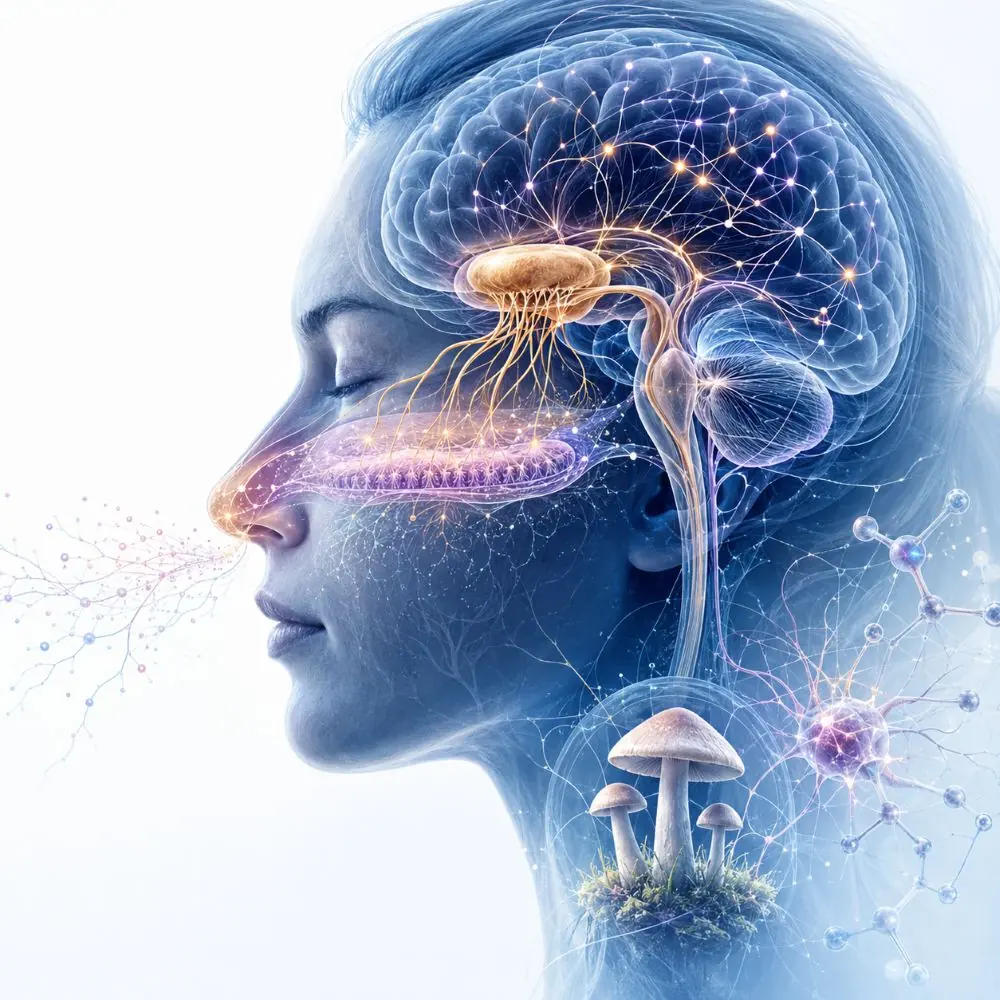
Within this context, psilocybin, a naturally occurring serotonergic psychedelic compound found in certain species of mushrooms, has garnered attention. This report aims to critically evaluate the hypothesis that psilocybin may facilitate recovery from post-COVID sensory loss, particularly through mechanisms colloquially described as "restarting brain connections." This notion likely refers to scientifically recognized concepts such as neuroplasticity, neural network reorganization, and potentially peripheral neural regeneration, all of which have theoretical links to psilocybin's known neurobiological effects. The exploration of psilocybin is fueled by a combination of its profound effects on brain function and emerging anecdotal reports, including a few published case studies, suggesting potential benefits of psychedelic compounds for anosmia.10 The significant prevalence and persistence of post-COVID olfactory dysfunction, combined with the inadequacies of current treatments, create a compelling rationale for investigating such innovative approaches. The very premise of considering psilocybin reflects this urgent search for new solutions to a widespread and debilitating condition.
2. Mechanisms of Olfactory Loss Following SARS-CoV-2 Infection
The pathophysiology of olfactory and gustatory dysfunction following SARS-CoV-2 infection is complex, involving a combination of peripheral and potential central nervous system (CNS) mechanisms. Understanding these mechanisms is crucial for evaluating potential therapeutic interventions.
2.1. Peripheral Olfactory System Damage
Initial concerns regarding direct viral infection of olfactory sensory neurons (OSNs) have largely been supplanted by evidence suggesting that SARS-CoV-2 rarely infects these neurons or extensively invades the brain.18 Instead, damage to the peripheral olfactory system appears to be primarily indirect, mediated through effects on supporting cells and subsequent inflammatory responses.
SARS-CoV-2 primarily infects non-neuronal cells within the olfactory epithelium (OE), particularly sustentacular (support) cells and vascular pericytes, which abundantly express the Angiotensin-Converting Enzyme 2 (ACE2) receptor, the primary entry point for the virus.1 Sustentacular cells play a critical role in maintaining the structural and functional integrity of the OE, providing metabolic and physical support to OSNs. Damage to these cells can, therefore, indirectly compromise OSN function and survival.1 Similarly, taste cells in the gustatory system also exhibit ACE2 positivity, which may explain the concurrent ageusia experienced by many patients.1
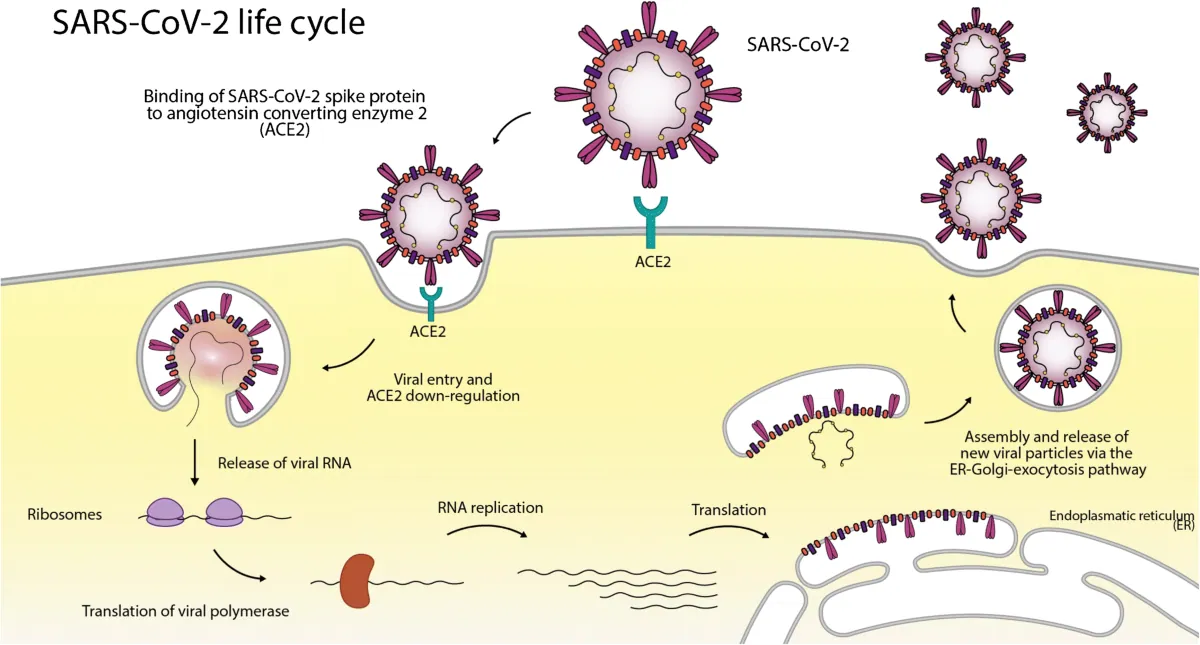
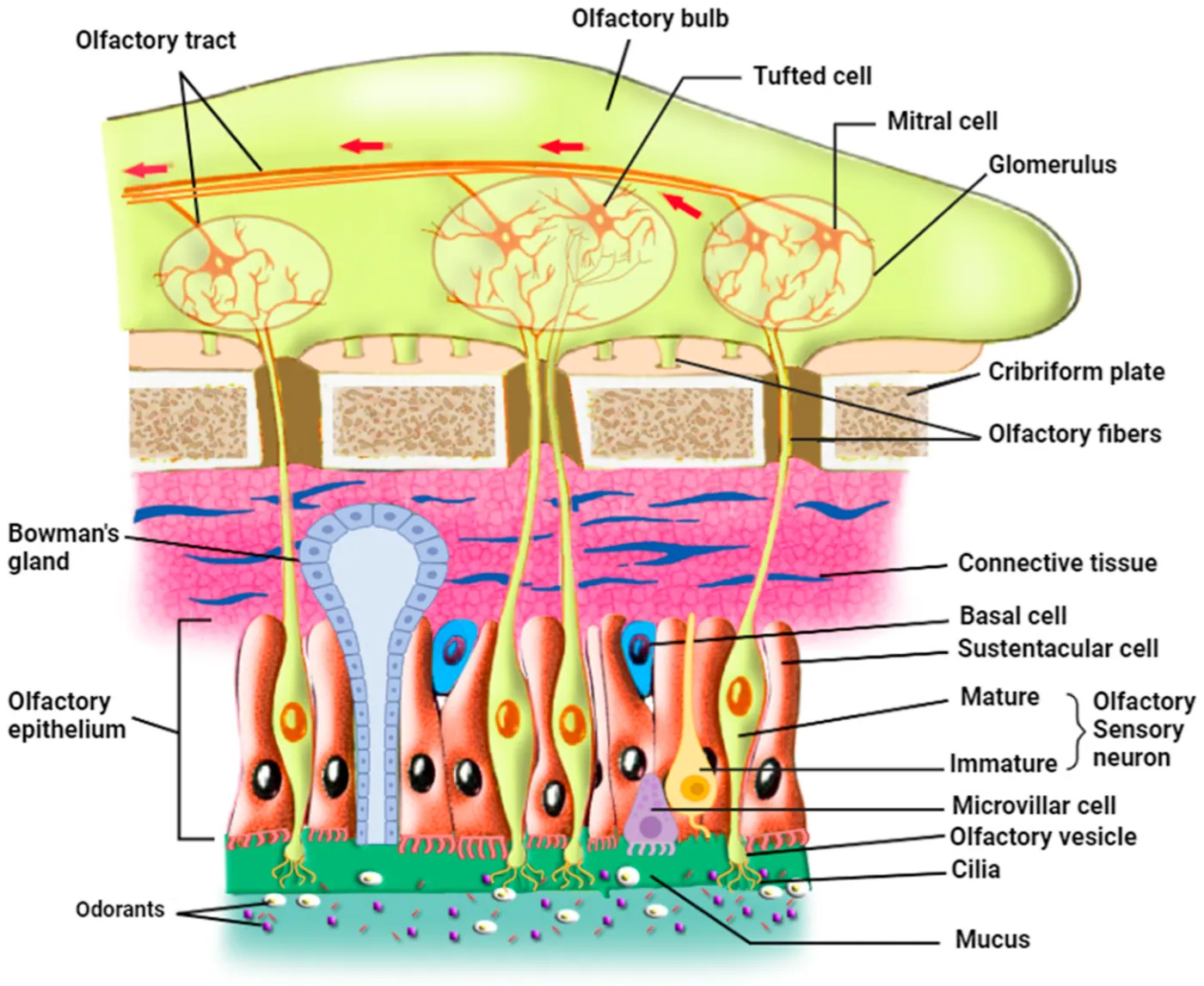
The consequences of this indirect damage can lead to OSN dysfunction or loss. Post-viral anosmia, in general, can involve the destruction of OSNs.1 In the context of COVID-19, even without direct neuronal infection, the inflammatory milieu and loss of support cell function can result in significant OSN pathology. This includes the loss of olfactory cilia, which are essential for odorant detection, and the downregulation of odorant receptor gene expression within OSNs.18 Severe infection can cause widespread damage, leading to detachment and lesions within the OE. This, in turn, activates horizontal basal cells (HBCs) – the resident olfactory stem cells – to initiate regenerative processes.18 However, if this regeneration is aberrant or incomplete, it can contribute to persistent olfactory disorders, including parosmia (distorted smell perception).
2.2. Central Nervous System Involvement and Neuroinflammation
While widespread neuroinvasion appears uncommon, some evidence suggests potential CNS involvement. Viral propagation to the olfactory bulb (OB) – the first central relay for olfactory information – and subsequently to higher olfactory centers like the pyriform cortex has been proposed based on animal studies and the rapid dissemination observed with other coronaviruses.1 Medical imaging studies in patients with post-infectious anosmia can reveal a reduction in OB and olfactory tract volume, correlating with the degree of olfactory dysfunction.1
A more prominent and widely accepted mechanism for neurological symptoms in COVID-19, including olfactory dysfunction, is neuroinflammation.8 This inflammatory response can be triggered by the systemic immune reaction to SARS-CoV-2, even in cases of mild respiratory disease, and can affect CNS structures including those involved in olfaction. Several factors contribute to this neuroinflammatory state:
-
Cytokine Imbalance: Severe COVID-19 is often characterized by a "cytokine storm," but even milder infections can lead to an imbalance with elevated levels of pro-inflammatory cytokines such as Interleukin-6 (IL-6), Interleukin-1β (IL-1β), and Tumor Necrosis Factor-alpha (TNF-α). These cytokines, found in serum and potentially in cerebrospinal fluid (CSF) even in the absence of detectable virus in the CSF, can disrupt the integrity of the blood-brain barrier (BBB), increase its permeability, and drive neuroinflammatory processes within the CNS.8
-
Microglial Activation: Microglia, the resident immune cells of the CNS, become activated in response to systemic inflammation or local CNS insults. In the context of COVID-19, reactive microglia in the brain, including olfactory processing areas, contribute to the neuroinflammatory milieu. Prolonged or excessive microglial activation can dysregulate neural homeostasis, impair neurogenesis (including in the OB), damage myelin, and release neurotoxic substances, further contributing to neuronal dysfunction.8
-
Immune Cell Trafficking: The systemic inflammatory response can also lead to the infiltration of peripheral immune cells, such as pro-inflammatory monocytes, into the CNS. These cells can exacerbate neuroinflammation and contribute to pathology.20
2.3. Persistence of Olfactory Dysfunction
The persistence of anosmia or hyposmia, often termed post-viral anosmia syndrome, is frequently associated with more significant or widespread neural loss within the OE or OB.1 Alternatively, chronic, unresolved inflammation and aberrant or stalled regenerative processes within the OE are also key contributors to long-term olfactory deficits.5 Changes in the nasal microbiota have also been implicated in the persistence of post-COVID symptoms, potentially influencing local immune responses and OE health.5
The multifaceted nature of COVID-19-induced olfactory damage, encompassing peripheral epithelial disruption, OSN dysfunction and loss, and central neuroinflammation affecting the OB and higher cortical areas, implies that a truly effective therapeutic intervention may need to address multiple pathological targets. If a compound like psilocybin possesses diverse biological actions, such as promoting neuroplasticity, exerting anti-inflammatory effects, and modulating serotonergic pathways, it becomes a theoretically compelling candidate, provided it can engage these varied mechanisms relevant to olfactory recovery. Furthermore, the growing consensus that SARS-CoV-2 rarely infects OSNs directly 18 shifts the therapeutic focus. Instead of primarily antiviral strategies for the olfactory neurons themselves, interventions aimed at mitigating the indirect damage caused by inflammation and support cell loss, and at promoting the intrinsic regenerative capacity of the OE and the plasticity of central olfactory pathways, become paramount.
3. Psilocybin: Neurobiological Profile and Mechanisms of Action
Psilocybin is a classic serotonergic psychedelic whose neurobiological effects are increasingly being characterized. Its potential to induce profound changes in perception, cognition, and mood is primarily attributed to its interaction with the brain's serotonin system, leading to a cascade of downstream effects on neural plasticity and network dynamics.
3.1. Primary Pharmacological Action: Serotonin 5-HT2A Receptor Agonism
Psilocybin is a prodrug that is rapidly dephosphorylated in the body to its active metabolite, psilocin, upon ingestion.22 Psilocin acts as a potent agonist at serotonin 5-HT₂A receptors (5-HT₂A Rs).24 These receptors are G protein-coupled receptors (GPCRs) that are widely distributed throughout the central nervous system, with particularly high expression in cortical regions—especially in layer V pyramidal neurons—and in areas involved in sensory perception and emotional regulation.⁽²⁴⁾
Agonism at 5-HT₂A receptors is considered the principal mechanism underlying psilocybin’s psychedelic effects as well as its ability to promote neuroplastic changes. While 5-HT₂A receptor activation is central to its pharmacological profile, psilocin also binds to other serotonin receptor subtypes, such as 5-HT₁A and 5-HT₂C. Moreover, some preclinical evidence suggests that psilocin may interact directly with the tropomyosin receptor kinase B (TrkB)—the receptor for brain-derived neurotrophic factor (BDNF).15 However, the therapeutic relevance of these non-5-HT₂A receptor interactions remains an active area of investigation.
for its main therapeutic and neuroplastic effects is still under investigation.
3.2. Induction of Neuroplasticity ("Psychoplastogenic" Effects)
One of the most significant findings in contemporary psychedelic research is the ability of compounds like psilocybin to promote neuroplasticity, earning them the term "psychoplastogens." These effects are observed at multiple levels:
-
Gene Expression: Psilocybin administration acutely and dose-dependently upregulates the expression of a suite of genes associated with neuroplasticity, particularly in the prefrontal cortex and hippocampus. Key genes affected include those encoding for BDNF, a critical neurotrophin for neuronal survival, growth, differentiation, and synaptic plasticity.24 Other upregulated genes include immediate early genes like c-Fos and EGR1 (Early Growth Response 1), which are markers of neuronal activity and involved in long-term plastic changes, as well as genes for synaptic proteins like SV2A (synaptic vesicle glycoprotein 2A) and PSD95 (postsynaptic density protein 95), and cell adhesion molecules like NPTN (Neuroplastin) and NEGR1 (Neuronal Growth Regulator 1).10
-
Structural Plasticity: Psilocybin promotes structural changes in neurons, notably synaptogenesis (the formation of new synapses) and dendritogenesis (the growth and increased complexity of dendritic arbors and spines) in cortical neurons.10 Studies in animal models have shown that these structural changes, such as increased dendritic spine density and size, can occur rapidly following a single dose of psilocybin and can persist for at least a month.31 Psilocybin also increases the expression of molecular biomarkers of synaptic plasticity, such as SV2A and synaptophysin, in brain regions like the prefrontal cortex, hippocampus, and amygdala.31
-
Neurogenesis: The impact of psilocybin on adult neurogenesis – the birth of new neurons from neural stem/progenitor cells – is less definitively established and appears more complex. Some preclinical studies report no significant influence of psilocybin on the proliferation of progenitor cells in the adult rat hippocampus.31 However, other research indicates that repeated administration of psychedelics might stimulate neurogenesis and increase BDNF mRNA levels for an extended period.10 There are also suggestions of potential mitogenic effects on hippocampal progenitors.24 It has been proposed that the primary neuroplastic impact of psychedelics like psilocybin might be more focused on cortical plasticity (synaptogenesis and dendritic remodeling) rather than robustly stimulating hippocampal neurogenesis, which is more classically associated with chronic SSRI treatment via 5−HT1A-mediated effects.27
3.3. Modulation of Brain Network Dynamics
Psilocybin profoundly alters functional brain network dynamics, leading to a temporary but significant shift in how different brain regions communicate:
-
Default Mode Network (DMN) Disruption: A consistent finding in human neuroimaging studies is that psilocybin acutely desynchronizes activity within the DMN and reduces the functional coupling between the DMN and other brain networks, particularly its connections with the anterior hippocampus.26 The DMN is a large-scale brain network most active during introspective, self-referential thought and is often found to be overactive or rigidly connected in conditions like depression.
-
Increased Network Flexibility and "Reset": This disruption of established network patterns, especially the DMN, is thought to contribute to a more flexible, less constrained, or "entropic" brain state.26 This altered state is sometimes conceptualized as a "neural reset," allowing for the dissolution of rigid, maladaptive patterns of thought and behavior.25 Psilocybin induces widespread changes in brain activity and connectivity, affecting various cortical and subcortical structures beyond the DMN.26
-
Persistent Connectivity Changes: Importantly, some of these psilocybin-induced alterations in functional connectivity, such as the persistent suppression of hippocampal-DMN connectivity, have been observed to last for several weeks after a single administration.26 These enduring network changes are hypothesized to represent a neurobiological correlate for the sustained therapeutic effects reported in psychiatric disorders.
3.4. Potential Anti-inflammatory and Immunomodulatory Effects
Beyond its direct neural effects, emerging preclinical evidence suggests that psilocybin and other serotonergic psychedelics may possess anti-inflammatory and immunomodulatory properties.13 Psilocin, the active metabolite, has been shown to modulate immune responses. Proposed mechanisms include the regulation of pro-inflammatory cytokine production (e.g., reducing TNF-α, IL-1β, IL-6), modulation of microglial activity (the brain's resident immune cells), and influencing intracellular signaling pathways involved in inflammation, such as the Nuclear Factor kappa-light-chain-enhancer of activated B cells (NF-κB) and mammalian Target of Rapamycin (mTOR) pathways.22 The 5−HT2A receptors are expressed on various immune cells and also on neurons that can influence immune cell function, suggesting that psilocybin's primary receptor target is also involved in mediating these anti-inflammatory effects.28
The multi-level neuroplastic actions of psilocybin—spanning molecular (gene expression), structural (dendritic and synaptic growth), and functional network levels—provide a strong biological basis for its potential to induce significant and lasting changes in brain structure and function. This aligns well with the concept of "restarting brain connections," as it involves both the facilitation of new neural pathways and the disruption of entrenched, potentially maladaptive, existing ones. Furthermore, the dual capacity of psilocybin to promote neuroplasticity and potentially reduce neuroinflammation is particularly pertinent to conditions like post-COVID olfactory loss, where both neural repair mechanisms and a reduction in ongoing inflammatory damage are likely crucial for functional recovery. The primary mediation of these effects through 5−HT2A receptor agonism offers a specific pharmacological target for understanding these actions, including within the olfactory system itself, where these receptors are known to be expressed.
4. Evaluating the "Restarting Brain Connections" Hypothesis for Olfactory Recovery
The proposition that psilocybin could "restart brain connections" to facilitate recovery from post-COVID olfactory dysfunction, while colloquially phrased, finds resonance with several established neurobiological mechanisms of the drug. This section critically evaluates how psilocybin's known actions might translate into therapeutic benefits for lost or impaired olfaction.
4.1. Interpreting "Restarting Connections" in a Neurobiological Context
The notion of "restarting connections" can be deconstructed into several scientifically plausible processes:
-
Enhanced Neuroplasticity: At its core, the hypothesis aligns with psilocybin's well-documented ability to act as a psychoplastogen. The drug promotes synaptogenesis, dendritic growth, and the expression of key plasticity-related proteins like BDNF.10 In the context of olfactory recovery, this could translate to the formation of new functional connections within damaged olfactory pathways, the repair or strengthening of weakened synapses, or even the facilitation of OSN regeneration and their proper re-innervation of the olfactory bulb. These processes represent a literal "re-wiring" or "re-connection" at a cellular and synaptic level.
-
Network Reorganization: Psilocybin's capacity to acutely desynchronize the DMN and alter global brain connectivity patterns 26 can be interpreted as a "loosening" of established, potentially rigid, neural patterns. If persistent olfactory loss involves maladaptive central processing of absent, distorted, or weakened peripheral olfactory signals, this induced network flexibility might create a window for the brain to reorganize its olfactory processing towards a more functional state. The observation that some connectivity changes can persist for weeks 26 suggests that these new, potentially more adaptive, network configurations may have an opportunity to stabilize.
-
"Neural Reset" or "Reboot": The concept of a "neural reset" or "reboot" 25 implies a temporary disruption of ongoing, potentially dysfunctional, brain activity, allowing the system to return to a more basal, adaptable, or "healthier" state from which more functional operations can emerge. For olfaction, this could mean overcoming a state of chronic sensory deprivation or maladaptive processing that has become entrenched following the initial viral insult and subsequent inflammation.
4.2. Reopening Critical Periods for Sensory Learning and Recalibration
While direct evidence for psilocybin reopening critical periods specifically for olfaction is not present in the provided materials, the broader concept of "induced juvenile-like plasticity" or "iPlasticity," initially described for antidepressants 29, offers a relevant theoretical framework. Psychedelics are generally hypothesized to create a "window of opportunity" during which the brain is more amenable to therapeutic change and learning.24
If psilocybin induces a state of heightened plasticity within olfactory cortices and related pathways, it could facilitate the relearning of smell associations or the recalibration of the olfactory system to new or recovering peripheral inputs from the OE. This effect might be particularly potent if psilocybin administration is combined with olfactory training. Olfactory training, a recognized therapy for anosmia, involves repeated, mindful exposure to specific odorants to stimulate the olfactory system.7 Its efficacy is also thought to rely on neuroplastic mechanisms.7 Psilocybin could potentially render the brain more receptive to the sensory inputs provided by such training, thereby enhancing the relearning process and promoting a more robust recovery.
4.3. Modulation of Sensory Gating and Perception
Psilocybin is known for its profound effects on sensory perception across various modalities.24 Research, primarily in the auditory domain, indicates that psilocybin can prevent the habituation of neural responses to repeated stimuli, thereby preserving sensitivity and suggesting a disruption of normal sensory gating mechanisms.46 Sensory gating is the neurological process of filtering out redundant or irrelevant stimuli from the constant stream of sensory information.
If a similar effect occurs in the olfactory system, psilocybin might enhance the brain's awareness or processing of even weak or subtle olfactory signals emanating from a damaged or partially recovered OE. Alternatively, it could alter how the brain filters and interprets distorted signals, potentially reducing parosmic experiences or allowing faint, true odor signals to be perceived more clearly. It is noteworthy that ayahuasca, which contains the 5-HT2A agonist DMT, has been reported to have decremental effects on P50 auditory sensory gating, a measure of early-stage sensory filtering.47 These findings suggest a complex interaction with sensory processing rather than a simple enhancement.
4.4. Cross-Modal Plasticity and Sensory Integration
Although less directly explored in the context of olfactory recovery in the provided sources, psilocybin and other psychedelics are known to occasionally induce synesthesia, a condition where stimulation of one sensory pathway leads to automatic, involuntary experiences in a second sensory pathway (e.g., seeing colors when hearing sounds).45 This points to an altered state of cross-modal sensory processing and integration under the influence of these compounds. While highly speculative for anosmia recovery, if primary olfactory pathways are severely damaged, there might be a theoretical potential for enhanced integration of related sensory inputs (e.g., trigeminal sensations, taste) to contribute to a modified form of "smell" perception, or for cross-modal plasticity to support the reorganization of olfactory circuits. However, research specifically linking this to olfactory recovery is currently lacking.48
The "restarting connections" hypothesis for olfactory recovery via psilocybin appears scientifically plausible, primarily through the combined mechanisms of enhanced structural and functional neuroplasticity (allowing for the formation of new connections or repair of existing ones) and brain network reorganization (which could break maladaptive processing patterns and allow new, more functional configurations to emerge). The persistence of some of psilocybin's neuroplastic and network effects offers a potential therapeutic window during which these changes could consolidate. Moreover, the possibility that psilocybin could modulate sensory gating or "reopen critical periods" for learning suggests that its therapeutic benefits might be significantly amplified if combined with targeted sensory rehabilitation strategies, such as olfactory training. The drug could, in essence, make the brain more amenable to relearning the sense of smell.
However, it is also important to consider that "restarting connections" is not an inherently guaranteed positive outcome. Uncontrolled or misdirected neuroplasticity, especially during a period of potentially disorganized peripheral regeneration in the OE, could theoretically lead to negative sensory outcomes, such as the development or worsening of parosmia if connections are rewired aberrantly. Indeed, one online report mentioned an unfavorable shift from anosmia to parosmia following psychedelic use.13 This underscores the necessity for carefully controlled research to understand not only the potential benefits but also the potential risks associated with inducing such profound neuroplastic changes in the context of sensory recovery.
5. Evidence for Psilocybin in Treating Post-COVID Olfactory Dysfunction
The investigation into psilocybin as a treatment for post-COVID olfactory dysfunction is in its nascent stages. Current evidence is primarily derived from case reports, analyses of anecdotal online accounts, and the theoretical plausibility inferred from preclinical studies on psilocybin's broader neurobiological effects.
5.1. Case Reports and Series
The most direct, albeit limited, human data come from published case reports and series. A key publication in this area is by Kovacevich et al. (2023) in the Journal of Psychoactive Drugs, which is frequently referenced in the literature discussing psychedelics and olfactory improvement.13 This series described three individuals:
-
Case 1: A male who developed microsmia (reduced sense of smell) following a non-COVID respiratory infection reported an improvement in his sense of smell after consuming 6 grams of psilocybin-containing mushrooms.15
-
Case 2: A female with congenital anosmia (anosmia since childhood) reported olfactory improvement after ingesting 100 µg of lysergic acid diethylamide (LSD).15
-
Case 3 (COVID-19 related): A female experiencing COVID-19-related anosmia reported olfactory improvement after microdosing with 0.1 grams of psilocybin mushrooms three times.15 Specific details regarding the duration of her anosmia prior to using psilocybin, the precise nature and extent of the olfactory improvement, the persistence of these improvements, and whether objective olfactory testing was performed are largely unspecified in the available summaries of this case.15
Another report, often cited in conjunction with or as part of the Kovacevich et al. (2023) work, describes a 22-year-old woman with a 6-month history of post-COVID-19 anosmia whose condition partially resolved after microdosing psilocybin-containing mushrooms, based on patient report.15 It remains somewhat unclear from the snippets if this is one of the three primary cases or an additional observation. One source mentions that in the Kovacevich et al. (2023) series, one individual's improvement was confirmed with objective olfactory testing, but it does not specify which of the three cases this refers to.13 The proposed mechanisms underlying these reported improvements generally include serotonergic effects, increased neuroplasticity, and potential anti-inflammatory actions.13
5.2. Analysis of Anecdotal Online Reports
Beyond formal case reports, several studies have analyzed anecdotal accounts shared by individuals on public online platforms such as Reddit and other forums.10 These analyses consistently indicate that numerous individuals self-report improvements in olfactory dysfunction, including cases attributed to COVID-19, following the naturalistic use of various serotonergic psychedelics like psilocybin, LSD, and N,N-dimethyltryptamine (DMT).
A thematic analysis of 125 online posts by Kovacevich et al. (published in 2025, likely a follow-up to their 2023 case series) found that 108 posts (86.4%) described improvements in the sense of smell following psychedelic use.13 COVID-19 infection was the most commonly reported etiology for anosmia in these posts (60.8%), and psilocybin was the most frequently mentioned psychedelic (68.8%). The nature and duration of these reported improvements varied considerably:
-
Some individuals (50.1%) first noticed smell enhancement during the acute psychedelic experience.
-
A significant portion (38.8%) reported olfactory improvements persisting for at least one day post-psychedelic use.
-
Improvements ranged from transient (only during the experience) to lasting for days or even over a month, while some users reported that the beneficial effects diminished over time.13
-
Taste was the most commonly reported secondary sense to be heightened alongside smell.13
-
However, not all experiences were positive; for instance, one individual described an unfavorable shift from anosmia to parosmia (a distorted sense of smell) after using a psychedelic.13
These online reports, while inherently subjective and lacking clinical verification or controlled conditions, are valuable for generating hypotheses and highlighting patient-observed phenomena that warrant further scientific investigation. They indicate a perceived benefit by a substantial number of users, driving interest in more formal research.
5.3. Preclinical Data Supporting Plausibility
Currently, there is a lack of preclinical studies specifically investigating the effects of psilocybin on olfactory recovery in animal models of COVID-19-induced anosmia. However, the broader preclinical research establishing psilocybin's robust neuroplastic, neurotrophic (e.g., BDNF-enhancing), and serotonergic modulatory effects (as detailed in Section 3 and Section 6) provides a strong biological basis for its potential plausibility in facilitating neural repair and functional reorganization within the olfactory system.
The following table summarizes key findings from human case reports and analyses of online accounts:
| Study/Source | Etiology of OD | Psychedelic(s) Used | Dosage Range (if specified) | Number of Subjects/Posts | Key Reported Outcomes | Objective Testing Mentioned | Key Limitations |
|---|---|---|---|---|---|---|---|
| Kovacevich et al. 2023, Case 1 15 | Post-viral (non-COVID) microsmia | Psilocybin mushrooms | 6 g | 1 | Improvement in smell | Not specified for this case | Single case, subjective report, no control, naturalistic use |
| Kovacevich et al. 2023, Case 2 15 | Congenital anosmia | LSD | 100 µg | 1 | Olfactory improvement | Not specified for this case | Single case, subjective report, no control, naturalistic use |
| Kovacevich et al. 2023, Case 3 15 | COVID-19 related anosmia | Psilocybin mushrooms | 0.1 g (microdose) x 3 | 1 | Olfactory improvement | Not specified for this case | Single case, subjective report, limited detail, no control, naturalistic use |
| Kovacevich et al. 15 | Post-COVID-19 anosmia (6 months duration) | Psilocybin mushrooms | Microdosing (not specified further) | 1 | Partial resolution (patient report) | Not specified | Single case, subjective report, no control, naturalistic use |
| Kovacevich et al. 2025 (Online Analysis) 13 | COVID-19 (60.8%), Congenital (10.4%), Post-traumatic (7.2%), Other | Psilocybin (68.8%), LSD (30.4%), DMT, etc. | Varied (micro to macro) | 125 posts (108 reported improvement) | 86.4% reported smell improvement; 38.8% persisted >1 day; variable duration; taste often improved. Some negative effects (e.g., parosmia). | One case in Kovacevich et al. 2023 series had objective testing (unspecified which) | Subjective self-reports, no controls, variable substances/doses/etiologies, recall bias, lack of standardized outcome measures, selection bias |
The current human evidence supporting psilocybin for post-COVID olfactory recovery is, therefore, overwhelmingly anecdotal and preliminary. It primarily consists of a small number of published case reports and larger analyses of online self-reports. While these sources are valuable for hypothesis generation and for gauging patient interest and perceived efficacy, they critically lack the methodological rigor of controlled clinical trials. For most reported cases, objective olfactory measurements using standardized tests are absent, making it difficult to differentiate true sensory recovery from subjective perceptions of improvement, which could be influenced by factors such as enhanced mood or expectancy effects.
The heterogeneity observed in the types of psychedelic substances used (psilocybin, LSD, DMT), the wide range of dosages (from microdoses to larger, psychoactive doses), and the variability in the reported duration and nature of effects in these online accounts 13 further complicate the interpretation of these findings. While this variability makes it challenging to pinpoint optimal parameters for potential therapeutic use and to design initial clinical trials, it also suggests that different patient subgroups or varying underlying mechanisms of olfactory damage might respond differently, or that multiple psychedelic agents could hold therapeutic potential.
The co-occurrence of reported taste improvement alongside smell improvement in some online accounts 13 is particularly noteworthy. Given that COVID-19 frequently affects both of these closely linked chemosensory systems, and that they share interconnected neural processing pathways, this observation suggests that any potential beneficial effects of psilocybin might extend to broader chemosensory recovery. This could imply an action on shared central mechanisms of neuroplasticity or modulation of common chemosensory processing areas in the brain, rather than an effect solely restricted to peripheral olfactory-specific targets.
6. The Serotonergic System and Olfactory Function: A Potential Nexus for Psilocybin's Effects
The olfactory system is intrinsically linked with the brain's serotonergic network, providing a direct neurochemical pathway through which psilocybin, a potent serotonergic agent, could exert effects on smell perception and recovery.
6.1. Serotonin (5-HT) in the Olfactory System
Serotonergic neurons originating in the raphe nuclei of the brainstem project extensively throughout the brain, including to key structures of the olfactory system such as the olfactory epithelium (OE) and, more densely, the olfactory bulb (OB).52 Within these structures, serotonin (5-hydroxytryptamine, 5-HT) functions as a crucial neuromodulator, influencing olfactory processing, olfactory learning and memory, and the development and plasticity of olfactory circuits.28
6.2. 5-HT Receptors in Olfactory Pathways
A variety of serotonin receptor subtypes are expressed within olfactory pathways, mediating the diverse effects of 5-HT. These include 5−HT1A, 5−HT2A, and 5−HT2C receptors, among others, which are found in the OB and other olfactory-related brain regions.28 Of particular relevance to psilocybin, 5−HT2A receptors are expressed on mitral cells, the principal output neurons of the OB that convey olfactory information to higher brain centers, and also on external tufted cells, which are excitatory interneurons within the glomerular layer of the OB.28 Pharmacological studies have shown that agonism of these 5−HT2A receptors can directly excite or depolarize these critical olfactory neurons.54
6.3. Serotonin's Role in Olfactory Neurogenesis and Plasticity
The olfactory system possesses a remarkable capacity for plasticity and regeneration. The OE undergoes continuous renewal, with olfactory sensory neurons (OSNs) being regenerated from a population of resident basal stem cells (including horizontal basal cells, HBCs) throughout life.19 The OB is also one of the few sites in the adult mammalian brain where neurogenesis persists, with new interneurons (primarily granule cells and periglomerular cells) being constantly generated in the subventricular zone (SVZ) and migrating to the OB via the rostral migratory stream.24
Serotonin plays a significant modulatory role in these neurogenic and plastic processes within the olfactory system:
-
SVZ/OB Neurogenesis: Serotonin promotes the proliferation of neural progenitor cells in the SVZ, the source of new interneurons for the OB.52 It also influences the survival, migration, and maturation of these adult-born neurons once they reach the OB. The effects can be complex and receptor-subtype specific; for instance, while 5−HT1A and 5−HT2C receptor agonists have been shown to increase SVZ proliferation, 5−HT1A agonism reportedly decreased the survival of newly formed granule cells in the OB.52
-
OE Regeneration: While the role of serotonin in OB neurogenesis is better characterized, its influence on the regeneration of OSNs within the OE itself is an area requiring more research. Given the serotonergic innervation and receptor expression, a modulatory role is plausible.
-
Plasticity and Critical Periods: Treatments that increase serotonin levels, such as selective serotonin reuptake inhibitors (SSRIs), have been shown to induce critical period-like structural plasticity in sensory systems 55, suggesting that serotonin can re-open windows for experience-dependent circuit modification.
-
Modulation of OSN Activity: Serotonin, acting via 5−HT2C receptors, has been found to modulate odor-evoked responses in the axons of OSNs as they project to the glomeruli of the OB.52
6.4. Psilocybin's Potential Direct Modulation of Olfactory Pathways
Given that psilocin is a potent 5−HT2A receptor agonist, it has the potential to directly influence the activity of neurons within the OB, such as mitral cells and external tufted cells, where these receptors are expressed.54 This could lead to alterations in olfactory signal processing, transmission, and perception. Furthermore, through its action on local 5-HT receptors (including 5−HT2A receptors, though their specific role in OE regeneration is less detailed in the provided sources 52), psilocybin could potentially modulate the regenerative processes of OSNs in the OE or the integration of new neurons in the OB. This suggests that psilocybin's therapeutic effects in anosmia might not be solely confined to its well-documented general effects on brain-wide neuroplasticity and network dynamics (like DMN modulation) but could also involve more specific, targeted actions within the olfactory system itself.
The established presence and functional significance of the serotonergic system, and particularly 5−HT2A receptors, within core olfactory structures like the OE and OB provide a compelling neuroanatomical and neurochemical foundation for psilocybin's potential to directly modulate olfactory processing and contribute to repair mechanisms. This offers a more targeted mechanistic hypothesis beyond simply inducing a global state of heightened brain plasticity. However, the complexity of serotonergic modulation, with different receptor subtypes sometimes exerting distinct or even opposing effects on aspects of olfactory neurogenesis (e.g., 5−HT1A versus 5−HT2C effects on cell proliferation or survival in the OB neurogenic pathway 52), indicates that psilocybin's net impact will be nuanced. As primarily a 5−HT2A agonist but with potential for off-target interactions, its precise effects on the various cell types and processes within the olfactory system require careful and specific investigation. It is not simply a matter of "more serotonin activity equals better olfaction."
A critical knowledge gap remains concerning the direct effects of selective 5−HT2A agonism, such as that produced by psilocybin/psilocin, on the regeneration of the olfactory epithelium—specifically the activation of olfactory stem cells (HBCs), the proliferation and differentiation of OSNs, their axonal guidance to the OB, and successful re-innervation—following injury, especially viral-induced damage like that seen in COVID-19. Most existing data on serotonin and olfactory neurogenesis focus on the interneurons of the OB originating from the SVZ, rather than the primary sensory neurons of the OE.52 While human OE-derived cell cultures have been shown to express certain serotonin receptors like 5−HT2C 57, the specific role of 5−HT2A receptors in a regenerative context within the OE is not well elucidated in the provided research. Addressing this gap is crucial for understanding whether psilocybin could directly stimulate the repair mechanisms within the peripherally damaged nasal epithelium.
7. Critical Appraisal: Plausibility, Current Evidence Gaps, and Limitations
While the hypothesis that psilocybin could aid in the recovery of post-COVID olfactory dysfunction by "restarting brain connections" is intriguing and possesses a degree of biological plausibility, a critical appraisal reveals significant evidence gaps and limitations that must be addressed through rigorous scientific inquiry.
7.1. Strengths of the Hypothesis
The potential therapeutic role of psilocybin in this context is supported by several converging lines of reasoning:
-
Biological Plausibility: Psilocybin's well-documented neuroplastic effects (promoting synaptogenesis and dendritic growth), its ability to modulate brain network dynamics (inducing flexibility and potentially "resetting" maladaptive patterns), and its emerging potential anti-inflammatory properties align with the multifaceted pathology of post-COVID olfactory loss, which involves both neural damage and inflammation (see Section 3).22
-
Olfactory System Characteristics: The olfactory system itself has an intrinsic capacity for regeneration, particularly within the OE, and its function and plasticity are known to be modulated by the serotonergic system, psilocybin's primary target (see Section 6).19
-
Preliminary Human Observations: Emerging, albeit anecdotal and limited, human case reports and analyses of online self-reports suggest that some individuals with olfactory dysfunction, including post-COVID cases, perceive an improvement in their sense of smell following psychedelic use (see Section 5).13
7.2. Weaknesses and Evidence Gaps
Despite these points of plausibility, the hypothesis currently rests on a fragile evidence base:
-
Lack of Rigorous Clinical Trials: The most significant weakness is the complete absence of placebo-controlled, double-blind clinical trials specifically designed to evaluate psilocybin's efficacy for post-COVID olfactory dysfunction. The current human data are derived from a handful of case reports or uncontrolled, naturalistic observations, which are insufficient to establish causality or efficacy.10
-
Subjectivity of Reported Outcomes: Many of the existing reports rely heavily on subjective patient accounts of improvement. Standardized, objective olfactory testing (e.g., using tools like the University of Pennsylvania Smell Identification Test (UPSIT) or Sniffin' Sticks) is crucial to quantify changes in olfactory function and is largely absent in the detailed descriptions of the COVID-related cases.15 Without such measures, it is difficult to distinguish true sensory recovery from perceived improvements due to other factors, such as enhanced mood or placebo effects.
-
Mechanism Specificity Remains Unclear: Even if improvements are objectively verified, it is currently unclear whether they would be attributable to direct effects of psilocybin on the olfactory system (e.g., promoting OSN regeneration or modulating OB plasticity), to more general central neuroplasticity affecting overall sensory processing, or to indirect benefits stemming from psilocybin's known effects on mood, anxiety, and general well-being.1 Olfactory loss significantly impacts mood, and an improvement in mood could lead to increased attention to sensory stimuli or a more positive reporting bias.
-
Limited Preclinical Models: There is a lack of dedicated animal models of post-COVID or post-viral anosmia that have been treated with psilocybin to elucidate the underlying mechanisms of action and confirm effects on olfactory pathway regeneration or function.
7.3. Challenges Inherent in Psychedelic Research
Research involving psychedelic compounds like psilocybin faces unique methodological challenges:
-
Blinding and Placebo Effects: The profound and distinct subjective effects of psychedelics make it exceptionally difficult to maintain effective blinding in clinical trials for both participants and researchers. This complicates the design of robust placebo controls and makes it challenging to disentangle true pharmacological effects from expectancy and other non-specific effects.58
-
Variability in Individual Response: Responses to psychedelics are notoriously variable, influenced by factors such as an individual's genetic makeup, personality, psychological state ("set"), and the environment in which the drug is administered ("setting").36 This heterogeneity can make it difficult to achieve consistent outcomes and requires careful consideration in trial design and data analysis.
7.4. Safety Considerations, Risks, and Contraindications
The use of psilocybin, especially outside of controlled research settings, carries potential risks:
-
Psychological Risks: Psilocybin can induce intense psychological experiences, including anxiety, fear, paranoia (colloquially termed a "bad trip"), and, in rare instances, may precipitate or exacerbate psychosis in individuals with a predisposition.24 This necessitates careful psychological screening of participants and administration in a supportive, supervised environment.
-
Physiological Effects: Acute administration of psilocybin typically causes transient increases in heart rate and blood pressure.36 While generally well-tolerated in healthy individuals, this could pose risks for patients with pre-existing cardiovascular conditions. Other common side effects include nausea and headaches.60
-
Drug Interactions: There is a potential for adverse interactions with other medications, particularly other serotonergic drugs (e.g., SSRIs, MAOIs), which could lead to serotonin syndrome. Interactions with stimulant drugs are also possible.60
-
Abuse Potential and Legal Status: Psilocybin is classified as a Schedule I controlled substance in many countries, including the United States, indicating a high potential for abuse and no currently accepted medical use in treatment under federal law.60 This status imposes significant regulatory hurdles and logistical challenges for conducting research.
The most significant barrier to validating the therapeutic potential of psilocybin for post-COVID anosmia is the profound lack of robust, controlled clinical trial data that employ objective measures of olfactory function. The current enthusiasm is largely built upon a foundation of plausible neurobiological mechanisms and compelling anecdotal reports. While these are intriguing and essential for hypothesis generation, they do not constitute scientific proof of efficacy. A key challenge in interpreting any future positive findings will be to disentangle direct pro-olfactory effects from indirect benefits that might arise from psilocybin's well-established mood-enhancing and anxiolytic properties. An improvement in mood or a reduction in the distress associated with anosmia could lead individuals to pay more attention to subtle sensory stimuli or to have a more positive reporting bias, even if their objective olfactory threshold has not significantly changed.
Furthermore, the complex and variable pathophysiology of post-COVID anosmia—which can involve differing degrees of peripheral olfactory epithelial damage versus central neuroinflammatory or neuroplastic changes—means that psilocybin's potential efficacy might critically depend on the predominant underlying pathology in an individual patient and, importantly, the timing of the intervention relative to the initial infection and the stage of olfactory system recovery or degeneration. These are critical unknowns that necessitate thorough investigation.
8. Conclusion and Future Research Imperatives
The exploration of psilocybin as a potential therapeutic agent for post-COVID-19 olfactory dysfunction, based on the hypothesis that it can "restart brain connections," stands at an intriguing but very early stage. The convergence of psilocybin's known neurobiological actions with the pathogenic mechanisms of olfactory loss and the intrinsic plasticity of the olfactory system provides a compelling, albeit theoretical, rationale for its investigation.
8.1. Summary of Current Understanding
Persistent olfactory dysfunction following COVID-19 is a prevalent and impactful condition with limited effective treatments, creating a significant unmet medical need.1 Psilocybin, acting primarily as a serotonin 5−HT2A receptor agonist, robustly induces multifaceted neuroplasticity (structural and functional), modulates brain network activity, and may possess anti-inflammatory properties.22 The hypothesis that psilocybin could facilitate olfactory recovery by promoting the repair or reorganization of neural pathways ("restarting connections") aligns with these established mechanisms and the known serotonergic modulation of the olfactory system itself.52 However, the direct evidence supporting this application is currently confined to anecdotal reports and a small number of case studies, which, while suggestive, lack the rigor of controlled clinical trials and objective olfactory measurements.13
8.2. Key Unanswered Questions
The path from intriguing hypothesis to validated therapy is paved with critical unanswered questions:
-
Efficacy: Does psilocybin, and if so, at what dosage and administration regimen, lead to objectively measurable improvements in olfactory function (e.g., detection thresholds, identification ability) in patients with persistent post-COVID anosmia/hyposmia when compared to placebo or active control conditions?
-
Mechanisms of Action: If an effect is observed, what are the precise cellular and molecular mechanisms responsible? Does it involve direct stimulation of OSN regeneration in the olfactory epithelium, modulation of neuroplasticity in the olfactory bulb and olfactory cortices, reduction of neuroinflammation within these olfactory pathways, a global reorganization of central sensory networks, or a combination thereof?
-
Synergy with Existing Therapies: Could psilocybin enhance the efficacy of established treatments for olfactory dysfunction, such as olfactory training, by creating a neurobiological state more conducive to sensory relearning?
-
Safety and Long-Term Effects: What is the long-term safety profile of psilocybin when used in this specific patient population, considering potential psychological and physiological effects? Are any improvements in olfaction sustained over time?
-
Patient Subgroup Variability: Are there specific subgroups of patients (e.g., defined by duration or severity of anosmia, specific underlying olfactory pathology, genetic factors) who are more or less likely to benefit from psilocybin treatment?
8.3. Proposed Future Research Directions
Addressing these questions requires a multi-pronged research strategy that integrates rigorous clinical trials with in-depth mechanistic studies:
-
Rigorous Clinical Trials:
-
The foremost priority is the initiation of well-designed, randomized, double-blind, placebo-controlled clinical trials to assess the efficacy of psilocybin in patients with persistent post-COVID olfactory dysfunction. These trials should explore various dosages, potentially including both microdosing and single high-dose regimens.
-
Primary outcome measures must include standardized, objective assessments of olfactory function (e.g., UPSIT, Sniffin' Sticks, electro-olfactography, olfactory fMRI) in addition to subjective patient-reported outcomes, quality of life questionnaires, and measures of mood and anxiety.1
-
Investigate the potential synergistic effects of combining psilocybin administration with structured olfactory training programs.7
-
-
Mechanistic Studies (Preclinical and Human):
-
Utilize relevant animal models of post-viral olfactory loss to dissect psilocybin's effects on olfactory epithelium regeneration (including OSN proliferation, differentiation, and maturation from olfactory stem cells like HBCs 18), the re-innervation of the olfactory bulb, and the modulation of local inflammatory responses (cytokine profiles, microglial activation) within olfactory tissues.8
-
In human participants, employ advanced neuroimaging techniques (e.g., fMRI with olfactory stimulation, PET targeting 5−HT2A receptors or neuroinflammation markers) to assess psilocybin-induced changes in olfactory bulb activity, olfactory cortex connectivity, and markers of neuroinflammation before and after treatment in anosmic patients.1
-
Explore specific molecular targets and signaling pathways within the olfactory system that are modulated by psilocybin, with a particular focus on 5−HT2A receptor-mediated effects on neuroplasticity (e.g., BDNF/TrkB, mTOR signaling 29) and inflammation (e.g., NF-κB pathway 42).22
-
-
Translational Research:
-
Identify potential biomarkers (e.g., genetic, neuroimaging, inflammatory) that could predict patient response to psilocybin treatment for olfactory loss, allowing for more personalized therapeutic approaches.
-
Develop and refine protocols for the safe and effective administration of psilocybin in this clinical context, considering the unique psychological and supportive care needs of patients experiencing sensory loss.
-
Address the inherent challenges in psychedelic research, such as effective blinding, appropriate placebo control, and managing expectancy effects, to ensure the generation of high-quality, interpretable data.9
-
The path forward necessitates a careful, stepwise approach. Clinical trials are indispensable for determining efficacy and safety in humans, but without a deeper understanding of the underlying mechanisms, optimizing treatment strategies or identifying likely responders will remain challenging. Preclinical studies are vital for dissecting the cellular and molecular effects of psilocybin on olfactory tissues—processes difficult to study directly in living humans. Human neuroimaging can then bridge these findings by examining functional and structural changes in relevant brain areas. A coordinated, iterative research effort, where clinical observations inform preclinical investigations and preclinical discoveries help refine clinical trial designs, will be essential.
If psilocybin or related compounds are ultimately proven effective and safe for treating post-COVID olfactory dysfunction, it could represent a significant advancement, potentially a paradigm shift, in the management of this and possibly other sensory disorders. Such a development would move beyond merely symptomatic relief or basic rehabilitation towards actively promoting neural repair and functional reorganization through targeted neuroplastic and immunomodulatory interventions. The broader implications for neurotherapeutics derived from psychedelic science are substantial, as hinted at by ongoing research into their potential for a range of neurological and psychiatric conditions.34
However, it is crucial to manage public and patient expectations. The current scientific enthusiasm surrounding psychedelics, fueled by promising early results in other conditions and compelling anecdotal reports for anosmia, must be tempered with the understanding that rigorous research is a slow and meticulous process. Premature claims of "cures" must be avoided until robust, replicated evidence from well-controlled studies is available. The complex regulatory and ethical landscape surrounding psychedelic research further underscores the need for a cautious, evidence-driven approach.61
In conclusion, while the concept of psilocybin "restarting brain connections" to restore the sense of smell lost after COVID-19 is scientifically plausible and supported by a compelling neurobiological rationale, the field is currently in its infancy. The existing anecdotal evidence serves as a critical catalyst for rigorous scientific investigation. Only through such dedicated research can the true therapeutic potential of psilocybin for this debilitating condition be determined and, if validated, translated into a safe and effective treatment strategy.
Works cited
- Anosmia and ageusia associated with coronavirus infection (COVID ..., accessed May 18, 2025, https://pmc.ncbi.nlm.nih.gov/articles/PMC7401831/
- Recovery of Smell and Taste in Patients With Persistent COVID-19-Related Hyposmia and Dysgeusia by Targeting Inflammation and Endothelial Dysfunction - PMC, accessed May 18, 2025, https://pmc.ncbi.nlm.nih.gov/articles/PMC10966633/
- Management of Anosmia in COVID-19: A Comprehensive Review - PMC - PubMed Central, accessed May 18, 2025, https://pmc.ncbi.nlm.nih.gov/articles/PMC9670825/
- Corticosteroids for COVID-19-induced olfactory dysfunction: A comprehensive systematic review and meta-analysis of randomized controlled trials - PubMed Central, accessed May 18, 2025, https://pmc.ncbi.nlm.nih.gov/articles/PMC10734960/
- Long-term neurological and otolaryngological sequelae of COVID-19: a retrospective study, accessed May 18, 2025, https://www.explorationpub.com/Journals/em/Article/1001310
- Post-COVID-19 Olfactory and Gustatory Dysfunction: Photobiomodulation Therapy as a Treatment Option in a Series of Cases - The Open Neurology Journal, accessed May 18, 2025, https://openneurologyjournal.com/VOLUME/17/ELOCATOR/e1874205X2309190/FULLTEXT/
- The effectiveness of olfactory training for chronic olfactory disorder following COVID-19: a systematic review - Frontiers, accessed May 18, 2025, https://www.frontiersin.org/journals/human-neuroscience/articles/10.3389/fnhum.2024.1457527/full
- The neurobiology of long COVID - PMC - PubMed Central, accessed May 18, 2025, https://pmc.ncbi.nlm.nih.gov/articles/PMC9537254/
- INVESTIGATIONAL DRUGS FOR TREATMENT OF OLFACTORY DYSFUNCTION | Request PDF - ResearchGate, accessed May 18, 2025, https://www.researchgate.net/publication/362606466_INVESTIGATIONAL_DRUGS_FOR_TREATMENT_OF_OLFACTORY_DYSFUNCTION
- Therapeutic Potential of Psychedelics for Treating Anosmia: An ..., accessed May 18, 2025, https://www.researchgate.net/publication/389464818_Therapeutic_Potential_of_Psychedelics_for_Treating_Anosmia_An_Investigation_of_Online_Accounts
- Intensive Olfactory Training in Post-COVID-19 Patients: A Multicenter Randomized Clinical Trial - PubMed Central, accessed May 18, 2025, https://pmc.ncbi.nlm.nih.gov/articles/PMC9309586/
- The Effect of Corticosteroids on Post-Covid-19 Smell Loss: A Meta-Analysis - PMC, accessed May 18, 2025, https://pmc.ncbi.nlm.nih.gov/articles/PMC10712548/
- Full article: Therapeutic Potential of Psychedelics for Treating Anosmia: An Investigation of Online Accounts, accessed May 18, 2025, https://www.tandfonline.com/doi/full/10.1080/02791072.2025.2474239?src=
- Sensory disorders, neuroinflammation, and COVID-19 | Request PDF - ResearchGate, accessed May 18, 2025, https://www.researchgate.net/publication/381628938_Sensory_disorders_neuroinflammation_and_COVID-19
- Three Cases of Reported Improvement in Microsmia and Anosmia ..., accessed May 18, 2025, https://www.researchgate.net/publication/373545591_Three_Cases_of_Reported_Improvement_in_Microsmia_and_Anosmia_Following_Naturalistic_Use_of_Psilocybin_and_LSD
- Three Cases of Reported Improvement in Microsmia and Anosmia ..., accessed May 18, 2025, https://www.tandfonline.com/doi/abs/10.1080/02791072.2023.2253538
- Three Cases of Reported Improvement in Microsmia and Anosmia Following Naturalistic Use of Psilocybin and LSD - PubMed, accessed May 18, 2025, https://pubmed.ncbi.nlm.nih.gov/37650700/
- Mechanisms of SARS-CoV-2-associated anosmia - PMC - PubMed Central, accessed May 18, 2025, https://pmc.ncbi.nlm.nih.gov/articles/PMC10625840/
- Injury activates transient olfactory stem cell states with diverse lineage capacities - PMC, accessed May 18, 2025, https://pmc.ncbi.nlm.nih.gov/articles/PMC5728414/
- Neuroinflammation and COVID-19 - PMC - PubMed Central, accessed May 18, 2025, https://pmc.ncbi.nlm.nih.gov/articles/PMC9239981/
- COVID-19-Related Anosmia: The Olfactory Pathway Hypothesis and Early Intervention, accessed May 18, 2025, https://www.frontiersin.org/journals/neurology/articles/10.3389/fneur.2020.00956/full
- Serotonergic psychedelics as potential therapeutics for post-COVID ..., accessed May 18, 2025, https://www.researchgate.net/publication/388661126_Serotonergic_psychedelics_as_potential_therapeutics_for_post-COVID-19_syndrome_or_Long_COVID_A_comprehensive_review
- Psilocybin Promotes Cell-Type-Specific Changes in the Orbitofrontal Cortex Revealed by Single-Nucleus RNA-seq | bioRxiv, accessed May 18, 2025, https://www.biorxiv.org/content/10.1101/2024.01.07.573163v1
- Effects of psychedelics on neurogenesis and broader neuroplasticity: a systematic review, accessed May 18, 2025, https://pmc.ncbi.nlm.nih.gov/articles/PMC11657683/
- Psychedelics and the Autonomic Nervous System: A Perspective on ..., accessed May 18, 2025, https://pubs.acs.org/doi/10.1021/acsptsci.5c00005
- Psilocybin desynchronizes brain networks - PMC, accessed May 18, 2025, https://pmc.ncbi.nlm.nih.gov/articles/PMC10493007/
- Effects of psychedelics on neurogenesis and broader neuroplasticity: a systematic review - Diva Portal, accessed May 18, 2025, https://uu.diva-portal.org/smash/get/diva2:1927541/FULLTEXT01.pdf
- 5-HT2A receptor - Wikipedia, accessed May 18, 2025, https://en.wikipedia.org/wiki/5-HT2A_receptor
- Psychedelic-Induced Neural Plasticity: A Comprehensive Review and a Discussion of Clinical Implications - MDPI, accessed May 18, 2025, https://www.mdpi.com/2076-3425/15/2/117
- Hitting the target: Imaging reveals psilocybin's neural odyssey - EurekAlert!, accessed May 18, 2025, https://www.eurekalert.org/news-releases/1079449
- Psychedelic-Induced Neural Plasticity: A Comprehensive Review and a Discussion of Clinical Implications - PMC, accessed May 18, 2025, https://pmc.ncbi.nlm.nih.gov/articles/PMC11853016/
- Single-cell sequencing reveals psilocybin induces sustained cell-type specific plasticity in mouse medial prefrontal cortex | bioRxiv, accessed May 18, 2025, https://www.biorxiv.org/content/10.1101/2025.01.08.631940v1.full-text
- Dose-dependent changes in global brain activity and functional connectivity following exposure to psilocybin: a BOLD MRI study in awake rats - Frontiers, accessed May 18, 2025, https://www.frontiersin.org/journals/neuroscience/articles/10.3389/fnins.2025.1554049/full
- Beyond psychedelics - UC Davis Giving, accessed May 18, 2025, https://giving.ucdavis.edu/impacts-giving/in-greater-focus-magazine-fall-2024/beyond-psychedelics
- Psychedelic-Inspired Approaches for Treating Neurodegenerative Disorders - PMC, accessed May 18, 2025, https://pmc.ncbi.nlm.nih.gov/articles/PMC9126991/
- Psilocybin (Magic Mushrooms) | National Institute on Drug Abuse (NIDA), accessed May 18, 2025, https://nida.nih.gov/research-topics/psilocybin-magic-mushrooms
- Mapping Psilocybin's Brain Effects to Explore Potential for Treating Mental Health Disorders, accessed May 18, 2025, https://directorsblog.nih.gov/2024/08/15/mapping-psilocybins-brain-effects-to-explore-potential-for-treating-mental-health-disorders/
- Psychedelic treatment and mental health: Navigating a longer trip with optimism, accessed May 18, 2025, https://www.apa.org/monitor/2025/01/trends-psychedelic-treatments
- Neural mechanisms underlying psilocybin's therapeutic potential – the need for preclinical in vivo electrophysiology - PubMed Central, accessed May 18, 2025, https://pmc.ncbi.nlm.nih.gov/articles/PMC9247433/
- Acute psilocybin increased cortical activities in rats - Frontiers, accessed May 18, 2025, https://www.frontiersin.org/journals/neuroscience/articles/10.3389/fnins.2023.1168911/full
- Synergistic, multi-level understanding of psychedelics: three systematic reviews and meta-analyses of their pharmacology, neuroimaging and phenomenology, accessed May 18, 2025, https://pmc.ncbi.nlm.nih.gov/articles/PMC11618481/
- Psychedelics in neuroinflammation: Mechanisms and therapeutic ..., accessed May 18, 2025, https://pubmed.ncbi.nlm.nih.gov/39892847/
- The Effect of Combined Treatment of Psilocybin and Eugenol on Lipopolysaccharide-Induced Brain Inflammation in Mice - PubMed Central, accessed May 18, 2025, https://pmc.ncbi.nlm.nih.gov/articles/PMC10056123/
- Mushrooms, Microdosing, and Mental Illness: The Effect of Psilocybin on Neurotransmitters, Neuroinflammation, and Neuroplasticity - Dove Medical Press, accessed May 18, 2025, https://www.dovepress.com/mushrooms-microdosing-and-mental-illness-the-effect-of-psilocybin-on-n-peer-reviewed-fulltext-article-NDT
- Psilocybin - Wikipedia, accessed May 18, 2025, https://en.wikipedia.org/wiki/Psilocybin
- Psilocybin prevents habituation to familiar stimuli and preserves sensitivity to sound following repeated stimulation in mouse primary auditory cortex | bioRxiv, accessed May 18, 2025, https://www.biorxiv.org/content/10.1101/2024.09.27.614985v1.full-text
- Effects of ayahuasca on sensory and sensorimotor gating in humans as measured by P50 suppression and prepulse inhibition of the startle reflex, respectively | Request PDF - ResearchGate, accessed May 18, 2025, https://www.researchgate.net/publication/10998127_Effects_of_ayahuasca_on_sensory_and_sensorimotor_gating_in_humans_as_measured_by_P50_suppression_and_prepulse_inhibition_of_the_startle_reflex_respectively
- Neural mechanism of spatial navigation and memory - NIH RePORTER, accessed May 18, 2025, https://reporter.nih.gov/project-details/11194832
- Psychedelics, Meditation, and Self-Consciousness - PMC - PubMed Central, accessed May 18, 2025, https://pmc.ncbi.nlm.nih.gov/articles/PMC6137697/
- PubMed Clinical Queries, accessed May 18, 2025, https://pubmed.ncbi.nlm.nih.gov/clinical/?term=covid%20anosmia%20mechanism
- Therapeutic Potential of Psilocybin for Treating Neuropsychiatric ..., accessed May 18, 2025, https://pubmed.ncbi.nlm.nih.gov/40084630/
- Role of serotonin in modulating the development and function of ..., accessed May 18, 2025, https://pmc.ncbi.nlm.nih.gov/articles/PMC8643039/
- Rewiring of the Serotonin System in Major Depression - Frontiers, accessed May 18, 2025, https://www.frontiersin.org/journals/psychiatry/articles/10.3389/fpsyt.2021.802581/full
- Serotonin increases synaptic activity in olfactory bulb glomeruli | Journal of Neurophysiology, accessed May 18, 2025, https://journals.physiology.org/doi/10.1152/jn.00847.2015
- Serotonin acts through multiple cellular targets during an olfactory critical period - PMC, accessed May 18, 2025, https://pmc.ncbi.nlm.nih.gov/articles/PMC11550141/
- Sensory neurons differentially express Eph, which is capable of... - ResearchGate, accessed May 18, 2025, https://www.researchgate.net/figure/Sensory-neurons-differentially-express-Eph-which-is-capable-of-initiating-repulsive_fig4_236604026
- Human olfactory epithelial cells generated in vitro express diverse neuronal characteristics, accessed May 18, 2025, https://pmc.ncbi.nlm.nih.gov/articles/PMC2951119/
- What 2025 could bring for psychedelic use in healthcare, accessed May 18, 2025, https://www.healthcare-brew.com/stories/2025/01/13/2025-psychedelic-use-healthcare
- Psychedelic science in post-COVID-19 psychiatry - PMC, accessed May 18, 2025, https://pmc.ncbi.nlm.nih.gov/articles/PMC7487743/
- PSILOCYBIN: Overview, Uses, Side Effects, Precautions, Interactions, Dosing and Reviews, accessed May 18, 2025, https://www.webmd.com/vitamins/ai/ingredientmono-1654/psilocybin
- Clarifying the legal landscape of psilocybin regulation: A medico-legal perspective, accessed May 18, 2025, https://www.drugscience.org.uk/legal-landscape-of-psilocybin
- Legal and Ethics Concerns of Psilocybin as Medicine, accessed May 18, 2025, https://jaapl.org/content/early/2024/11/19/JAAPL.240089-24
- GAO-24-106630, DRUG CONTROL: DEA Should Improve its Religious Exemptions Petition Process for Psilocybin (Mushrooms) and Other C, accessed May 18, 2025, https://www.gao.gov/assets/gao-24-106630.pdf
- Full article: Long COVID and gut microbiome: insights into pathogenesis and therapeutics, accessed May 18, 2025, https://www.tandfonline.com/doi/full/10.1080/19490976.2025.2457495?src=
- Prevalence of depression, anxiety, stress, and suicide tendency among individual with long-COVID and determinants: A systematic review and meta-analysis | PLOS One, accessed May 18, 2025, https://journals.plos.org/plosone/article?id=10.1371/journal.pone.0312351
First published . Last revised . Also on Google Docs.