The Subconscious Tapestry: Mind, Universe, and the Unfolding of Human Potential
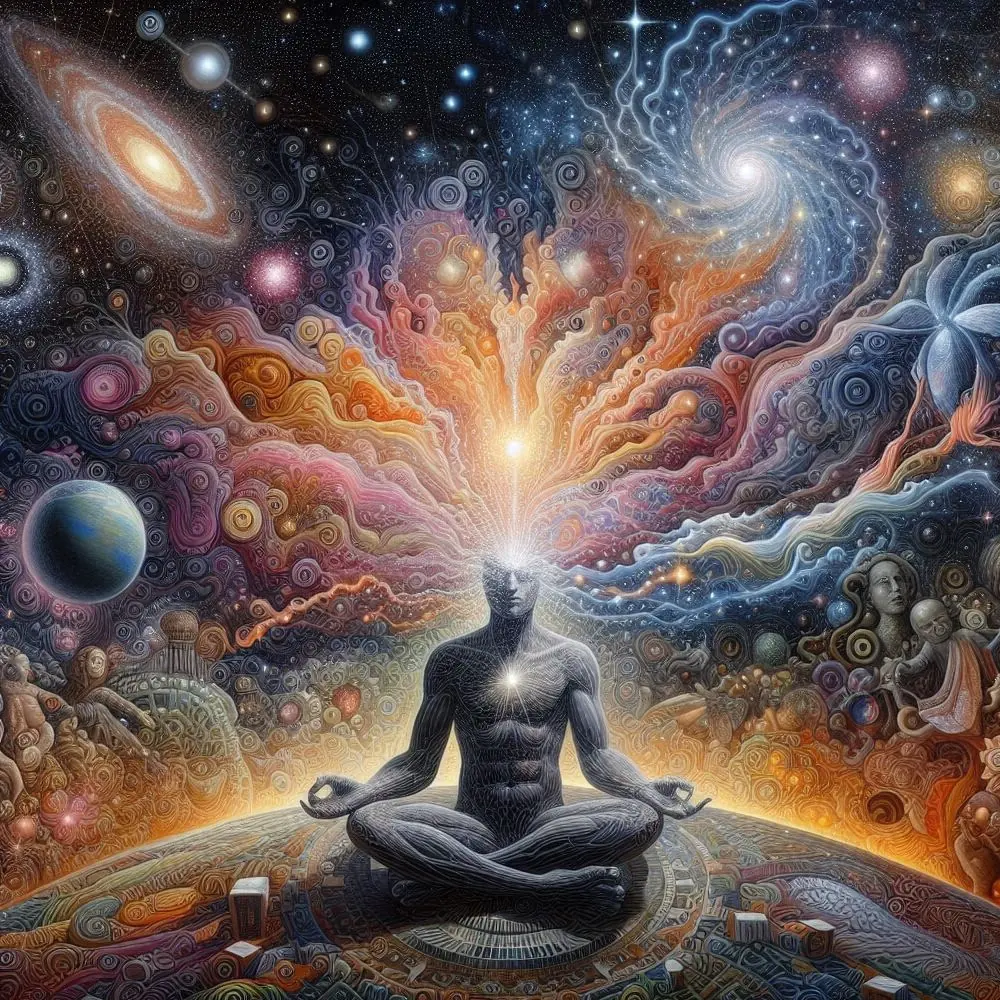
Section 1: The Interwoven Tapestry – Unveiling the Subconscious and Its Universal Resonance
The human fascination with the hidden depths of the mind and its potential connection to the broader universe is an enduring quest. This report embarks on an exploration of this intricate relationship, aiming to weave together diverse threads from psychology, philosophy, neuroscience, and esoteric traditions. The objective is to illuminate the complex interplay between the subconscious mind, concepts of universal consciousness, the nature of inspiration, the role of meditation, and the latent powers inherent within human beings. This journey will traverse from foundational theories of the subconscious to the speculative frontiers of mind-matter interaction, all approached with a commitment to integrative and scholarly inquiry. The very breadth of topics under consideration—ranging from psychoanalysis to quantum physics, from ancient philosophy to modern parapsychology—points towards a contemporary yearning for holistic models of consciousness that transcend purely materialistic or reductionist explanations. There appears to be a growing desire to integrate scientific understanding with experiential, philosophical, and spiritual insights, seeking a more comprehensive grasp of human experience and our place in the cosmos. This report endeavors to address this underlying need for integration by not only presenting information from disparate fields but by actively building bridges and highlighting convergent themes.
Section 2: Charting the Inner World – Psychological and Philosophical Perspectives on the Subconscious Mind
The concept of a mental realm operating beneath the surface of conscious awareness has been a cornerstone of psychological and philosophical thought for centuries. Understanding this inner world, often termed the subconscious or unconscious, is crucial for comprehending the full spectrum of human behavior, motivation, and experience.
2.1 Psychoanalytic Pioneers: Freud and Jung
The formal exploration of the unconscious mind in psychology was significantly advanced by Sigmund Freud. He conceptualized the unconscious as a vast reservoir containing repressed desires, traumatic memories, and primal instincts, which he structured into the id, ego, and superego.1 For Freud, human behavior is primarily determined by these unconscious processes, many of which stem from suppressed childhood experiences and, notably, sexual desires.1 He famously described dreams as the "royal road to the unconscious," viewing them as a disguised fulfillment of repressed wishes and a psychic safety valve.3
Carl Jung, initially a close collaborator of Freud, later diverged to develop his own influential school of analytical psychology. While Jung acknowledged a "personal unconscious," similar in scope to Freud's concept, his most significant contribution was the introduction of the "collective unconscious".1 This, Jung proposed, is a deeper, universal layer of the psyche, inherited and shared by all humanity, containing the accumulated experiences of our ancestors and universal patterns of thought he termed "archetypes".3 Archetypes, such as the Persona (the social mask), the Shadow (the repressed, darker aspects of the self), the Anima/Animus (the contra-sexual aspects of the psyche), and the Self (the archetype of wholeness and integration), are innate psychic dispositions that manifest in myths, dreams, art, and religious symbolism across diverse cultures.1 Jung viewed dreams not merely as wish fulfillments but as rich tapestries woven from both personal and archetypal material, offering profound insights into the individual's journey towards self-realization, or "individuation".3
2.2 Cognitive Science and the Modern Unconscious
Contemporary cognitive science has further refined our understanding of unconscious processes, moving beyond the classical psychoanalytic models. Initially, a "conscious-centric bias" prevailed in much of psychological science, where the unconscious was often viewed as a less capable shadow of the "real" conscious mind.4 This perspective was partly due to an operational definition within cognitive psychology that equated "unconscious" primarily with the processing of subliminal stimuli—information presented below the threshold of conscious awareness.4 Such a narrow definition naturally led to the conclusion that the unconscious was rather limited in its capabilities, perhaps capable of primitive associative learning but not complex, flexible responses.4
However, a significant shift occurred as researchers, particularly in social cognition, began to define the unconscious in terms of the unintentional nature of mental processes and the influences or effects of stimulus processing of which one is not aware, regardless of whether the stimuli themselves are subliminal or supraliminal (above the threshold of awareness).4 This broader definition has unveiled a far more sophisticated and adaptive unconscious. Substantial evidence now indicates that the unconscious is not identifiably less flexible, complex, controlling, deliberative, or action-oriented than its conscious counterpart.4 It is involved in a variety of cognitive processes, including perception, evaluation, motivation, and complex behavioral guidance systems that operate without conscious intent or monitoring.4 Unconscious goal pursuit, for example, can mirror the outcomes of conscious goal pursuit, demonstrating persistence and adaptation to environmental cues.4
The "Theory of Unconscious Thought" (UTT) further challenges the notion of a "dumb" unconscious, proposing that for complex decisions involving many variables, unconscious thought (or "deliberation without attention") might actually lead to better choices than conscious deliberation due to its potentially higher capacity to integrate vast amounts of information, albeit with less precision.5 Neuroscience findings complement this view, suggesting that there are no specific brain structures solely dedicated to unconscious thought; rather, all brain regions appear to be involved in both conscious and unconscious processing.5 This evolving understanding of the unconscious, from a repository of repressed material to a dynamic and integral component of cognition, has profound implications. If a significant portion of our daily behavior, decision-making, and goal pursuit is guided by these sophisticated unconscious processes, it challenges the traditional emphasis on conscious will as the primary driver of human action, suggesting that consciousness might often serve as a narrator or interpreter of unconsciously initiated actions.
2.3 Philosophical Precursors and Parallels
Long before the advent of modern psychology, philosophers grappled with concepts akin to the unconscious. Arthur Schopenhauer, in the early 19th century, posited "The Will" as the fundamental reality, the Ding an sich (thing-in-itself).6 This Will is not a conscious, deliberate faculty but a blind, aimless, unconscious striving that objectifies itself as the phenomenal world, including our own bodies and minds.6 For Schopenhauer, this universal metaphysical principle manifests in individuals as impulse, instinct, desire, and craving, and is the ultimate root of all suffering, as its insatiable nature ensures perpetual dissatisfaction.7 His emphasis on unconscious desires and the power of the Will significantly influenced later thinkers, including those in psychoanalysis.8
Friedrich Nietzsche, who was himself influenced by Schopenhauer, developed the concept of the "Will to Power".8 Unlike Schopenhauer's Will-to-live, which is primarily about self-preservation, Nietzsche's Will to Power is an irrational, unconscious force found in all individuals, driving them to grow, overcome, dominate, and express their strength.10 This fundamental drive, operating beneath conscious awareness, shapes desires and motivations.10 The Will to Power is not inherently good or bad; it can be channeled into creative activity, self-mastery (what Nietzsche termed "self-overcoming"), or into the harmful domination of others.10
The emergence of these philosophical concepts—Schopenhauer's "Will" as a fundamental, unconscious striving and Nietzsche's "Will to Power" as an irrational, motivating force—can be seen as intuitive articulations of powerful, unconscious drives within the human psyche. These ideas, which arose from deep philosophical introspection about the nature of existence and human motivation, prefigured and likely created an intellectual climate conducive to the later psychoanalytic formulations of the id and other unconscious drives. This suggests that the exploration of the deep unconscious is not solely a product of clinical observation but also has profound roots in philosophical inquiry.
Jung's introduction of the "collective unconscious" and its archetypes serves as a particularly vital bridge. By positing a shared, universal layer of the psyche containing inherited patterns of thought and primordial images that resonate across cultures and manifest in myths, religions, and symbols, Jung connected individual psychology to transpersonal and universal themes.1 This concept of a collective stratum of mind provides a psychological framework that can interface with the broader philosophical and esoteric notions of a Universal Mind or World Soul, directly addressing the quest for understanding the links between the individual subconscious and a larger, cosmic consciousness.
To provide a clearer comparative overview, the following table summarizes these key perspectives:
| Theorist/School | Key Terminology for Unconscious Realm | Primary Characteristics/Contents | Proposed Functions/Influence | Connection to Universal/Collective Aspects |
|---|---|---|---|---|
| Sigmund Freud | The Unconscious | Repressed desires, traumatic memories, primal instincts (Id), psychosexual development influences | Drives behavior, dream production (wish fulfillment), defense mechanisms | Primarily personal, though societal influences on superego |
| Carl Jung | Personal Unconscious, Collective Unconscious | Personal experiences; Inherited archetypes (Persona, Shadow, Anima/Animus, Self), universal symbols | Influences behavior, dream production (personal & archetypal insights), individuation process | Collective Unconscious is inherently universal, shared by all humanity, source of myths and universal themes 1 |
| Cognitive Science | Modern Unconscious/Nonconscious Processes | Automated skills, implicit biases, subliminal processing, unintentional effects of stimuli | Information processing, behavioral guidance, decision-making (UTT), perception, evaluation, motivation 4 | Shared cognitive architecture, universal principles of information processing |
| Arthur Schopenhauer | The Will | Blind, aimless, universal striving, fundamental reality (thing-in-itself) | Objectifies as the world, manifests as impulse, instinct, craving; root of suffering 6 | A universal metaphysical principle, the inner essence of everything |
| Friedrich Nietzsche | Will to Power | Irrational, unconscious force driving growth, mastery, expression of strength | Influences desires, motivations; can lead to creativity, self-overcoming, or domination 10 | A fundamental drive found in all individuals, potentially a metaphysical principle of life itself |
This comparative framework highlights the evolution and diversification of our understanding of the subconscious, from a repository of personal repressions to a dynamic cognitive system and even a fundamental metaphysical principle.
Section 3: The Cosmic Mind – Exploring Universal Consciousness and Its Manifestations
The notion that individual consciousness is part of, or connected to, a larger, all-encompassing Universal Mind or cosmic consciousness is an ancient and remarkably persistent idea, appearing in diverse philosophical, spiritual, and esoteric traditions across cultures and epochs. This convergence suggests it may reflect a fundamental human intuition or experience regarding the nature of reality.
3.1 Ancient and Transcendental Roots
As early as 2,500 years ago, the pre-Socratic Greek philosopher Anaxagoras introduced the concept of Nous (Mind) as an ordering and animating principle of the cosmos.12 He taught that Nous was a single Universal Mind, fundamental to the universe, and responsible for the growth and organization of living things.13 While Aristotle commended Anaxagoras for this idea, both he and Plato later critiqued it for not sufficiently incorporating an ethical dimension, a mind acting for the "best interests" of the universe.13
Centuries later, in the American Transcendentalist movement, Ralph Waldo Emerson articulated a similar vision with his concept of the "Over-Soul".14 For Emerson, the Over-Soul is a profound spiritual unity, a divine presence that permeates every individual, connecting all beings to one another and to the universe as a whole.15 It is "that great nature in which we rest... that Unity within which every man's particular being is contained and made one with all other".14 This Over-Soul is the source of all true moral and intellectual growth, the fount of genius, and is perceptible not through rational analysis but through intuition and moments of profound insight.14
3.2 Idealist and Eastern Philosophies
In German Idealism, Georg Wilhelm Friedrich Hegel developed the concept of the "Absolute Spirit" (often termed Absolute Mind or Universal Mind).16 For Hegel, the Absolute Spirit is the ultimate reality, a self-conscious and self-directing principle that governs all existence and unfolds dialectically through history.16 This unfolding is manifest in the progression of human culture, particularly in art (intuitive expression), religion (representational understanding), and philosophy (conceptual self-comprehension of the Absolute).17 Individual self-consciousness is a stage in the Absolute Spirit's journey to complete self-awareness.16
Eastern philosophies offer rich and varied perspectives on universal consciousness. In Hinduism, the Advaita Vedanta school posits Brahman as the sole, unchanging, ultimate reality.18 Atman, the individual Self or soul, is, in its true nature, identical to Brahman.18 The apparent separation between the individual and this universal consciousness is due to Avidya, or ignorance.18 Liberation (moksha) is the realization of this non-dual identity. Advaita Vedanta also describes four states of consciousness: Jagrat (waking), Swapna (dreaming), Sushupti (deep sleep), and Turiya (the transcendental fourth state).19 Turiya represents pure consciousness, the direct experience of unity with Brahman.19
Within Buddhism, the Yogacara school (also known as Vijnanavada or "consciousness-only" school, or Cittamatra, "mind-only" school) emphasizes the primacy of consciousness in shaping reality.20 A key concept is alaya-vijnana, or "storehouse consciousness".20 This is considered the foundational consciousness that stores all karmic seeds (bijas) and mental impressions (samskaras), which then ripen and project our perceived reality.20 While often interpreted as an individual storehouse, some texts, notably the Lankavatara Sutra, present a view of the alaya-vijnana (or Dharmakaya) as a single, universal Mind that has become everything—all existents are manifestations of this one Mind.22 Enlightenment involves the transformation of this storehouse consciousness, purifying it of defilements and realizing its true, non-dual nature.22
3.3 Esoteric and New Thought Perspectives
Esoteric traditions have long embraced the idea of a universal consciousness. Theosophy, founded by H.P. Blavatsky, speaks of a "Divine Wisdom" (Theosophia) and posits that all beings and all matter are interconnected aspects of a universal whole.23 This wisdom-religion describes multiple layers or "planes" of existence—typically seven, such as the Physical, Astral, Mental, Buddhic, and Divine planes—which interpenetrate each other and the physical cosmos, each representing a different vibrational frequency and state of consciousness.23 Intuition, in Theosophical thought, can provide revelations from this divine or universal Mind, and humanity possesses latent powers that, when awakened, allow for direct perception of these higher realities.23
The New Thought movement, which emerged in the late 19th century, centers on the principle of an "Infinite Intelligence" or God that is omnipresent, omnipotent, and the ultimate reality.27 Thinkers like Charles Haanel and Ernest Holmes taught that the individual mind is an expression or manifestation of this Universal Mind.13 Haanel specifically proposed that the subconscious mind is the individual's direct link to the Universal Mind, differing from it only in degree, much as a drop of water differs from the ocean.29 This connection implies that by aligning one's thoughts with the Universal Mind, individuals can tap into its unlimited resources and influence their reality.13
3.4 Modern Echoes: Quantum Physics and Consciousness
Interestingly, some concepts from early 20th-century quantum physics have been invoked by proponents of universal consciousness theories, though these interpretations are often debated within the scientific community. Max Planck, a father of quantum theory, famously stated, “I regard consciousness as fundamental. I regard matter as derivative from consciousness. We cannot get behind consciousness. Everything that we talk about, everything that we regard as existing, postulates consciousness”.12 This perspective has fueled ideas of a "Thought Universe," where underlying the material world are invisible waves of possibilities, akin to thought waves.12 Some proponents equate the "Unified Field" sought in physics with the Universal Mind, suggesting a scientific parallel to these long-standing philosophical and spiritual ideas.12
Across these diverse viewpoints, a common thread emerges: the individual mind is not an isolated entity but an integral part of a vast, interconnected conscious universe. The journey of self-discovery is often portrayed as simultaneously a journey into understanding this universal dimension. Philosophical ideas of a responsive, intelligent, and accessible universal consciousness provide a metaphysical foundation for many esoteric practices aimed at influencing reality through thought or accessing universal knowledge. Without such a framework, these practices would lack a coherent rationale.
| Concept/Term | Key Proponents/Tradition | Core Attributes/Description | Relationship to Individual Consciousness |
|---|---|---|---|
| Nous | Anaxagoras (Ancient Greek Philosophy) | Ordering force of the Cosmos, single Universal Mind as fundamental principle 12 | Mind within organisms enabling nourishment and growth 13 |
| Over-Soul | Ralph Waldo Emerson (Transcendentalism) | Spiritual unity, divine presence connecting all beings and the universe, source of moral/intellectual growth 14 | "Within man is the soul of the whole"; individual soul partakes in the Over-Soul 14 |
| Absolute Spirit/Mind | G.W.F. Hegel (German Idealism) | Ultimate reality, self-directing principle, reason and self-consciousness unfolding through history 16 | Individual self-consciousness is a stage in the Absolute Spirit's self-realization 16 |
| Brahman | Advaita Vedanta (Hinduism) | Sole, unchanging, ultimate reality; consciousness itself (Nirguna Brahman) 18 | Atman (individual Self) is identical to Brahman; realization obscured by Avidya (ignorance) 18 |
| Alaya-vijnana (Universal Aspect) | Yogacara Buddhism (esp. Lankavatara Sutra interpretation) | Storehouse consciousness; in some views, a single universal Mind (Dharmakaya) manifesting as everything 22 | Individual consciousness as a projection or manifestation of this universal storehouse/Mind 22 |
| Collective Unconscious | Carl Jung (Analytical Psychology) | Deeper layer of psyche shared by all humans, containing ancestral experiences and archetypes 1 | Individual psyche contains and is influenced by the collective unconscious; archetypes shape universal human experiences 3 |
| Divine Wisdom / Universal Whole | Theosophy | Interconnected universal whole, wisdom-religion, seven planes of existence 23 | All beings are aspects of this universal whole; latent powers connect to superphysical existence 23 |
| Infinite Intelligence / Universal Mind | New Thought Movement (e.g., Haanel, Holmes) | Omnipresent, omnipotent, omniscient, all-creative intelligence; ultimate reality 13 | Individual mind is an expression/manifestation of Universal Mind; subconscious is a link to it 13 |
This table underscores the cross-cultural and trans-historical recurrence of the idea that individual consciousness is embedded within, or is an expression of, a larger, universal field of mind or being.
Section 4: Rhythms of Being – Intraspinal Waves, the Body, and Consciousness
Beyond the purely mental or metaphysical explorations of consciousness, some contemporary approaches investigate the body itself as a conduit or expression of deeper organizing principles that may relate to consciousness and well-being. One such area of inquiry involves specific wave-like phenomena observed in the human spine.
4.1 The Network Spinal Wave
A phenomenon termed the "network wave" or "Network Spinal Wave" has been described in the context of Network Spinal Analysis (NSA), a chiropractic technique.30 This wave is characterized by visible undulations and specific rocking movements of spinal segments. It is reportedly elicited through a sequence of gentle contacts applied by a practitioner to specific areas along the spine, often associated with the locations of meningeal attachments of the spinal cord to the vertebral column.30
Research into the network wave suggests it possesses mathematical properties consistent with a Central Pattern Generator (CPG).30 CPGs are neural circuits capable of producing rhythmic patterns of activity, such as those involved in locomotion (walking, swimming), without continuous sensory input or direct cortical involvement. Significantly, the network wave is proposed as potentially the first CPG discovered in the human spine that is unrelated to locomotion.30 Its neurological circuitry is thought to originate primarily from the sacral and cervical regions of the spine, distinct from the lumbar and thoracic origins of many locomotor CPGs.30 The development of this wave is theorized to occur through a process of neurologic entrainment, where the repeated gentle spinal contacts act as stimuli, leading to the entrainment of oscillators—vertebral motion segments—into rhythmic and synchronous patterns of movement.30
Studies employing surface electromyography (sEMG) have characterized the muscular activity during the network wave as having both electromagnetic and mechanical components.30 Mathematical analysis of these sEMG signals has indicated that the wave demonstrates coherence over a distance, specifically between the sacral and cervical spine. This coherence has led some mathematical engineers to suggest that its detection might represent a novel measure for central nervous system health.30 The wave itself is described as propagating along the spine; for instance, a headward traveling wave can reflect off the sphenoid bone (the most cephalad dural attachment) and then travel caudally, with upward and downward traveling waves observed to collide and continue, exhibiting soliton-like properties.30
4.2 Potential Implications of Intraspinal Waves
The emergence and characteristics of the Network Spinal Wave are associated with several potential implications for nervous system health, healing, and possibly even broader aspects of consciousness. Proponents suggest that the wave phenomenon is linked to reorganizational healing processes and may have implications for recovery from conditions such as spinal cord injury.30 One hypothesis, posited by Donald Epstein, the developer of NSA, is that the development of the wave facilitates the release of bound energy stored in defensive physiological patterns, such as those associated with adverse mechanical cord tension.30 This released energy then purportedly becomes available to create a higher order of spinal and neural integrity and organization.30 This idea of energy reorganization offers a potential causal link between the resolution of physical tension patterns in the spine and the availability of resources for enhanced neurological function. The observed increase in the wave's complexity over time, with advancing levels of care, is thought to support this hypothesis.30
Furthermore, the development of the network wave and the associated reorganization of spinal behaviors have been linked to the emergence of "wellness lifestyles" and "novel perceptions" in individuals undergoing NSA care.30 While direct causal links to consciousness are speculative, these observations hint at a potential impact on an individual's overall state of being and awareness. The electromagnetic component of the wave 30 is particularly intriguing, as some theories of consciousness propose that electromagnetic fields generated by the brain play a crucial role in conscious experience (e.g., McFadden's cemi field theory 31). Although these theories primarily focus on the brain's EM field, the nervous system is an integrated electrical network. Coherent electromagnetic phenomena generated and propagated along the spine could, speculatively, interact with or influence the brain's EM field, or perhaps contribute to a more distributed electromagnetic aspect of consciousness. The observed "coherence at a distance" of the network wave 30 further suggests a system-wide organizational capacity.
It is important to distinguish the "network wave" phenomenon, which is associated with a specific therapeutic approach and purported wellness benefits, from intraspinal pressure waves discussed in the context of pathologies such as syringomyelia.32 Theories of syringomyelia, like Gardner's "water hammer" theory or Oldfield's "piston theory," describe pathological cerebrospinal fluid (CSF) dynamics resulting from blockages or anatomical abnormalities, which lead to the formation of fluid-filled cavities (syrinxes) within the spinal cord and are detrimental to neurological function.32 These pathological waves are driven by abnormal CSF pressure gradients. In contrast, the network wave is presented as a self-organizing, potentially therapeutic phenomenon elicited under specific conditions, aimed at enhancing neural integrity and adaptability.30 The term "intraspinal waves" in the context of the user query most likely refers to this network wave phenomenon rather than pathological CSF dynamics.
The novelty of a non-locomotor CPG in the spine, if validated, suggests that the spinal cord may possess intrinsic mechanisms for generating complex, organizing rhythms that extend beyond basic motor output, potentially playing a role in self-regulation, healing, and fostering higher states of nervous system organization.
Section 5: The Genesis of Insight – Inspiration, Intuition, and the Subconscious Source
The wellspring of novel ideas, creative breakthroughs, and intuitive hunches has long captivated human thought. These moments of "inspiration" often feel as if they arrive from beyond the ordinary confines of conscious reasoning, hinting at deeper, less accessible mental processes.
5.1 Defining Inspiration and Creativity
Creativity, the capacity to generate novel and valuable ideas or solutions, has been understood through various theoretical lenses. The mystical approach, prevalent in many ancient cultures and lingering in modern discourse, views creativity as a divine gift or an otherworldly force.33 Inspiration, in this context, is a "flash" from a higher power, with creative individuals seen as channels for ideas beyond ordinary human comprehension.33 Plato, for instance, spoke of a form of divine "madness" or possession by the Muses as a source of poetic creation.34
In contrast, the psychometric approach treats creativity as a measurable mental skill.33 Psychologist J.P. Guilford, for example, emphasized "divergent thinking"—the ability to generate multiple possible solutions to a problem—as a key component of creativity.33 The social psychological perspective highlights the role of intrinsic motivation (the internal drive to engage in an activity for its own sake) and the experience of "flow" (a state of complete immersion and energized focus in an activity) as crucial for creative output.33 Teresa Amabile's work underscores intrinsic motivation, while Mihaly Csikszentmihalyi extensively researched the flow state. Finally, the investment theory, proposed by Sternberg and Lubart, likens creativity to astute investing: creative individuals identify and develop undervalued or unconventional ideas, "buying low" and "selling high" in the marketplace of concepts.33
Inspiration itself, derived from the Latin inspirare meaning "to breathe in," can be seen as stemming from both internal sources (one's own thoughts, feelings, and experiences) and external sources (observations of the world, encounters with others, or engagement with art and nature).35
5.2 The Subconscious in the Creative Process
A significant body of thought points to the subconscious mind as playing a pivotal role in the creative process, particularly in the stages leading to inspiration. Graham Wallas, in his influential 1926 model, outlined four stages of creativity: Preparation, Incubation, Illumination, and Verification/Implementation.36
-
Preparation: This initial stage involves conscious effort: defining the problem, gathering information, and immersing oneself in the relevant domain.36
-
Incubation: Crucially, this stage involves stepping back from the problem consciously. The problem is set aside, and the individual might engage in unrelated activities. It is during this period that the unconscious mind is believed to take over, mulling over the information, making novel connections, and "nurturing" potential solutions below the threshold of awareness.36 This aligns with the "Wanderer" archetype described by Scott Jeffrey, where one allows "higher consciousness" or the deeper mind to work on the problem without direct conscious interference.37 The subconscious is recognized as a realm where reality can shift and expand beyond the confines of the logical, practical mind, making it a fertile ground for creativity.39
-
Illumination: This is the "eureka!" or "aha!" moment—the sudden flash of insight or the emergence of a solution into conscious awareness.36 This breakthrough is often the result of the unconscious processing that occurred during incubation. It can feel like an inspiration from a "higher source" or an "inner guide," corresponding to Wallas's "Light" archetype.37
-
Verification/Implementation: Following the insight, the idea is consciously evaluated, refined, and put into practice.36
Many creative individuals describe their moments of inspiration as occurring when they are not actively trying to solve the problem—during a walk, a shower, or a state of reverie.38 This anecdotal evidence supports the idea that the subconscious mind requires a degree of freedom from the focused, often rigid, control of the conscious mind to forge novel associations. Intense conscious effort (Preparation) seems to lay the groundwork, but the "letting go" during Incubation allows the "primordial soup" of unconscious thoughts and images to "collide until pairs interlock, making a stable combination".38 This suggests a practical approach to fostering creativity: balancing periods of focused work with intervals of rest, distraction, or engagement in different types of activities to facilitate subconscious incubation.
5.3 Intuition: The Subconscious Whisper
Intuition, often described as a "gut feeling" or an instinctive knowing, is closely allied with subconscious processing and inspiration.40 It is the capacity to understand or know something quickly, without apparent conscious reasoning or deliberation.40 Psychological theories propose that intuition is not a mystical sixth sense but rather a sophisticated cognitive function where the unconscious or subconscious mind rapidly sifts through vast stores of past experiences, accumulated knowledge, and learned patterns to arrive at a holistic assessment or decision.40
Essentially, intuition can be understood as subconscious expertise. The mind, operating below the level of conscious awareness, engages in rapid pattern recognition, matching current situations to similar ones encountered in the past and presenting a judgment or course of action that feels right.42 This process acts as a mental shortcut, particularly useful in complex situations where data may be incomplete or when decisions need to be made quickly.41 While intuition can be remarkably accurate and insightful, it can also be influenced by biases embedded in past experiences. Therefore, a balance between intuitive insights and rational analysis is often optimal for effective decision-making.40 This understanding demystifies intuition to some extent, reframing it from an inexplicable phenomenon to a highly efficient form of subconscious information processing, which implies that intuition can be cultivated by broadening one's experiential and knowledge base.
The descriptions of inspiration arising from a "higher source" or an "inner guide," common in mystical traditions and echoed in Wallas's "Light" archetype, can be psychologically interpreted as the experience of accessing profound insights generated from the deeper, less personalized layers of the subconscious. This may include Jung's collective unconscious, with its repository of archetypal wisdom, or what some esoteric traditions term the "superconscious mind".39 Such an interpretation provides a psychological framework for understanding these transpersonal-feeling experiences, linking them to the vast, often untapped, potential residing within the deeper strata of mind.
Section 6: The Meditative Path – Accessing and Harnessing Subconscious Potential
Meditation, in its myriad forms, has been practiced for millennia across cultures as a method to quiet the conscious mind, cultivate self-awareness, and explore inner realms of experience. Modern research and esoteric traditions alike suggest that meditation can be a powerful tool for accessing and potentially influencing the subconscious mind.
6.1 Meditation: Gateway to Inner Realms
Meditation is often described as a practice that nurtures inner peace, enhances self-awareness, and fosters mental clarity, allowing individuals to connect with their inner selves and unlock the hidden depths of the mind.45 A key mechanism through which meditation is thought to facilitate access to the subconscious is by altering brainwave patterns. Typically, active, waking consciousness is associated with faster beta brainwaves. Meditation practices, particularly those involving focused attention or deep relaxation, can guide the mind towards slower alpha and theta brainwave states.45 These states are consistently linked with increased relaxation, heightened creativity, enhanced receptivity to suggestion, and more direct access to subconscious content.45 This neurophysiological shift creates an environment where the usual "filter" of the conscious, critical mind is less dominant, allowing normally submerged subconscious material—such as memories, insights, and emotional patterns—to surface or be more readily engaged.
Mindfulness meditation, which involves paying attention to the present moment without judgment, is specifically noted for its potential to blur the boundary between the unconscious and conscious mind.47 Some practitioners and theorists suggest that, similar to the psychoanalytic technique of free association, mindfulness can facilitate the emergence of unconscious material, allowing for its integration into conscious awareness at a higher cognitive level.47
Scientific studies have provided evidence for meditation's effects on brain structure and function, particularly in areas related to attention, emotional regulation, and self-awareness. For instance, long-term meditation practice has been associated with changes in activity and even structure in regions like the amygdala (involved in emotional processing), the prefrontal cortex (linked to executive functions and self-regulation), and the default mode network (active during mind-wandering and self-referential thought).46 These neurological changes may underpin the psychological benefits reported by meditators, including increased focus, better emotional control, and deeper self-understanding.
6.2 Techniques for Subconscious Engagement through Meditation
Various meditation techniques can be employed to engage with the subconscious mind:
-
Mindfulness and Breath Meditation: These foundational practices involve focusing attention, typically on the breath or bodily sensations, and observing thoughts and feelings as they arise without judgment.49 This helps to quiet the "mental chatter" of the conscious mind, creating space for subconscious insights to emerge and enhancing self-awareness.
-
Guided Meditations and Visualization: These techniques use imagery and verbal guidance to lead the practitioner into specific states of mind or to explore particular themes.45 Visualization, in particular, is a powerful tool for working with the subconscious. By creating vivid mental images of desired outcomes or states of being, one can reinforce these ideas in the subconscious mind.50 It is believed that visualization activates the creative subconscious and can also engage the Reticular Activating System (RAS) in the brain, helping to filter information and direct focus towards resources and opportunities aligned with one's goals.51
-
Affirmations: The practice of repeating positive statements, often during a meditative state, aims to reprogram subconscious beliefs and thought patterns.45 By consistently introducing positive affirmations, individuals seek to replace limiting beliefs with empowering ones, thereby influencing their feelings, behaviors, and even decision-making processes.52 Research suggests that affirmations can indeed affect subconscious thought processes and lead to measurable shifts in cognitive patterns and choices.52
-
Yoga Nidra: Translating to "yogic sleep," Yoga Nidra is a systematic method of inducing complete physical, mental, and emotional relaxation while maintaining awareness.56 A key component is the Sankalpa, a short, positive resolve or intention that is mentally stated at the beginning and end of the practice, when the mind is highly receptive. Through techniques like body scanning (rotation of consciousness through different body parts), breath awareness, and guided visualizations, Yoga Nidra aims to access deep layers of the unconscious mind, release stored tensions, unlock memories and emotions, and implant the Sankalpa for profound healing, self-awareness, and personal transformation.56
-
Other Techniques: Practices like Transcendental Meditation (using mantras), Vipassana (insight meditation), and Chakra Meditation (focusing on energy centers) also offer pathways to quiet the conscious mind, deepen self-awareness, and potentially explore subconscious or transpersonal realms.49
The use of specific intentions, visualizations, and affirmations within meditative states suggests that engaging the subconscious is not merely a passive observation but can be an active process of directing and reshaping inner patterns. This implies that the subconscious, when accessed in a receptive state, is malleable and responsive to focused conscious input, offering a means to harness the mind's power for personal development.
6.3 Esoteric Perspectives on Meditation and Higher Consciousness
Some esoteric traditions propose that meditation can lead beyond the personal subconscious to what might be termed a "superconscious" mind. For example, teachings stemming from Paramhansa Yogananda describe the superconscious as the realm of true creativity, universal thoughts, direct spiritual experiences, and divine love and bliss, accessible through deep meditation.44 From this viewpoint, the subconscious mind is primarily a storehouse of past actions, habits, memories, and unprocessed emotional residues, which can often have a "confused and murky feel".44 While the subconscious greatly influences daily life, ideas drawn from it are seen as reflections of past conditioning rather than truly novel or creative insights, which are attributed to the superconscious.44 These traditions may also include practices aimed at "cleansing" or purifying the subconscious of negative patterns using spiritual energy or "Divine Light," thereby facilitating access to higher states of consciousness.44 This perspective suggests a continuum of consciousness, where the subconscious acts as a layer that can be transcended or purified to reach more expansive and universal states of awareness. The idea that "thoughts are universally, not individually, rooted," as Yogananda stated, supports the notion that deep meditation can connect one to these transpersonal wellsprings of wisdom.44
The following table provides an overview of various meditation techniques and their proposed relationship to subconscious access:
| Technique | Primary Mechanism/Focus | How it Accesses/Influences Subconscious | Reported Benefits for Subconscious/Intuition/Well-being | Key Supporting References (Examples) |
|---|---|---|---|---|
| Mindfulness Meditation | Non-judgmental awareness of present moment, thoughts, feelings, sensations | Blurs conscious/unconscious boundary; allows observation of habitual patterns; may facilitate emergence of unconscious material 47 | Increased self-awareness, emotional regulation, reduced rumination, integration of unconscious content 47 | 47 |
| Guided Visualization | Creating vivid mental imagery of desired outcomes, states, or explorations | Imprints desired scenarios/feelings onto subconscious; activates creative subconscious and RAS to align with goals 50 | Enhanced creativity, motivation, goal achievement, stress reduction, subconscious reprogramming 45 | 45 |
| Affirmation Practice (during meditation) | Repetition of positive statements embodying desired beliefs or outcomes | Rewrites limiting subconscious beliefs; reinforces positive thought patterns; aligns conscious goals with subconscious programming 45 | Shifts in decision-making, enhanced self-belief, positive behavioral changes, stress reduction 52 | 45 |
| Yoga Nidra | Systematic deep relaxation, body scan, breath awareness, Sankalpa (intention setting) | Induces hypnagogic state (border between waking/sleep); implants Sankalpa directly into receptive subconscious; unlocks stored impressions 56 | Deep healing, release of trauma/emotions, manifestation of intentions, profound self-awareness, reprogramming of unconscious patterns 56 | 56 |
| Theosophical/Yogic Meditation for Superconsciousness | Elevating consciousness beyond ordinary mental activity, seeking union with Divine | Quiets conscious/subconscious chatter to access superconscious realm of universal thoughts and true creativity 44 | Access to universal wisdom, profound spiritual experiences, true creativity, inner peace, bliss 44 | 44 |
These techniques, while diverse, share a common aim: to navigate the inner landscapes of the mind, moving beyond the surface level of consciousness to engage with the deeper, often untapped, potentials of the subconscious and, for some, superconscious realms.
Section 7: The Empowered Mind – Communication, Latent Powers, and Conscious Application
The exploration of the subconscious and its connection to universal principles naturally leads to questions about the mind's inherent powers and our ability to consciously apply this knowledge. This section delves into the mind-body connection, esoteric and parapsychological perspectives on latent human abilities, and the role of belief and intention in shaping our reality.
7.1 The Mind-Body Connection: Influencing Physiology
The intimate relationship between the mind and the body is increasingly recognized by science, particularly through the field of Psychoneuroimmunology (PNI). PNI studies the complex, bidirectional interactions between psychological processes (thoughts, emotions, beliefs), the brain, and the nervous, endocrine, and immune systems.58 Chronic stress, for example, is known to negatively impact these interconnected pathways, potentially leading to suppressed immune function and increased susceptibility to illness.59 Conversely, mind-body practices such as meditation, which can foster positive emotional states and reduce stress, have been shown to modulate these responses beneficially.59 The subconscious mind plays a crucial role here, as deeply ingrained beliefs and habitual emotional patterns, often operating below conscious awareness, significantly influence physiological health and the body's healing mechanisms.58
The placebo effect offers a compelling demonstration of this mind-body influence. It occurs when an inert treatment or substance, known to have no direct physiological effect, nonetheless produces measurable psychological and clinical improvements in a patient.61 These effects are not merely subjective; they can include physiological changes such as altered hormone secretion, changes in brain activity, and even impacts on immune responses.61 The mechanisms underlying the placebo effect involve psychological factors like expectation, conditioning, and belief.61 Critically, research indicates that the unconscious mind plays a key role; placebo and nocebo (negative placebo) effects can be activated outside of conscious awareness, driven by nonconscious anticipation.63 Neurological studies have identified specific brain regions, including the rostral anterior cingulate cortex (rACC), pontine nucleus, and cerebellum, as being involved in mediating placebo responses, particularly in pain modulation.62 This body of evidence suggests that the subconscious mind acts as a vital mediator, translating thoughts, beliefs, and suggestions into tangible physiological changes.
7.2 Latent Human Powers: Esoteric and Parapsychological Perspectives
Beyond influencing one's own physiology, many traditions and some scientific inquiries explore the possibility of the mind possessing latent powers that extend to interaction with the external world or accessing information beyond ordinary sensory channels.
Theosophical teachings, for instance, assert the existence of "powers latent in humanity," such as telepathy (mind-to-mind communication), precognition (knowledge of future events), clairvoyance (perception beyond normal senses), and psychokinesis (mind over matter).23 Theosophy suggests these powers can be awakened through spiritual development and initiations, enabling individuals to directly perceive and examine "superphysical" planes of existence.23
Hypnosis is often viewed as a tool for accessing the subconscious mind's potential. In a hypnotic state, characterized by focused attention and heightened suggestibility, individuals may be more receptive to suggestions aimed at behavioral change (e.g., quitting smoking, managing weight), alleviating pain and anxiety, and reshaping ingrained thought patterns.64 Theories of hypnosis suggest it works by relaxing the critical faculty of the conscious mind, allowing direct access to subconscious resources for problem-solving and transformation.66 The unconscious mind can be seen as a "gatekeeper," regulating the flow of information and influence during hypnosis.67
The field of parapsychology attempts to scientifically investigate such anomalous phenomena, often referred to as "psi."
-
The Rhine Research Center, originating from J.B. Rhine's Parapsychology Laboratory at Duke University in the 1930s, has a long history of conducting scientific studies on exceptional human experiences and psi phenomena.68
-
The Princeton Engineering Anomalies Research (PEAR) lab, which operated from 1979 to 2007, conducted extensive experiments investigating the influence of human intention on the output of physical devices, particularly Random Event Generators (REGs). Their findings, though controversial, suggested that human consciousness could indeed produce small but statistically significant deviations in the behavior of these random systems, challenging conventional understandings of mind-matter interaction.70
-
Researcher Dean Radin has synthesized decades of parapsychological research, arguing through meta-analyses of numerous studies that there is compelling scientific evidence for the existence of psi phenomena like telepathy, clairvoyance, precognition, and psychokinesis.72 He posits that these findings point towards a potential paradigm shift in our understanding of consciousness and its role in the universe.72
While mainstream science largely remains skeptical of psi phenomena, the convergence of long-standing esoteric claims and the anomalous findings from some frontier scientific research keeps the question of mind-matter interaction open for exploration. This hints that the "power of the mind" might extend beyond self-influence to interactions with the external environment.
7.3 The Power of Belief, Intention, and Thought in Shaping Reality
A recurring theme across various schools of thought, from New Thought to modern self-help, is the idea that our beliefs, intentions, and habitual thoughts can actively shape our experiences and reality. New Thought principles, for example, assert that "divinely attuned thought is a positive force for good" and that "our mental states are carried forward into manifestation and become our experience in daily living".27 The concept of a Universal Mind with unlimited resources, of which individual minds are manifestations, implies that our thoughts, when aligned with this universal power, can draw upon these resources.13
Practices like visualization and affirmations are predicated on this principle. Visualization involves creating detailed mental images of desired outcomes, thereby activating the "creative subconscious" and programming the brain (including the Reticular Activating System) to recognize and attract the people, resources, and circumstances needed to achieve those goals.50 Affirmations, the regular repetition of positive statements, aim to reprogram the subconscious mind by replacing limiting beliefs with empowering ones, which can subsequently influence decision-making, behavior, and emotional states.52 Research supports the idea that affirmations can indeed lead to measurable gains in decision-making efficiency and cognitive flexibility through subconscious reinforcement.52
The exploration of such mental powers also brings forth an ethical dimension. Theosophical writings, for instance, warn against "selfish magic" or the manipulative use of mind control, advocating instead for the application of such knowledge for "universal brotherhood" and the common good.74 If the mind possesses the power to influence itself, others, or reality, the intention behind such influence becomes paramount. This underscores the responsibility that accompanies the pursuit of knowledge about the mind's capabilities, highlighting the importance of aligning such powers with constructive and compassionate aims.
Section 8: Synthesis – Weaving the Threads of Mind, Universe, and Human Potential
The journey through diverse psychological, philosophical, esoteric, and scientific landscapes reveals a complex and deeply interconnected picture of the subconscious mind, its relationship with the universe, and the unfolding of human potential. Several overarching themes emerge that tie these seemingly disparate threads together.
The subconscious mind stands out as a central nexus. From Freud's repository of repressed experiences and Jung's gateway to the collective unconscious, to cognitive science's depiction of a sophisticated information processor and behavioral guide, the subconscious is consistently portrayed as a realm of immense influence.1 Philosophical concepts like Schopenhauer's "Will" and Nietzsche's "Will to Power" further underscore the existence of powerful, unconscious driving forces.7 This subconscious layer appears to mediate many of the phenomena explored: it's where inspirations are incubated 36, intuitions arise through rapid pattern recognition 40, and the mind-body connection is actualized through mechanisms like the placebo effect and psychoneuroimmunological responses.60 Furthermore, many traditions view the subconscious as the individual's primary interface with broader, universal fields of consciousness.29
This leads to the concept of a spectrum of consciousness. The exploration ranges from the personal unconscious, filled with individual memories and conditioning, to Jung's transpersonal collective unconscious, rich with archetypal wisdom shared by all humanity.1 Beyond this, philosophical and spiritual traditions posit various forms of a Universal Mind or ultimate reality—Anaxagoras' Nous, Emerson's Over-Soul, Hegel's Absolute Spirit, Hinduism's Brahman, the Yogacara notion of a universal alaya-vijnana, Theosophy's Divine Wisdom, and New Thought's Infinite Intelligence.12 Some esoteric views even delineate a "superconscious" mind, a realm of pure creativity and universal truth accessible through deep meditative states.44 This suggests that human consciousness is not a monolithic entity but a multi-layered spectrum. Personal development and practices like meditation can then be understood as methods for navigating this spectrum, potentially moving from limited ego-awareness towards more expanded, integrated, and universal states of being. The "power of the mind" may indeed vary depending on which level of this spectrum an individual is predominantly operating from or consciously accessing.
A strong recurrent theme is the dynamic interplay between inner and outer worlds. The thoughts, beliefs, and patterns held within the mind—particularly within the subconscious—are not merely passive reflections of external reality but actively shape and co-create an individual's experience. This is evident in the tangible physiological effects of mental states demonstrated by PNI and the placebo effect.58 It is the foundational principle behind New Thought's assertion that "mental states are carried forward into manifestation" 27 and the rationale for practices like visualization and affirmations, which aim to program the inner mind to influence outer outcomes.50 More speculatively, psi research hints at the possibility of mind interacting directly with the external physical world.70 Philosophies that posit a Universal Mind often see the physical universe itself as a manifestation or objectification of this Mind.6 This overarching perspective challenges a purely materialistic worldview, suggesting that the cultivation of the inner world through practices like meditation and the conscious direction of intention is a potent means of influencing both personal well-being and one's experience of reality.
Meditation emerges as a primary, cross-cultural methodology for accessing these subconscious, and potentially transpersonal, realms. By altering brainwave patterns and quieting the conscious mind, meditation appears to create a conducive state for self-awareness, the emergence of insights, and the potential to tap into latent powers or connect with a sense of universal consciousness.45 The understanding and conscious engagement with the subconscious mind, facilitated by such practices, appears pivotal for personal development, healing, creativity, and ultimately, for realizing a deeper, more meaningful connection with the universe and the wellspring of human potential.
Section 9: Pathways Forward – Cultivating Awareness and Exploring Inner Frontiers
The exploration of the subconscious mind and its universal connections is not merely an academic exercise; it offers pathways for personal growth, enhanced well-being, and a deeper understanding of our place in the cosmos. The "knowledge of using" the mind's power, as inquired by the user, begins with the cultivation of awareness and a commitment to exploring our inner frontiers.
A foundational step, underscored by nearly all psychological, philosophical, and spiritual traditions discussed, is the cultivation of self-awareness. Understanding one's own conscious and, crucially, subconscious thoughts, beliefs, emotional patterns, and motivations is paramount.1 Without this inner clarity, attempts to direct mental energies or harness latent potentials can be misguided or ineffective. Practices that deepen self-awareness are therefore primary:
-
Meditation: Various techniques can be employed. Mindfulness meditation fosters non-judgmental awareness of inner states, helping to identify habitual thought patterns.49 Yoga Nidra offers a structured method for deep subconscious exploration and the implantation of positive intentions (Sankalpa).56 Guided visualizations can be used for goal achievement and creative problem-solving by engaging the subconscious imaginal faculty.50
-
Journaling: This can be a valuable tool for dream analysis, drawing on Freudian and Jungian insights into the symbolic language of the unconscious.1 It can also be used to track intuitive hunches and reflect on their accuracy, thereby refining one's connection to subconscious wisdom.
-
Affirmations and Belief Work: Consciously identifying limiting subconscious beliefs and working to replace them with empowering affirmations can be a powerful method for personal transformation, as suggested by New Thought principles and supported by some psychological research.52
The journey into the mind's potential also necessitates an integrative yet discerning approach. The information presented in this report spans rigorous scientific research, profound philosophical inquiry, and experiential esoteric traditions. Each domain offers valuable perspectives, yet operates with different epistemological frameworks and standards of evidence.16 A purely skeptical stance might prematurely dismiss insights from introspective or wisdom traditions, while an overly credulous one might accept unsubstantiated claims without critical examination. Therefore, the explorer is encouraged to:
-
Value empirical evidence and scientific methodology where available, particularly in areas concerning physiological effects (e.g., PNI, neuroscience of meditation) or testable phenomena (e.g., parapsychological experiments).
-
Remain open to the conceptual clarity and deep insights offered by philosophical traditions regarding the nature of consciousness and reality.
-
Appreciate the rich experiential wisdom embedded in esoteric and spiritual practices, which often provide practical methods for inner exploration, even if their claims are not always verifiable by current scientific means.
-
Seek coherence and convergence across these domains, while acknowledging areas of uncertainty, speculation, or apparent contradiction.
The exploration of the mind's power, particularly its capacity to influence oneself and potentially the broader environment, inherently carries ethical considerations. As Theosophical teachings warn, knowledge of the mind's deeper mechanisms can be used for manipulative or selfish purposes ("selfish magic") or for constructive, compassionate aims ("universal brotherhood").74 The pursuit of such knowledge and abilities should therefore be coupled with a commitment to ethical conduct, wisdom, and a desire to contribute positively to the well-being of oneself and others.
The relationship between the subconscious mind and the universe, the nature of intraspinal waves, the source of inspiration, the role of meditation, and the full extent of the mind's communicative and creative powers are frontiers where understanding is continually evolving. Scientific inquiry is still developing in many of these areas, particularly concerning the precise mechanisms of psi, the full implications of phenomena like the Network Spinal Wave for consciousness, and a comprehensive map of the interface between the individual subconscious and any Universal Mind. The pathways forward involve continued rigorous research, critical engagement with diverse sources of wisdom, and, for the individual, a dedicated practice of self-exploration and conscious living. The journey into the vast potential of human consciousness is ongoing, promising deeper understanding and a more profound connection to the interwoven tapestry of mind and universe.
Works cited
- Freudian and Jungian Theories of the Unconscious Mind ..., accessed May 18, 2025, https://psychologywriting.com/freudian-and-jungian-theories-of-the-unconscious-mind/
- Unconscious cognition - Wikipedia, accessed May 18, 2025, https://en.wikipedia.org/wiki/Unconscious_cognition
- (PDF) Exploring the Unconscious: Freud and Jung's Divergent ..., accessed May 18, 2025, https://www.researchgate.net/profile/Douglas-Youvan/publication/377663726_Exploring_the_Unconscious_Freud_and_Jung's_Divergent_Theories_on_Dream_Analysis/links/65b1ee819ce29c458bad4e6f/Exploring-the-Unconscious-Freud-and-Jungs-Divergent-Theories-on-Dream-Analysis.pdf
- The Unconscious Mind - PMC, accessed May 18, 2025, https://pmc.ncbi.nlm.nih.gov/articles/PMC2440575/
- The (Re)Discovery of the Unconscious: What We Have Learned ..., accessed May 18, 2025, https://clinmedjournals.org/articles/ijcb/international-journal-of-cognition-and-behaviour-ijcb-6-017.php?jid=ijcb
- The World as Will and Representation - Wikipedia, accessed May 18, 2025, https://en.wikipedia.org/wiki/The_World_as_Will_and_Representation
- Arthur Schopenhauer - The Philosophy of Life - Chapter 13, accessed May 18, 2025, https://www.swami-krishnananda.org/phil/phil_13.html
- Understanding Schopenhauer'S Pessimism: A Comprehensive ..., accessed May 18, 2025, https://philodive.com/blog/understanding-schopenhauer-s-pessimism--a-detailed-analysis
- Philosophy of Friedrich Nietzsche - Wikipedia, accessed May 18, 2025, https://en.wikipedia.org/wiki/Philosophy_of_Friedrich_Nietzsche
- Nietzsche's Concept of the Will to Power - ThoughtCo, accessed May 18, 2025, https://www.thoughtco.com/nietzsches-concept-of-the-will-to-power-2670658
- Friedrich Nietzsche: The Will to Power Motivates Us All | Shortform ..., accessed May 18, 2025, https://www.shortform.com/blog/friedrich-nietzsche-the-will-to-power/
- The Universal Mind—There is One Universal Consciousness, accessed May 18, 2025, https://mind-your-reality.com/universal-mind.html
- Universal mind - Wikipedia, accessed May 18, 2025, https://en.wikipedia.org/wiki/Universal_mind
- Over-Soul - Oxford Reference, accessed May 18, 2025, https://www.oxfordreference.com/display/10.1093/oi/authority.20110803100258251
- The Over-Soul - Ralph Waldo Emerson, accessed May 18, 2025, https://emersoncentral.com/texts/essays-first-series/the-over-soul/
- ijrpr.com, accessed May 18, 2025, https://ijrpr.com/uploads/V3ISSUE3/IJRPR2957.pdf
- What is the Absolute Spirit in Hegel's Thinking? | HEGELCOURSES, accessed May 18, 2025, https://hegelcourses.wordpress.com/2024/10/23/what-is-the-absolute-spirit-in-hegels-thinking/
- Brahman - Wikipedia, accessed May 18, 2025, https://en.wikipedia.org/wiki/Brahman
- The Four States of Consciousness in Hinduism and Its Relevance to ..., accessed May 18, 2025, https://www.psychologs.com/the-four-states-of-consciousness-in-hinduism-and-its-relevance-to-psychology-introduction/
- Yogacara school and the theory of consciousness | Indian ... - Fiveable, accessed May 18, 2025, https://library.fiveable.me/indian-philosophy/unit-9/yogacara-school-theory-consciousness/study-guide/aEFWajGrFizwAHse
- Yogacara – Consciousness Teaching – Buddhism: The Way of ..., accessed May 18, 2025, https://buddhism-thewayofemptiness.blog.nomagic.uk/yogacara-consciousness-teaching/
- The Lankavatara Sutra: New Perspectives - Electrical Spirituality, accessed May 18, 2025, https://www.electricalspirituality.com/the-lankavatara-sutra-new-perspectives/
- A Brief Introduction to Theosophy - Theosophical Society in America, accessed May 18, 2025, https://www.theosophical.org/publications/quest-magazine/a-brief-introduction-to-theosophy
- The Theosophical Movement, 1875-1950 - United Lodge of Theosophists, London, UK, accessed May 18, 2025, https://www.theosophy-ult.org.uk/wp-content/uploads/2019/08/The-Theosophical-Movement-1875-1950.pdf
- Plane (esotericism) - Wikipedia, accessed May 18, 2025, https://en.wikipedia.org/wiki/Plane_(esotericism)
- Intuisjon i Teosofi, accessed May 18, 2025, https://www.intuisjon.com/intuisjon/teosofi
- New Thought - Wikipedia, accessed May 18, 2025, https://en.wikipedia.org/wiki/New_Thought
- Chapter 5 - Universal Mind in Man - New Thought Archives, accessed May 18, 2025, https://lessonsintruth.info/library/abel-leighton-allen/the-message-of-new-thought-by-abel-leighton-allen/chapter-5-universal-mind-in-man/
- The Master Key System Chapter 14 – The Connection Between ..., accessed May 18, 2025, https://therealizedman.com/the-master-key-system-chapter-14-the-connection-between-conscious-subconscious-and-universal-mind/
- The Network Spinal Wave as a Central Pattern Generator - PMC, accessed May 18, 2025, https://pmc.ncbi.nlm.nih.gov/articles/PMC4939370/
- Electromagnetic theories of consciousness - Wikipedia, accessed May 18, 2025, https://en.wikipedia.org/wiki/Electromagnetic_theories_of_consciousness
- Pediatric Syringomyelia | PM&R KnowledgeNow, accessed May 18, 2025, https://now.aapmr.org/pediatric-syringomyelia/
- How Does Creativity Work? Psychological Theories Explained ..., accessed May 18, 2025, https://teachers.institute/higher-education-the-psycho-social-context/creativity-work-psychological-theories/
- Theories of creativity | AI and Art Class Notes | Fiveable | Fiveable, accessed May 18, 2025, https://library.fiveable.me/art-and-artificial-intelligence/unit-6/theories-creativity/study-guide/oanrNAUZnUbjXPoq
- Finding internal and external inspiration - - the Song Brewery, accessed May 18, 2025, https://song-brewery.com/finding-internal-and-external-inspiration/
- What are the Stages of Creativity? | IxDF, accessed May 18, 2025, https://www.interaction-design.org/literature/article/what-are-the-stages-of-creativity
- The Creative Process: Decoding these 4 Powerful Stages, accessed May 18, 2025, https://scottjeffrey.com/creative-process/
- A Journey into Chaos: Creativity and the Unconscious\*\* - PMC, accessed May 18, 2025, https://pmc.ncbi.nlm.nih.gov/articles/PMC3115302/
- The Inner Language of the Subconscious | Psychology Today, accessed May 18, 2025, https://www.psychologytoday.com/us/blog/in-flux/201301/the-inner-language-of-the-subconscious
- What Is Intuition and Why Is It Important? 5 Examples, accessed May 18, 2025, https://positivepsychology.com/intuition/
- Intuition | EBSCO Research Starters, accessed May 18, 2025, https://www.ebsco.com/research-starters/religion-and-philosophy/intuition
- Intuition | Psychology Today, accessed May 18, 2025, https://www.psychologytoday.com/us/basics/intuition
- Balance Intuition and Data to Master the Art of Decision-Making - Reworked, accessed May 18, 2025, https://www.reworked.co/leadership/balance-intuition-and-data-to-master-the-art-of-decision-making/
- The Conscious, Subconscious, and Superconscious Minds — Ananda, accessed May 18, 2025, https://www.ananda.org/ask/levels-of-consciousness-and-what-they-represent/
- Unlocking the Power of Meditation for the Subconscious Mind, accessed May 18, 2025, https://www.therapyroute.com/article/unlocking-the-power-of-meditation-for-the-subconscious-mind-by-a-devnani
- Scientists discover a fascinating fact about the brains of meditators, accessed May 18, 2025, https://www.psypost.org/scientists-discover-a-fascinating-fact-about-the-brains-of-meditators/
- The Perspective of Psychological Action Mechanism of Mindfulness ..., accessed May 18, 2025, https://pmc.ncbi.nlm.nih.gov/articles/PMC10232059/
- Effects of meditation - Wikipedia, accessed May 18, 2025, https://en.wikipedia.org/wiki/Effects_of_meditation
- How to Meditate for Clarity, Intuition & Guidance | Jack Canfield, accessed May 18, 2025, https://jackcanfield.com/blog/how-to-meditate/
- Visualization Techniques to Manifest Your Dreams | Jack Canfield, accessed May 18, 2025, https://jackcanfield.com/blog/visualization-techniques-manifest-your-dreams/
- Using Visualization For Self-Improvement And Personal ... - BetterHelp, accessed May 18, 2025, https://www.betterhelp.com/advice/visualization/how-to-harness-the-power-of-visualization-for-self-improvement/
- Subconscious Mind and Decision Making Ability Among Adults: An ..., accessed May 18, 2025, https://ijip.in/articles/subconscious-mind/
- Efficiency Through Affirmations: A Science-Based Approach - Ciara ..., accessed May 18, 2025, https://ciaraconlon.com/2024/efficiency-through-affirmations-a-science-based-approach/
- The science of affirmations - David R Hamilton PHD, accessed May 18, 2025, https://drdavidhamilton.com/the-science-of-affirmations/#:~:text=University%20of%20Pennsylvania%20researchers%20showed,positive%20changes%20in%20people's%20behaviour.
- View of Positive Affirmation Self-Talk, Impacts on Well-Being, When ..., accessed May 18, 2025, https://ijsh.ph/index.php/rp/article/view/279/798
- Awaken Your Unconscious with Yoga Nidra - Big Shakti, accessed May 18, 2025, https://www.bigshakti.com/yoga-nidra-awakening-the-unconscious
- Unlocking the Power of Your Subconscious Mind - Spiritual Arts Institute, accessed May 18, 2025, https://spiritualarts.org/unlocking-the-power-of-your-subconscious-mind/
- Principles of Psychoneuroimmunology | Healing | Wellness | Bruce ..., accessed May 18, 2025, https://www.pniaustralia.com.au/pni-about/pni-principles.html
- Psychoneuroimmunology: The Mind-Body Connection, accessed May 18, 2025, https://blog.bioticsresearch.com/psychoneuroimmunology-the-mind-body-connection
- PNI & Hypnosis - Sunshine Clinical Hypnosis, accessed May 18, 2025, https://www.sunshineclinicalhypnosis.com.au/pni-hypnosis/
- Placebos: a psychological and biological perspective – Introduction ..., accessed May 18, 2025, https://openpress.sussex.ac.uk/introductiontobiologicalpsychology/chapter/title-placebos-a-psychological-and-biological-perspective/
- Placebo Effects: Neurological Mechanisms Inducing Physiological, Organic, and Belief Responses—A Prospective Analysis - MDPI, accessed May 18, 2025, https://www.mdpi.com/2227-9032/12/22/2314
- Placebo response occurs at nonconscious level: Findings ..., accessed May 18, 2025, https://www.sciencedaily.com/releases/2012/09/120910152011.htm
- 5 Ways Hypnosis Works - Sofia Digital Hub, accessed May 18, 2025, https://demo.sofia.edu/social-cognitive-theory-hypnosis
- The Benefits of Hypnotherapy for Behavioral Change, accessed May 18, 2025, https://www.newhorizonscenters.com/blog/the-benefits-of-hypnotherapy-for-behavioral-change
- Unconscious Processing - John Mongiovi, accessed May 18, 2025, https://johnmongiovi.com/unconscious-processing
- Exploring the Role of Conscious and Unconscious Processes in ..., accessed May 18, 2025, https://pmc.ncbi.nlm.nih.gov/articles/PMC11048517/
- Rhine Research Center - Wikipedia, accessed May 18, 2025, https://en.wikipedia.org/wiki/Rhine_Research_Center
- About Us | RhineResearchCenter, accessed May 18, 2025, https://www.rhineonline.org/about-us
- Princeton Engineering Anomalies Research Scientific, accessed May 18, 2025, https://www.pear-lab.com/
- The PEAR proposition : scientific study of consciousness-related physical phenomena : a quarter century of Princeton Engineering Anomalies Research - National Library of Medicine Institution, accessed May 18, 2025, https://catalog.nlm.nih.gov/discovery/fulldisplay?docid=alma9915174793406676&context=L&vid=01NLM_INST:01NLM_INST&lang=en&search_scope=MyInstitution&adaptor=Local%20Search%20Engine&tab=LibraryCatalog&query=lds56%2Ccontains%2CMan-Machine%20Systems%2CAND&mode=advanced&offset=30
- The Conscious Universe: The Scientific Truth of Psychic ..., accessed May 18, 2025, https://www.goodreads.com/book/show/319012.The_Conscious_Universe
- The Conscious Universe: The Scientific Truth of Psychic Phenomena: 9780062515025: Radin PhD, Dean: Books - Amazon.com, accessed May 18, 2025, https://www.amazon.com/Conscious-Universe-Scientific-Psychic-Phenomena/dp/0062515020
- Freedom From Mind Manipulation, accessed May 18, 2025, https://www.filosofiaesoterica.com/freedom-from-mind-manipulation/
First published . Last revised . Also on Google Docs.