The Interwoven Legacy of Jean During: Scholarship, Performance, and Cultural Transmission
I. Introduction: Situating Jean During's Enduring Significance
A. Overview of Jean During and the Scope of His Legacy
Jean During, born in 1947, stands as a seminal figure in contemporary ethnomusicology, whose career has been characterized by an exceptional depth of engagement with the musical traditions of Iran and Central Asia, including those of the Tajik, Uzbek, Turkmen, Khorasan, and Azerbaijani peoples. His long and distinguished affiliation with the Centre National de la Recherche Scientifique (CNRS) in France, culminating in the esteemed position of "Directeur de Recherche de classe exceptionnelle", attests to the high caliber and widespread recognition of his scholarly endeavors. This institutional validation from one of Europe's premier research organizations underscores the rigor and significance of his contributions to the field.
During's legacy is not a monolithic entity but rather a rich tapestry woven from several interconnected strands: extensive and immersive ethnographic fieldwork, a voluminous corpus of influential academic publications, and a dedicated, insightful artistic practice as a performer of the music he studied. This multifaceted engagement—simultaneously as an ethnomusicologist, a scholar, and a musician—is not merely a collection of roles but a fundamental aspect of his epistemological approach. The immediate identification of these three facets suggests an inherent interdisciplinarity where practical, embodied musical knowledge informs scholarly analysis, and conversely, scholarly understanding enriches artistic interpretation. This integrated perspective has enabled him to offer holistic and profoundly nuanced understandings of the musical cultures to which he dedicated his life's work, moving beyond purely observational or textual modes of inquiry.
B. Thesis Statement
This report posits that Jean During's enduring legacy is primarily characterized by a profound and synergistic interplay between immersive, long-term ethnographic research; rigorous and theoretically informed scholarly analysis; dedicated artistic performance that embodies and illuminates his research findings; and a deep-seated ethical commitment to the cultural contexts and individual bearers of the musical traditions he investigated. This synthesis of roles and methodologies has established him as a pivotal figure in ethnomusicology, whose work continues to resonate powerfully within academic discourse, artistic practice, and the broader global appreciation of Persian and Central Asian musical heritage. His contributions have not only expanded knowledge but have also shaped the very means by which such knowledge is acquired and understood.
II. The Life and Trajectory of Jean During
A. Formative Influences and Intellectual Awakening
Jean During was born in Strasbourg, France, in 1947, into an environment that would nurture his intellectual and artistic inclinations. His initial foray into music was through the Western classical tradition; he commenced classical guitar studies at the age of 13 and later pursued formal musical education at the Strasbourg conservatory. This grounding in Western classical music provided him with a specific musical literacy and aesthetic framework, which would subsequently serve as both a reference point and a point of departure for his engagement with non-Western musical systems.
A truly transformative moment in During's early life occurred when, at the age of 18, he encountered a long-playing record of Indian classical music featuring the sarod master Ali Akbar Khan. This auditory experience acted as a profound catalyst, fundamentally reorienting his musical and intellectual compass. It was an epiphany that steered him away from a potential career in Western classical music and towards an intensive exploration of Eastern musical traditions. This pivotal event underscores the potent capacity of direct aesthetic encounters to shape lifelong intellectual passions and scholarly trajectories, demonstrating that his path was not merely a calculated academic pursuit but one ignited by a deep, personal response to the music itself.
Concurrently with these burgeoning musical interests, During pursued philosophical studies. This early and sustained engagement with philosophy suggests an inherent predisposition towards abstract reasoning, critical inquiry, and the exploration of meaning. Such philosophical training likely equipped him with a robust conceptual toolkit, enabling him to delve into the deeper ontological, epistemological, and aesthetic dimensions of the musical traditions he would later study. This intellectual foundation is evident in his later scholarly works, which frequently engage with complex themes such as music and ecstasy, the nature of tradition, and the spiritual underpinnings of musical practice, moving far beyond descriptive accounts to interrogate underlying principles and cultural significance.
B. The Path of Immersion: Fieldwork and Mastery in Eastern Cultures
During's journey into the heart of Eastern musical cultures commenced with his first trip to Afghanistan in 1967, which was followed by a significant two-year period of residence in the country. This initial foray into direct, immersive fieldwork laid the crucial groundwork for his subsequent, more intensive research endeavors.
However, the most defining period of his early career, and arguably of his entire scholarly formation, was an approximately ten-year residency in Iran throughout the 1970s. This extended period of deep immersion was far more than a typical academic fieldwork stint; it represented a profound commitment to understanding Persian culture and music from within. During this decade, he dedicated himself to the intensive study of Persian classical music, learning directly from some of the era's most eminent masters, including the revered figures of Nur Ali Borumand and Dariush Safvat. Studying with such "great masters of the time" signifies a commitment to learning from primary, authoritative sources, often within the traditional master-apprentice (ustād-shāgird) paradigm. This method of learning ensured an authentic and nuanced transmission of complex musical knowledge, encompassing not just technique but also the aesthetic and spiritual ethos of the tradition.
This profound immersion was not limited to passive observation or theoretical study; it crucially involved mastering key Persian musical instruments, notably the setār and the tār. For During, acquiring performance proficiency was not an ancillary activity but an integral component of his research methodology. This practical engagement allowed for an embodied understanding of the music—its technical intricacies, its improvisational logic, and its expressive capabilities—that would be inaccessible through purely academic study. The decade spent in Iran, therefore, was instrumental in cultivating the linguistic fluency, cultural assimilation, and deep musical intuition that would lend unique authority and authenticity to his later work.
C. Academic Career and Institutional Affiliations
Following his extensive periods of fieldwork and immersive study, Jean During formalized his research through doctoral studies, culminating in a PhD that undoubtedly drew heavily upon his rich experiences in Iran and Central Asia. His entry into the formal academic world was marked by his affiliation with the Centre National de la Recherche Scientifique (CNRS), which he joined in 1978. This marked the beginning of a long and distinguished career within one of France's, and indeed Europe's, most prestigious research institutions.
Over the subsequent decades, During ascended through the ranks at the CNRS, eventually achieving the highest distinction of "Directeur de Recherche de classe exceptionnelle". This senior, tenured position signifies a career characterized by sustained, original, and impactful research that has been rigorously peer-reviewed and recognized at the highest academic levels. Such institutional backing not only provided him with the resources and stability necessary for long-term research projects but also lent considerable weight and credibility to his scholarly output. His role at the CNRS was not merely a job title but a testament to his significant contributions to the advancement of knowledge in his field.
In addition to his research activities, During's academic career also encompassed a pedagogical role. He taught at the University of Strasbourg, where he would have had the opportunity to disseminate his extensive knowledge, share his unique research methodologies, and mentor new generations of students and scholars in ethnomusicology and related disciplines. This teaching function represents an important, though less documented in the provided materials, aspect of his legacy, contributing to the continuity and development of scholarly inquiry into the musical traditions he so profoundly understood.
To provide a clearer overview of these pivotal stages, the following table outlines key milestones in Jean During's life and career:
| Year(s) | Event/Milestone | Location (if applicable) | Significance/Brief Description |
|---|---|---|---|
| 1947 | Birth | Strasbourg, France | |
| c. 1960 | Commenced classical guitar studies | Strasbourg | Initial formal musical training in Western classical tradition. |
| Mid-1960s | Studies at the Strasbourg Conservatory | Strasbourg | Further formal education in Western classical music. |
| c. 1965 (age 18) | Pivotal encounter with LP of Indian music (Ali Akbar Khan) | Strasbourg | Catalytic experience leading to a shift in focus towards Eastern musical traditions. |
| Concurrent | Pursued philosophical studies | Provided a theoretical framework for later ethnomusicological analysis. | |
| 1967 | First trip to Afghanistan; followed by a two-year stay | Afghanistan | Beginning of direct engagement and fieldwork in Central Asian cultures. |
| c. 1970s (approx. 10 years) | Lived and studied Persian music in Iran | Iran | Intensive study with masters like Nur Ali Borumand and Dariush Safvat; learned setār and tār. Crucial immersion period. |
| 1978 | Joined the Centre National de la Recherche Scientifique (CNRS) | France | Start of distinguished academic career at a leading research institution. |
| Post-1978 | Attained PhD | Formal academic qualification underpinning his research. | |
| Ongoing | Taught at the University of Strasbourg | Strasbourg | Contributed to education and mentorship in ethnomusicology. |
| Ongoing | Numerous publications (books, articles, recordings) | Various | Dissemination of research findings and artistic work. |
| By 2000s | Achieved rank of "Directeur de Recherche de classe exceptionnelle" at CNRS | France | Highest level of academic recognition for his research contributions. |
This chronological framework helps to contextualize the development of During's expertise, underscoring the long-term commitments and foundational experiences that shaped his multifaceted contributions to ethnomusicology.
III. A Life of Dedication: Commitments and Contributions
Jean During's career is distinguished not merely by its intellectual achievements but by a profound and unwavering dedication that permeated every facet of his work. This dedication manifested in several key areas, each contributing to the unique depth and impact of his legacy.
A. Unwavering Commitment to Immersive Ethnographic Fieldwork
The very foundation of Jean During's scholarly edifice rests upon his steadfast dedication to "extensive fieldwork". This was not a superficial engagement involving brief visits or reliance on secondary sources, but rather a commitment to long-term residencies and deep immersion within the cultures he sought to understand. His sustained presence in these communities, most notably his decade in Iran, allowed for a level of linguistic fluency, cultural assimilation, and trust-building that is essential for profound ethnographic insight.
His geographical concentration on Iran and the diverse musical cultures of Central Asia—including those of Tajikistan, Uzbekistan, Turkmenistan, Khorasan, and Azerbaijan—demonstrates a focused dedication. This regional specialization enabled him to develop an unparalleled depth of expertise, fostering a nuanced understanding of the historical connections, shared aesthetic principles, and unique local expressions within this vast cultural continuum. His methodological approach, implicitly one of participant-observation, involved learning the languages, studying with local masters, and becoming proficient in the musical traditions from an insider's perspective. This dedication to experiential learning, to acquiring not just data but embodied knowledge, is a hallmark of his work. The physical practice and sensory experience of music-making, learned within its cultural context, provided insights that purely observational or textual study could not yield.
B. Dedication to the Authenticity and Lineage of Musical Traditions
During's research often centered on the "art music" (or classical music) and "spiritual music" of the Persian and Central Asian spheres. This specific focus indicates a dedication to understanding and articulating the most sophisticated, culturally resonant, and often philosophically rich forms of musical expression within these societies. These traditions, often possessing complex theoretical underpinnings and demanding high levels of technical skill, require sustained commitment to master and comprehend.
His commitment to learning directly from "great masters of the time," such as Nur Ali Borumand in Iran, reflects a profound respect for traditional pedagogical methods and a dedication to capturing and understanding musical knowledge at its source. By situating himself within these lineages of transmission, During ensured that his understanding was rooted in authentic practice and informed by the accumulated wisdom of generations of musicians. This dedication extended beyond personal learning; by meticulously documenting these traditions through his extensive publications and recordings, he played a crucial role in the preservation and wider dissemination of musical forms that might otherwise be vulnerable or less known globally. This act of scholarly documentation transformed orally transmitted knowledge and ephemeral performances into enduring resources, demonstrating a commitment not just to personal understanding but to the broader cultural value and continuity of these musical heritages.
C. Dedication to Integrating Scholarship, Performance, and Pedagogy
A distinctive feature of During's dedication was his refusal to compartmentalize the roles of scholar, performer, and teacher. His proficiency as a musician, particularly on the setār and tār, was not a peripheral interest but an integral component of his scholarly identity and research methodology. This demonstrates a dedication to a holistic understanding of music, one that is achieved through the synergistic interplay of intellectual analysis and embodied practice. Performing the music he studied provided him with direct experiential insights into its structure, aesthetics, and affective power.
Furthermore, his role as an educator at the University of Strasbourg signifies a dedication to cultivating future generations of scholars. By sharing his knowledge and methodological approaches, he contributed to the ongoing vitality of ethnomusicological inquiry and ensured that the understanding of these complex musical traditions would continue to develop.
D. Intellectual Dedication to Exploring Profound Musical Questions
Beyond the documentation and analysis of specific musical practices, During's publications reveal a consistent and profound intellectual dedication to investigating the deeper meanings, functions, and philosophical dimensions of music. His work courageously tackles complex and often elusive themes, such as "the relationship between music, trance and mysticism," "music therapy in the East," and "the ethos of music (ta'thir)". This sustained focus on a core set of intellectual inquiries, applied across various musical cultures within his regions of expertise, points to a lifelong commitment rather than scattered interests.
The very title of one of his major works, Musique et extase: L'audition mystique dans la tradition soufie (Music and Ecstasy: Mystical Listening in the Sufi Tradition), signals an intellectual fearlessness and a dedication to exploring the most profound experiential and transformative dimensions of musical engagement, particularly within Sufi spiritual practices. This willingness to engage with the numinous and affective aspects of music, often marginalized in more formalist academic approaches, is a testament to his intellectual dedication and his commitment to understanding music in its fullest human context. This thematic consistency across his oeuvre reflects a coherent research agenda pursued over decades, dedicated to unraveling the multifaceted role of music in shaping human experience and cultural meaning.
IV. The Scholarly Imprint: Jean During's Publications
Jean During's scholarly imprint is vast and deeply influential, manifested primarily through an extensive corpus of publications that have significantly shaped the understanding of Iranian and Central Asian music, as well as broader ethnomusicological theory.
A. A Prolific and Influential Corpus
The sheer volume of Jean During's scholarly output is remarkable, comprising "some thirty books and a hundred articles". This prolific production, sustained over several decades of intensive research and analysis, positions him as one of the most significant and productive scholars in the field of ethnomusicology, particularly concerning the musical traditions of the Persianate world and Central Asia.
Beyond his textual publications, During's contribution is significantly augmented by "numerous CDs of field recordings". These recordings are not mere adjuncts to his written work but constitute invaluable primary source materials. They preserve and disseminate the actual sounds of the traditions he studied, offering direct auditory access to performances, styles, and soundscapes that might otherwise remain inaccessible or be lost to time. This aspect of his output democratizes access to the musical traditions themselves, extending his legacy beyond the written word into the realm of direct auditory experience for scholars, musicians, enthusiasts, and diaspora communities alike.
The international reach and impact of his scholarship are further evidenced by the translation of his works. Though primarily written in French, many of his key publications have been translated into "English, Persian and other languages". This multilingual dissemination has considerably broadened his readership and influence, allowing his research to engage with and contribute to scholarly discourse on a global scale.
B. Deep Dives: Analysis of Major Publications and Dominant Themes
An examination of During's major publications reveals the depth and breadth of his scholarly inquiries. Several key works stand out, alongside recurrent thematic concerns that weave through his oeuvre:
-
1. Musique et Extase: L'audition mystique dans la tradition soufie (Music and Ecstasy: Mystical Listening in the Sufi Tradition): This seminal work is a profound exploration of the intricate and often ecstatic relationship between music, spiritual experience (specifically the samāʿ, or spiritual concert), and mysticism, particularly within Sufi traditions. It is widely regarded as a cornerstone text for understanding the experiential, transformative, and psycho-spiritual dimensions of music in sacred and contemplative contexts, moving far beyond purely structural or historical analyses.
-
2. Quelque chose se passe: Le sens de la tradition dans l'Orient musical (Something is Happening: The Meaning of Tradition in Eastern Music): In this significant publication, During delves into the complex, dynamic, and often contested nature of "tradition" in Eastern musical cultures. The work likely challenges static, monolithic, or overly romanticized notions of tradition, instead exploring its lived, evolving meaning for practitioners and its crucial role in cultural continuity, identity formation, and adaptation in the face of modernity.
-
3. Musiques d'Asie Centrale: L'esprit d'une tradition (Music of Central Asia: The Spirit of a Tradition): This comprehensive volume represents a major contribution to the scholarly understanding of the diverse musical soundscapes of Central Asia. Drawing on his extensive fieldwork in regions such as Tajikistan, Uzbekistan, and Turkmenistan, it likely offers a panoramic overview of various genres, instruments, performance practices, and the underlying socio-cultural "spirit" or ethos that animates these rich traditions.
-
4. L'âme des sons: L'art unique d'Ostad Elahi (The Soul of Sounds: The Unique Art of Ostad Elahi): This book exemplifies During's capacity for deep, focused monographic study. It provides an in-depth examination of the music, philosophical thought, and spiritual teachings of Ostad Nur Ali Elahi (1895-1974), a highly influential Persian musician, thinker, and spiritual figure. Such a study showcases During's ability to meticulously connect intricate musical analysis with broader spiritual, ethical, and philosophical frameworks, illustrating how deep engagement with specific cases can illuminate larger theoretical concerns.
-
5. Cross-Cutting Thematic Explorations: Across his numerous publications, During consistently addresses a set of interconnected themes. These include "the science of musical instruments (organology)," "the relationship between music, trance and mysticism," "music therapy in the East," "the ethos of music (ta'thir)," and "the rhythm and analysis of rhythm". This thematic constellation reveals a coherent and evolving research agenda, where understanding the material aspects of music (instruments, rhythm) is linked to its effects (ethos, therapy) and its role in profound human experiences (trance, mysticism). This interconnected intellectual architecture allows for a holistic exploration of music's multifaceted nature.
To provide a structured overview of these contributions, the following table offers a thematic matrix of Jean During's major publications:
| Publication Title (Original French & English Translation) | Year of First Publication (approx.) | Primary Geographical/Cultural Focus | Core Themes Addressed | Key Argument/Contribution (Brief Summary) | Snippet Reference |
|---|---|---|---|---|---|
| Musique et Extase: L'audition mystique dans la tradition soufie (Music and Ecstasy) | 1988 | Iran, Sufism, Broader Islamic World | Mysticism/Ecstasy, Spiritual Music, Samāʿ, Ethos/Ta'thir | Explores the profound connection between music, spiritual audition, and mystical states, particularly within Sufi practices. | |
| Quelque chose se passe: Le sens de la tradition dans l'Orient musical (Something is Happening) | 1994 | Eastern Music (general), Iran, Central Asia | Tradition, Modernity, Cultural Meaning, Performance Practice | Examines the dynamic and lived nature of musical tradition in Eastern cultures, challenging static interpretations. | |
| Musiques d'Asie Centrale: L'esprit d'une tradition (Music of Central Asia) | 1998 | Central Asia (Tajik, Uzbek, Turkmen, etc.) | Regional Musics, Spirit of Tradition, Organology, Genres | Comprehensive overview of Central Asian musical traditions, their characteristics, and cultural significance. | |
| L'âme des sons: L'art unique d'Ostad Elahi (The Soul of Sounds) | 1986 (rev. 2001) | Iran, Ostad Elahi | Biography of Master Musician, Spiritual Music, Ethics, Aesthetics, Organology (Tanbur) | In-depth study of the music, spiritual philosophy, and ethical teachings of the Persian musician and thinker Ostad Elahi. | |
| La musique iranienne: Tradition et évolution (Iranian Music: Tradition and Evolution) | 1984 | Iran | Persian Classical Music (Radif, Dastgāh), History, Theory, Evolution | A significant work on the structures, history, and evolution of Persian classical music. | (Implied by focus) |
| Musique et mystique dans les traditions de l'Iran (Music and Mysticism in the Traditions of Iran) | 1983 | Iran, Sufism | Mysticism, Spiritual Music, Symbolism | Explores the deep interconnections between musical practices and mystical thought within various Iranian traditions. | (Implied by focus) |
This table, while not exhaustive, highlights the thematic richness and geographical scope of During's major scholarly contributions, allowing for a clearer understanding of his intellectual trajectory and the key areas of his expertise.
C. Methodological Rigor and Innovation
Jean During's methodological approach is a cornerstone of his scholarly impact. It is characterized by a profound emphasis on achieving an "insider" perspective, meticulously cultivated through long-term immersion in the respective cultures, dedicated linguistic study, and, crucially, active participation as a musician. This commitment to learning instruments like the setār and tār from traditional masters in Iran allowed him to gain an embodied understanding of the music that transcends purely textual or observational analysis. This successful negotiation of the "insider-outsider" dynamic in ethnomusicology, where deep, emic understanding is combined with etic analytical frameworks, lends a unique authenticity and depth to his scholarship.
His work skillfully integrates meticulous ethnographic observation and detailed musical analysis with the rigorous study of historical and theoretical texts, including Sufi poetry, philosophical treatises, and musical manuscripts. This interdisciplinary approach allows him to situate musical practices within their broader cultural, intellectual, and spiritual contexts. Furthermore, his scholarship often employs a comparative lens, drawing insightful connections and distinctions between various musical traditions within the expansive Persianate and Central Asian cultural spheres, thereby illuminating both shared principles and unique local expressions.
D. Scholarly Reception, Impact, and Enduring Value
The scholarly reception of Jean During's work has been overwhelmingly positive and far-reaching. The translation of his major publications into English, Persian, and other languages is a clear testament to his international stature and the perceived universal value of his research well beyond the confines of French academia. His books and articles are widely considered foundational texts for students, researchers, and scholars specializing in Iranian and Central Asian music. Moreover, his work is essential reading for those interested in the broader intersections of music and mysticism, the anthropology of sound, the philosophy of music, and ethnomusicological theory and method.
Jean During has significantly shaped the scholarly discourse on these musical traditions, particularly by consistently highlighting their profound spiritual, philosophical, and aesthetic dimensions. He has often moved the analytical focus beyond purely formalist or structuralist concerns to explore the experiential qualities of music and its role in shaping human consciousness and cultural meaning. His emphasis on the "spirit" or "soul" of musical traditions, as suggested by titles like L'âme des sons and Musiques d'Asie Centrale: L'esprit d'une tradition, indicates a commitment to understanding music as a deeply human and culturally embedded phenomenon.
V. The Artistic Dimension: Exploring Jean During's Art
Beyond his formidable scholarly contributions, Jean During cultivated a significant artistic identity as a performer and recording artist. This artistic dimension is not separate from his academic pursuits but rather intricately interwoven with them, forming a crucial component of his holistic engagement with music.
A. The Performer: Mastery and Expression on Traditional Instruments
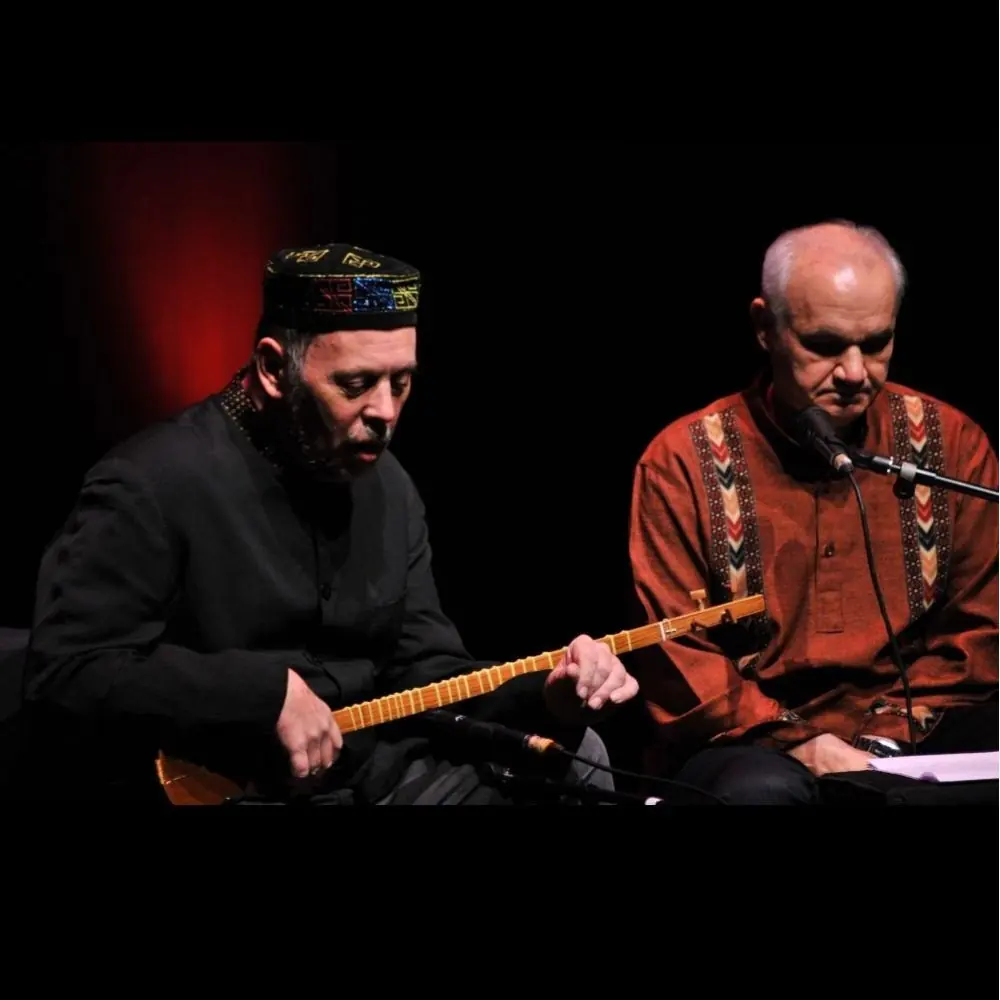
Jean During's artistic practice is centrally defined by his accomplished musicianship, particularly his proficiency as a performer on the Persian lutes, the setār and the tār. His skill on these instruments was not acquired in isolation or through purely academic study; it was meticulously honed through years of rigorous, direct study with "great masters of the time" during his extended residency in Iran. This traditional apprenticeship ensured an authentic grounding in the complex techniques, improvisational languages (such as the radif and dastgāh systems), and subtle aesthetic nuances of Persian classical music.
His commitment to sharing these musical traditions extended to an active career as a concert artist. The record states that "He has given numerous concerts in many countries". This extensive performance history underscores his role not only as a scholar documenting music but as an artist actively interpreting and disseminating it to diverse international audiences. These performances served as a vital form of public ethnomusicology, translating complex and perhaps unfamiliar musical traditions into accessible and affective experiences. Through the immediacy of live performance, he could convey emotional depth, aesthetic beauty, and cultural nuance in ways that academic texts alone often cannot, thereby fostering a direct and often profound connection between audiences and the music.
B. The Recording Artist: Disseminating Musical Interpretations
In addition to his live performances, Jean During "has recorded several CDs" of his own playing. These recordings represent a distinct and important facet of his artistic output, separate from his ethnographic field recordings which document other musicians. His personal recordings capture his own interpretations, improvisations, and mastery of the repertoire, preserving his artistic voice and making his music accessible to a broader listenership beyond the geographical or temporal limitations of the concert hall. These recordings allow for repeated listening and deeper engagement with his particular style and understanding of the traditions he embodied.
C. The Scholar-Practitioner Nexus: Art Informing Scholarship and Vice-Versa
The most compelling aspect of During's artistic dimension is the profound and synergistic relationship it holds with his scholarly pursuits. His deep engagement with musical performance provided an embodied, experiential understanding of musical structures, improvisational processes, modal intricacies, and aesthetic sensibilities that inevitably and richly informed his academic analyses. The practical challenges and discoveries inherent in mastering and performing complex musical forms, such as Persian classical music or the maqām traditions of Central Asia, would have generated nuanced questions, hypotheses, and insights that directly fueled his research. For instance, the subtle demands of improvisation, ornamentation, or conveying specific affects (hāl) in performance likely provided him with insights into musical structures, aesthetics, and the creative process that enriched his academic writing on topics like rhythm, ethos (ta'thir), or the very "soul of sounds."
Conversely, his profound scholarly knowledge—of music history, theory, cultural context, philosophical underpinnings, and textual sources—undoubtedly informed and deepened his own musical interpretations. This scholarly grounding would have allowed for performances that were not only technically skilled but also culturally resonant, historically informed, and intellectually robust. This created a virtuous, cyclical enrichment: artistic practice illuminated scholarly inquiry, and scholarly findings refined artistic expression. This dynamic interplay positions him as a unique bridge, not only between cultures (East-West) but also between different epistemological approaches to understanding music—the analytical/intellectual and the experiential/embodied. His dual competence lent exceptional credibility to his work, allowing him to speak with authority from both perspectives.
D. Influence and Reception of His Artistic Work
Through his numerous concerts and recordings, Jean During played a significant role in introducing, popularizing, and fostering a deeper appreciation for Persian and Central Asian art music among Western audiences. In this capacity, he acted as a crucial cultural ambassador, translating sophisticated musical languages for listeners who might otherwise have limited exposure to these traditions.
He also likely served as an influential model for other Western musicians, scholars, and students aspiring to learn and perform non-Western musical traditions with integrity, depth, and cultural sensitivity. His example demonstrated that it was possible to achieve a high level of proficiency and authentic understanding through dedicated study and respectful engagement. While the provided materials do not detail the specific critical reception of his artistic work, his sustained international concert career and recording output suggest a positive and appreciative response from audiences and critics alike, recognizing both his technical skill and the profound cultural understanding that informed his performances.
VI. Synthesizing the Legacy: Enduring Influence and Future Perspectives
Jean During's contributions to ethnomusicology, cultural understanding, and the artistic practice of Persian and Central Asian music are both profound and multifaceted. His legacy is not defined by a single achievement but by the remarkable synergy of his diverse roles and the enduring impact of his work.
A. A Holistic Appraisal of Jean During's Multifaceted Impact
Jean During's impact stems from his unique embodiment of several critical roles: he was a pioneering ethnomusicologist who pushed the boundaries of the discipline, a deeply committed fieldworker who privileged long-term immersion, an exceptionally prolific and insightful scholar whose writings have become foundational, and an accomplished, sensitive musician who brought the traditions he studied to life. The true significance of his legacy lies in the seamless integration and mutual reinforcement of these diverse capacities. His career compellingly demonstrates that profound scholarly insight is often enriched by, and sometimes contingent upon, practical engagement, embodied knowledge, and immersive experience.
His work has fundamentally advanced the study of Iranian and Central Asian musical traditions within global academia, providing nuanced analyses, rich ethnographic data, and invaluable primary source recordings. Furthermore, he has significantly contributed to broader theoretical debates within ethnomusicology concerning critical issues such as the nature of tradition and modernity, the complex relationship between music and mysticism, the ethical considerations of fieldwork, and the epistemological value of the performer-scholar model. Beyond the confines of academia, his performances, recordings, and accessible writings have broadened cross-cultural understanding and fostered a deeper appreciation for the sophisticated musical arts of these regions among a wider international public. His combined output of scholarly texts, field recordings, and personal performance recordings solidifies his role as a highly effective "cultural broker," translating, interpreting, and transmitting cultural knowledge and aesthetic experiences across different media and to diverse audiences.
B. The Continuing Resonance and Relevance of His Work
The work of Jean During continues to resonate powerfully and retains profound relevance in contemporary contexts. His extensive body of publications remains a cornerstone resource for scholars, students, and musicians interested in Persian and Central Asian music, as well as for those exploring the deeper anthropological, philosophical, and spiritual dimensions of music globally. His analyses of concepts like ta'thir (ethos/effect) or the dynamics of samāʿ (spiritual audition) offer enduring frameworks for understanding music's power.
His ethnographic field recordings and his own performance recordings serve as vital archival documents, preserving musical practices for future generations. They also function as crucial tools for musical pedagogy and as sources of aesthetic inspiration for performers and composers. Perhaps one of the most significant aspects of his enduring legacy is his methodological commitment. His approach—characterized by long-term immersion, linguistic competence, direct study with master musicians, and the thoughtful integration of performance practice with scholarly inquiry—continues to offer a powerful and relevant model for conducting nuanced, ethically grounded, and deeply insightful ethnomusicological research in an increasingly interconnected and complex world. This methodological exemplar, emphasizing depth, sustained engagement, and embodied knowledge, stands as a testament to a research ethic that prioritizes profound understanding.
Moreover, the profound themes he consistently explored—such as the nature of musical tradition in a changing world, the intricate relationship between music and spiritual experience, the "soul of sounds," and the ethos of music—remain highly pertinent to contemporary scholarly and public discourses on music, culture, and human experience. These are perennial questions concerning the human experience of music that transcend specific cultural contexts, ensuring that his work will continue to speak to future generations of thinkers and artists.
C. Avenues for Future Engagement and Research Building upon His Foundations
Jean During's extensive contributions provide a rich foundation upon which future scholarship can build. Several avenues for further engagement and research emerge from his work:
-
Critical Re-examination and Extension of Theories: Future scholars may undertake critical re-examinations or extensions of During's theoretical frameworks—for instance, his concepts of musical ecstasy, tradition, or the ethos of music—in light of new ethnographic research, evolving cultural contexts, or interdisciplinary theoretical developments.
-
Continued Regional Research: While During's coverage of Iranian and Central Asian music is extensive, there is always scope for further ethnographic and historical research in these culturally rich regions. Scholars can build upon his foundations by exploring specific local traditions, contemporary musical developments, or historical periods he may have touched upon less extensively.
-
Reception and Influence Studies: Research into the reception and influence of During's work, both within Western academia and, importantly, within Iran and Central Asian countries themselves, could offer valuable insights into the cross-cultural impact of his scholarship and its role in local discourses on music and cultural heritage.
-
Biographical and Methodological Exploration: More detailed biographical studies could further illuminate the intricate interplay between his personal intellectual journey, his formative fieldwork experiences, and the evolution of his scholarly and artistic output. Similarly, deeper analyses of his research methodology could provide valuable lessons for contemporary ethnomusicological practice.
-
Exploring the "Cultural Ecosystem": Further exploration of the interconnectedness of his diverse outputs—his texts, field recordings, and performance recordings—can reveal new understandings. How do these different forms of knowledge production inform and enrich each other, and how can they be used synergistically in teaching and research?
By engaging with these and other questions, future generations can ensure that Jean During's legacy remains a vibrant and evolving force in the study and appreciation of music.
VII. Conclusion: The Enduring Resonance of Jean During
Jean During's life and work constitute a singular and monumental contribution to the fields of ethnomusicology, Iranian and Central Asian studies, and the broader humanistic inquiry into music. His legacy is characterized by an exceptional synthesis of rigorous scholarship, profound cultural immersion, and dedicated artistic practice, a combination that has yielded insights of enduring value.
A. Recapitulation of a Singular Contribution
Throughout his distinguished career, Jean During played a pivotal role in bringing the sophisticated and spiritually rich musical traditions of Iran and Central Asia to global scholarly and public attention with unprecedented depth, nuance, and empathy. The unique strength and lasting impact of his contributions derive from the holistic integration of his roles: the meticulous researcher patiently uncovering historical and theoretical details; the profound philosophical thinker grappling with music's deepest meanings; the dedicated fieldworker committing years to understanding cultures from within; and the accomplished performing artist embodying and transmitting the traditions he studied. This interwoven approach allowed him to illuminate not just the structures and histories of these musical forms, but also their living essence, their "soul," and their transformative power.
B. The Lasting Echoes of a Life's Work
The legacy of Jean During is not a static monument but a dynamic and ongoing source of knowledge and inspiration. His extensive scholarly corpus—his books, articles, and meticulously documented field recordings—continues to serve as a foundational resource for academic inquiry, offering rich data, insightful analyses, and challenging theoretical perspectives. His artistic endeavors, captured in his own recordings and remembered through his numerous performances, remain vital conduits for cultural connection and profound aesthetic experience, inviting listeners into the intricate sound worlds he so passionately explored.
More broadly, his entire career stands as an inspiring exemplar of deeply committed, ethically engaged, and holistically pursued scholarship. His methodological insistence on long-term immersion, linguistic competence, and the integration of performance as a way of knowing offers a powerful model for future generations of researchers. The multifaceted nature of his output acts as an open invitation for varied forms of engagement—not merely reading his analyses, but also listening intently to the music he documented and interpreted, and perhaps even being inspired to learn and experience these traditions directly.
Ultimately, the "resonance" of Jean During lies in the ongoing dialogue his work provokes and sustains. It is a dialogue about the intricate beauty and profound wisdom embedded in specific musical traditions, about the universal power of music to shape consciousness and foster spiritual experience, and about the enduring human quest to understand music's vital place in our individual and collective lives. His work invites not just study but also listening, reflection, and continued, respectful engagement with the musical worlds he so brilliantly illuminated, ensuring that their echoes will continue to be heard and felt for generations to come.
First published . Last revised . Also on Google Docs.